
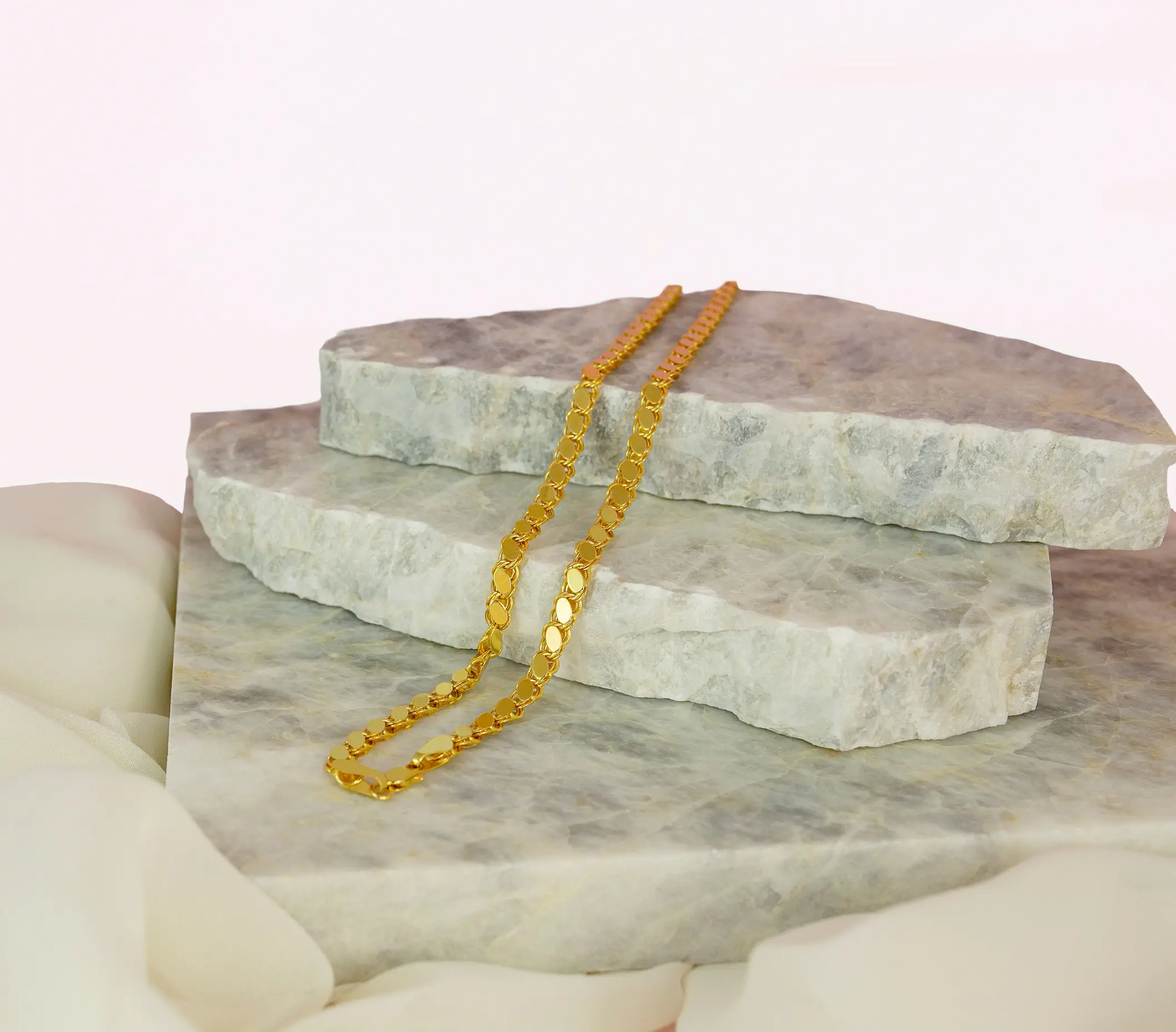
Before you can decide whether to keep, discard, or sell an old gold chain, you’ll need to know what it’s worth. That can be tricky, since a heavy 18K necklace and a lightweight 10K piece may have very different amounts of gold. And even two chains with the same gold content can command distinct prices when you resell them online.
This guide shows you how to find out how much a gold chain is worth, and explains what factors can move a real-world offer above or below that value.
How much is a real gold chain worth today? 7 key factors
A chain’s baseline value comes from how much pure gold it contains and the current gold price. Other factors like the jewelry's condition, construction, craftsmanship, and brand can also affect what the chain is worth on the resale market.
1. Gold purity
The higher the karat is, the more pure gold your chain contains. For example, 10K is 41.7% gold, while 18K is 75% gold. That means two chains of the same weight can have different metal values.
You can usually find the karat stamped near the clasp. If the mark is missing or unclear, consider taking the chain to a jeweler to have the metal tested.
2. Chain weight
For chains of the same karat, more weight means more gold content. Since gold value calculations typically use a price per gram, weigh your chain in grams instead of ounces.
3. Condition
Condition usually matters more to resale value than to melt value (the price of the raw gold). Scratches, broken clasps, stretched links, and previous repairs can make a wearable chain less desirable to some buyers.
4. Current gold price
Gold prices change with the market, so the same chain can have a different intrinsic value from one day to the next. Check today's gold price when making your estimate.
5. Solid or hollow construction
A hollow chain has empty space inside its links, which means there’s less gold in the piece. This gives the jewelry a lower metal value than a solid gold chain of the same size and karat.
6. Design and craftsmanship
Distinctive or labor-intensive pieces could have additional resale value if buyers are willing to pay for the design and workmanship. That premium isn’t guaranteed, though, so gold content remains the most useful starting point when you’re trying to establish baseline value.
7. Brand and gemstones
A recognizable designer or valuable natural gemstones can push a chain’s resale value higher. Buyers also consider demand for the brand, and assess whether the chain is more valuable as a complete piece or for its gold content alone.
How to calculate the gold value of a chain
You can estimate your chain’s gold value with four pieces of information: its weight, karat, pure gold content, and the current gold price. While the number you get isn’t a guaranteed resale price, these steps will give you an idea of what to expect:
- Find the chain’s karat: Check near the clasp for a stamp that says something like 10K, 14K, 18K, or 24K. That’s the karat, which tells you what percentage of the chain is pure gold.
- Weigh the chain in grams: Use a scale that can measure small weights accurately. Make sure to weigh only the chain, without a box or other packaging.
- Calculate the pure gold content: Multiply the chain’s weight by its gold percentage. For example, let’s say you want to know how much a 20-gram 14K chain is worth. Since the piece is 58.3% gold, it contains 11.66 grams of pure gold (20 x 0.583).
- Multiply the pure gold content by the current gold price per gram: If pure gold is trading at $140 per gram, for example, 11.66 grams would have an estimated gold value of $1,632.40.
Keep in mind that this calculation doesn’t account for factors like brand, craftsmanship, condition, and gemstones. That’s why the results of a full appraisal may look different from a simple melt value calculation.
Gold chain value by karat
Let’s take a closer look at how karat can affect a gold chain’s metal value, again using a sample gold spot price of $140 per gram.
Melt value vs. retail value vs. resale value
Knowing the different types of gold value can help you set realistic expectations for what your chain is worth:
- Melt value: The cost of the pure gold in your chain based on its weight, karat, and the current gold price; doesn’t account for the chain’s brand, design, condition, or gemstones.
- Retail value: What a retailer would sell the chain for new; may be significantly higher than melt value after factoring in the cost of materials, manufacturing, craftsmanship, branding, and the retailer’s markup.
- Resale value: What a buyer is willing to pay for the chain today; may be higher for items like designer pieces and old jewelry with historical value.
These different values are part of the reason the price you see when selling jewelry online may not match the original retail price or the calculated melt value. The actual offer you get depends on what the buyer is purchasing the piece for and what they care about beyond the raw gold.
Find out what your gold chain is worth with Unvault
Karat and weight can give you a good baseline value, but they don't always tell you how much your entire 10K gold chain is worth. Construction, condition, craftsmanship, brand, and gemstones may all influence jewelry's value beyond the gold itself.
Unvault’s Gold Calculator can give you an initial estimate based on your chain’s gold content. If your chain has value-adding features or you’re not sure how it was made, you can get a full jewelry appraisal for an assessment of the whole piece.
Find out what your gold chain is worth with Unvault.
Frequently asked questions
Know what your jewelry is worth before you sell.
Monthly gold-price context and hallmark guides from Unvault’s gemologists. No spam, unsubscribe anytime.
Related posts
.webp)


Ready to see what your jewelry is worth?