New: Unvault featured on Bloomberg  

Live prices
·
Gold
$4,088.90
·
Platinum
$1,599.00
·
Silver
$56.18

Home
›
›
Sell Estate Jewelry
Sell your ESTATE JEWELRY

Sell your estate jewelry and keep 80-85% of its worth

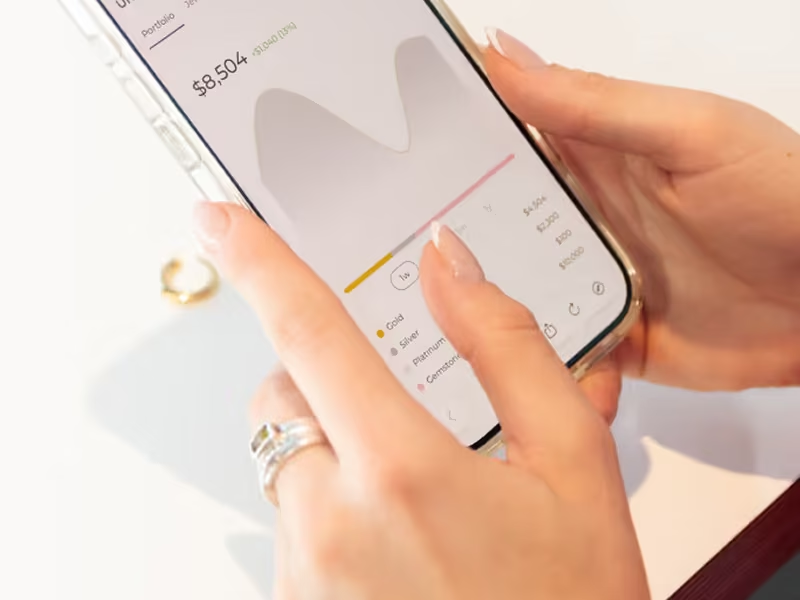
Get an online estimate in 60 seconds, ship your estate jewelry for video-recorded authentication, and receive a fair, transparrent offer.

★★★★★
4.9 · See Trustpilot reviews · “Excellent”
Insured shipping
Authenticated on camera
4.9 ★ Trustpilot rating
No-obligation to sell

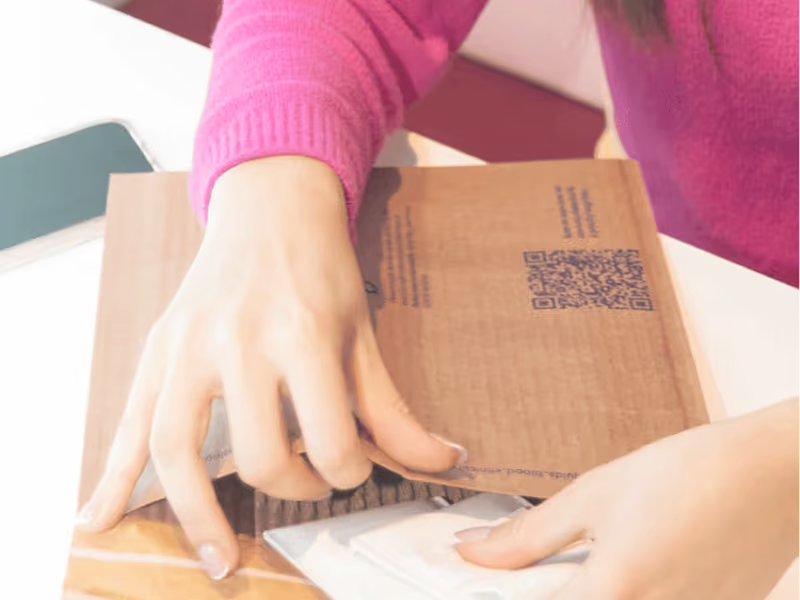
Free insured FedEx label · nothing owed if you decline · shipped back free · payment sent 1 business day after acceptance

Prices update daily - your offer holds for 30 days.
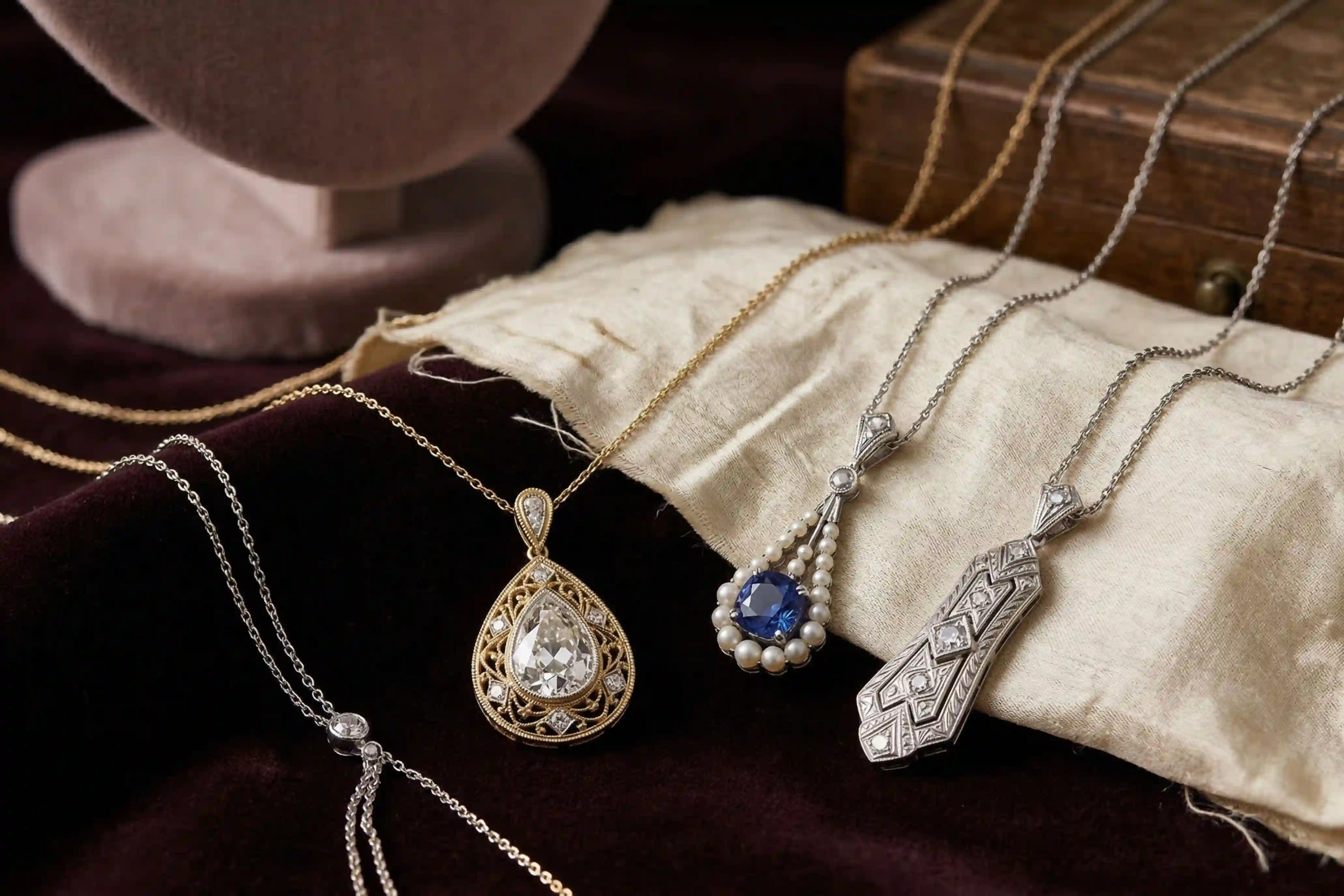
Jewelry photograph
SELLERS TRUST UNVAULT

Transparent valuation. Sold only if you choose.

200,000+
Valuations completed
$140M+
Jewelry tracked
BBB Accredited
Guaranteed transparency accross valuations
Online appraisal

Sell your estate jewelry in three steps

‍

01

Upload photos of your estate jewelry

Step illustration
02

Receive your estimate

Step illustration
03

Sell when ready

Step illustration

In less than a minute, you’ll receive a detailed valuation.

Get Instant Valuation
Why Unvault

The best place to sell estate jewelry online

Unvault evaluates each item separately so you can understand what is driving its estimate before deciding what to sell.

The old way
Pawn / mail-in
  • Buyers often pay only for the metal weight, ignoring the craftsmanship and design
  • No clear record of how each piece was valued
  • Pressure to move quickly while settling the estate
  • Uncertainty about damaged pieces or missing paperwork
The Unvault way
Value first
  • A separate estimate for each submitted piece
  • A clear distinction between replacement and resale value
  • You choose what to sell after reviewing the estimates
  • Hold and track your asset value over time
The value breakdown

What determines your estate jewelry’s value

Estate jewelry arrives as a mixed group rather than a single item. Value is established piece by piece: what each one is made of, what it holds, and what a buyer will pay for it now.
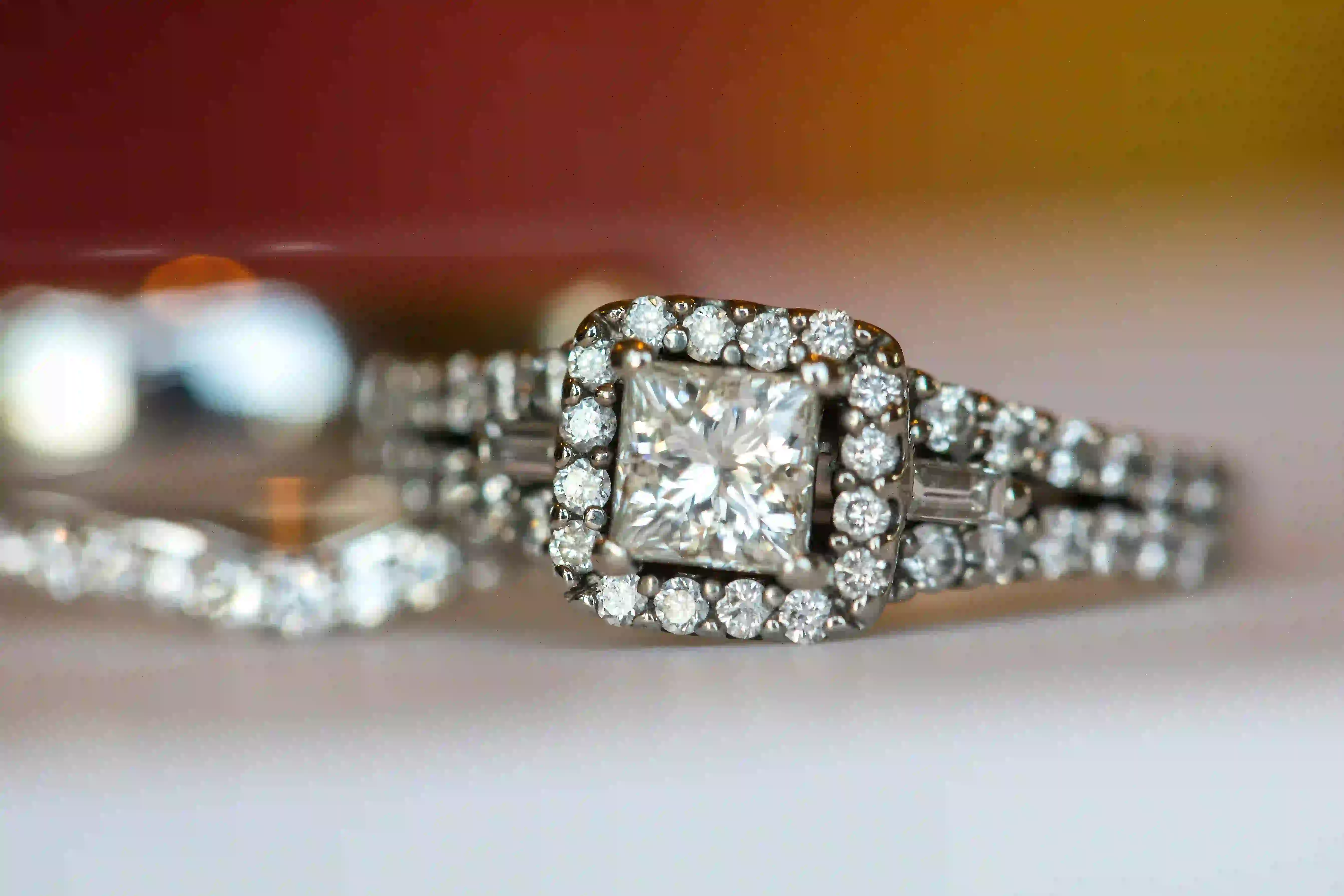
Section illustration

Sort and identify each piece

A box of inherited jewelry is not one lot, and pricing it as one is where value quietly disappears. Go through it item by item.

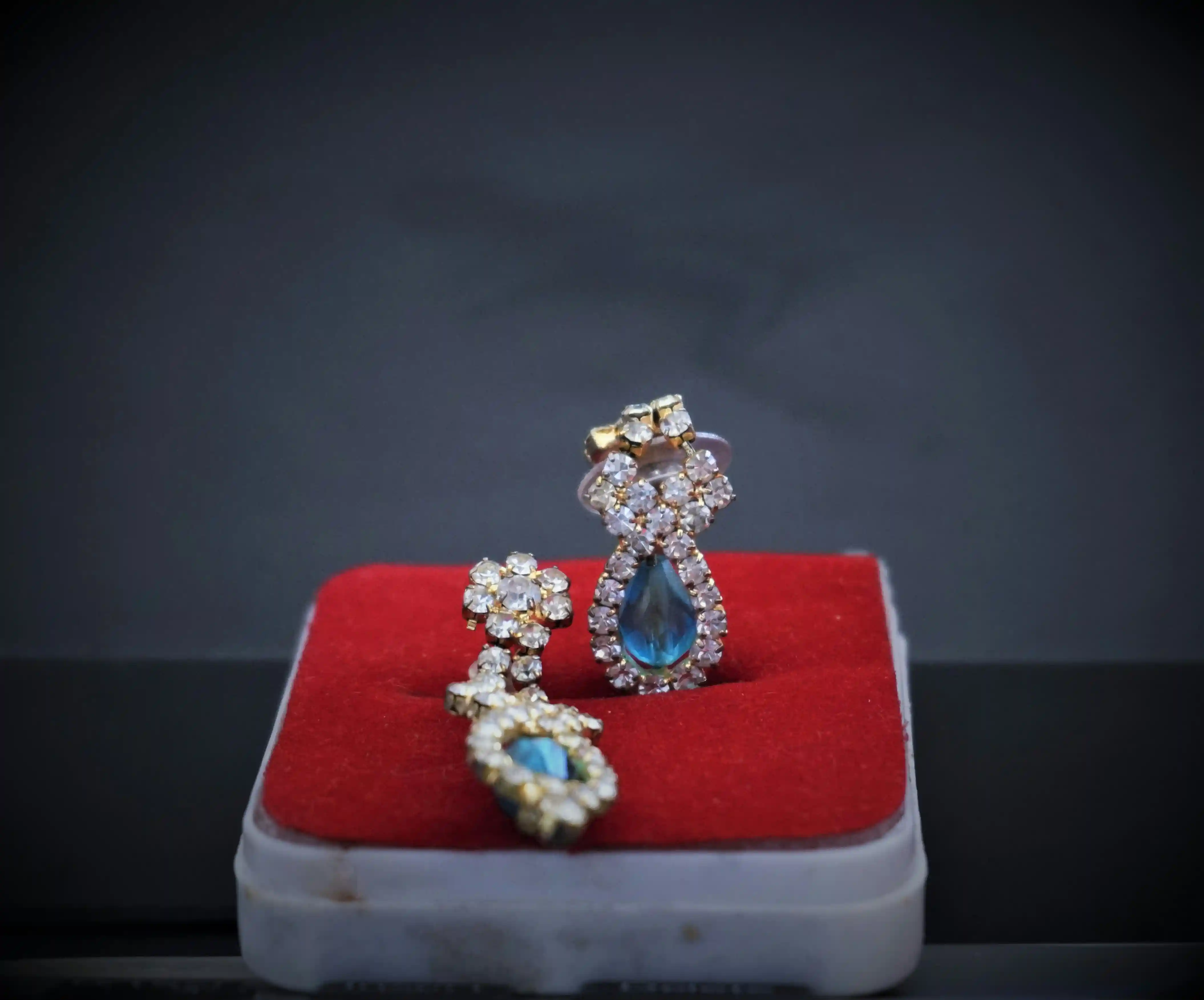
Be sure to photograph each complete piece then find the marks: 10K, 14K or 18K, or the fineness equivalents 417, 585 and 750, along with any maker’s signature, assay punch or serial number.

Clasps and findings are often a different metal from the body and are worth their own photograph. Note the damage as you go, and set aside whatever paperwork came with the estate. None of this requires you to know what anything is as it only requires that each piece is seen separately. Compare karat and fineness marks
‍

Section illustration

Separate metal, stones, and maker value

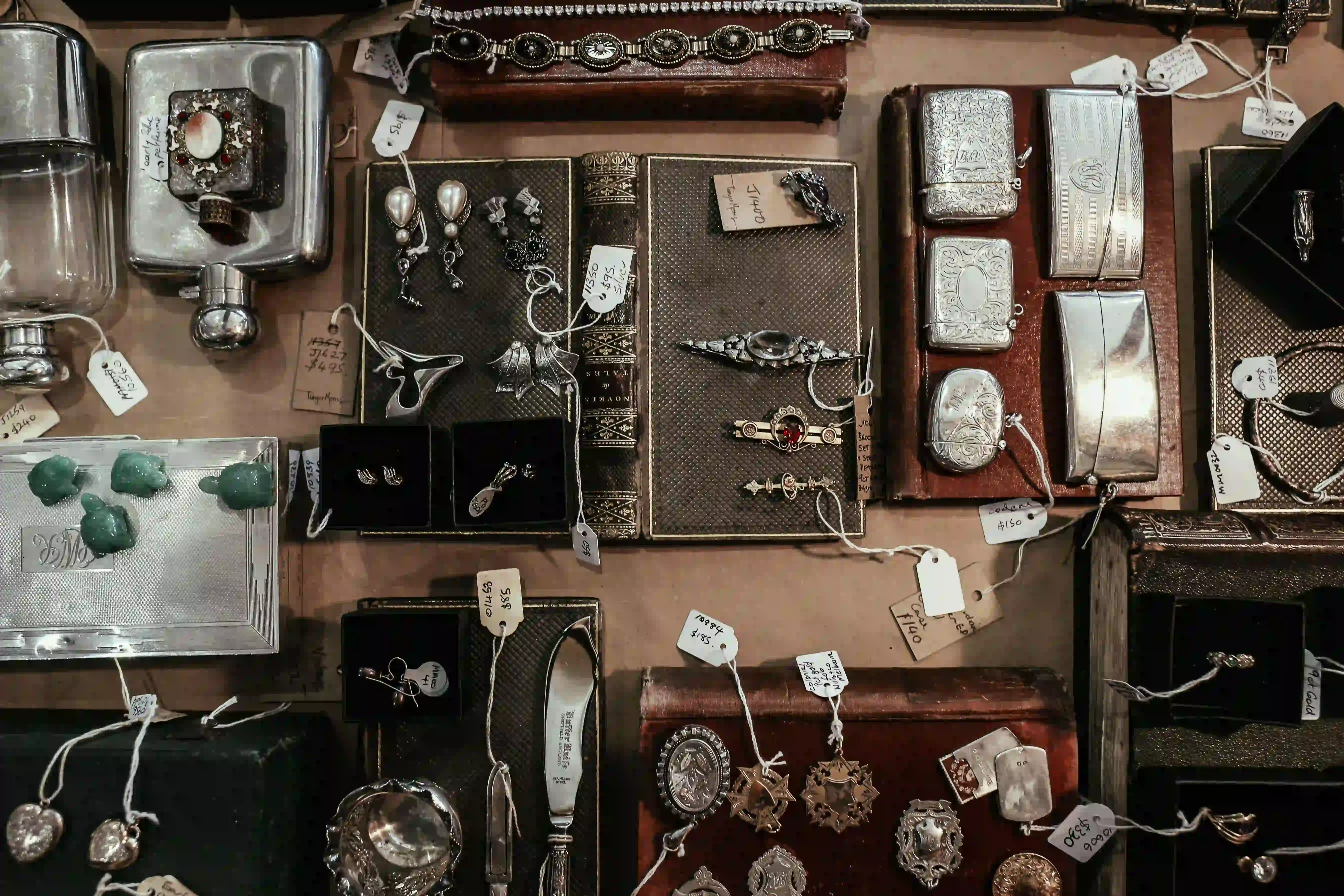
Every piece has a metal baseline: verified purity times net weight times the metal price at a stated moment. Net is what remains once stones, clasps, springs and any filler come out, so it is rarely what a household scale reads. 

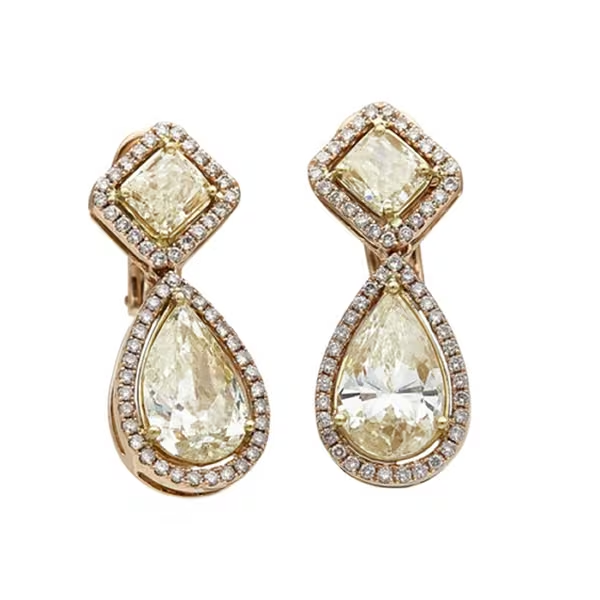
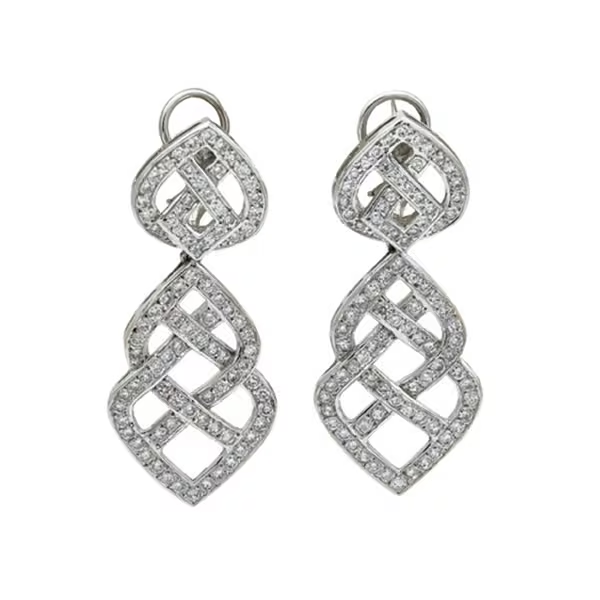
That baseline is the floor. Diamonds and colored gemstones are valued on their own characteristics, a recognized signature can carry value well beyond the materials, and hand-fabricated or period work holds value a weight calculation never sees. Demand decides how much of that translates into an offer, since appetite for particular styles and for individual makers moves over time.

For more information, click here to see how diamonds are valued.
‍

Section illustration

Condition and estate context matter

Estate pieces show their age, and that is expected. Worn prongs, broken clasps, missing stones and old repairs are recorded and factored in, not used to write a piece off.

Do not repair or polish anything first; the cost rarely returns in the offer, and on a period or signed piece refinishing can remove exactly what made it collectible.

Provenance helps where it can be documented, and current demand does the rest. Where an estate has several people with an interest in it, an independent estimate that itemizes each piece gives everyone the same set of facts to work from rather than competing impressions.

Note: Submit pieces as they are and decide what to sell after reviewing each estimate when dealing with a company like Unvault. Nothing obliges you to sell the whole group, or any of it.

‍

WHAT SELLERS SAY ABOUT UNVAULT

Read what people say about selling with Unvault

4.9
★★★★★
Trustpilot rating · rated “Excellent”
BBB · A+ Accredited
Jewelers Board of Trade
★★★★★

Great service. I was nervous about shipping my jewelry but everything went smoothly. Awesome communication and fast process. Will use again!

✓ Verified sale
Nicole
United States
Read on Trustpilot
★★★★★

Great company to work with easy to upload & the whole process took less than a week. For me I actually received $500 more than my estimate which was quite a surprise. I would definitely recommend & I would use this company again…

✓ Verified sale
Lisa
United States
Read on Trustpilot
★★★★★

Clean, simple process. You can trust Unvault with your valuables. Quick seamless and very helpful !
✓ Verified sale
Sharron
United States
Read on Trustpilot

Recent Valuations

Sold
Sold jewelry item
$6,016
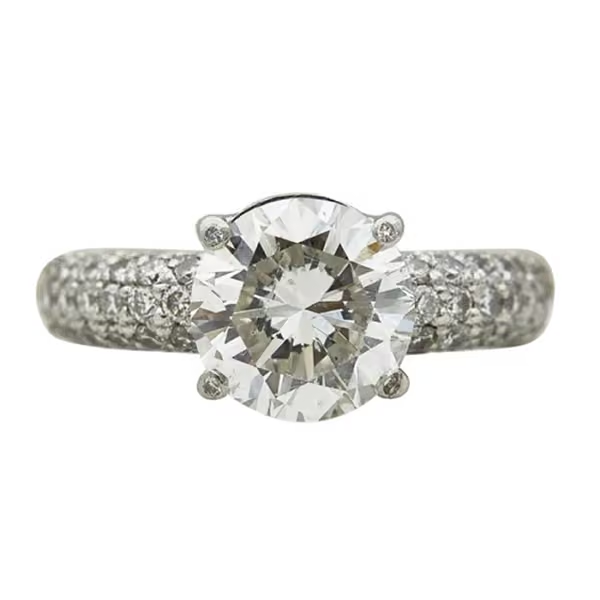
Ashlyn’s diamond ring
Sold
Sold jewelry item
$8,450
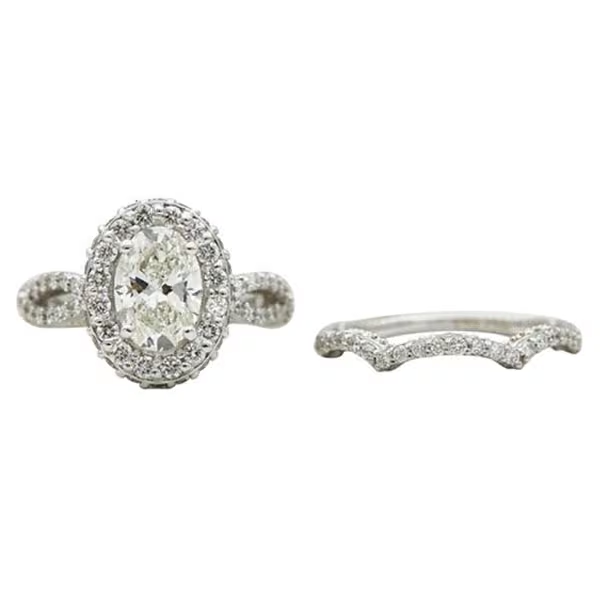
Alice’s oval halo ring
Sold
Sold jewelry item
$9,299
Steven’s diamond earrings
Sold
Sold jewelry item
$14,200
Priya’s diamond earrings
Sold
Sold jewelry item
$21,000
Jacquelyn’s eternity band
Sold
Sold jewelry item
$21,000
Jacquelyn’s eternity band
Questions, answered

Selling estate jewelry — FAQs

Why is the resale offer lower than the appraisal that came with the jewelry?

Because they are different measurements, not different opinions of the same one. A retail replacement appraisal, the kind written for insurance, estimates what buying a comparable piece in a store would cost today. An estate inventory or probate figure is prepared for tax and administration and follows its own rules. A fair market value estimates what a piece would fetch between willing parties. An auction estimate is a range set before a sale, not a result. A direct resale offer is what a buyer will pay you now; this would be after the costs of verifying, holding and reselling the piece. 

There is no fixed percentage between any two of these, and anyone quoting you one is guessing. Learn more here about how these figures differ

Can I sell inherited jewelry if I am the executor?

Often yes, but the authority comes from the estate rather than from possession, and the rules vary by jurisdiction. Some wills grant a personal representative power to sell chattels outright but others may require the beneficiaries’ agreement, a court authorization, or distribution in kind before anything can be sold.

Estates in probate, estates with minor beneficiaries and contested estates each carry their own restrictions. Read the governing documents and confirm with the estate’s attorney before committing to a sale. That is general information rather than legal advice. Getting pieces valued is a separate question and carries no obligation, so an itemized estimate is usually safe to obtain while the authority question is being settled. Get an itemized estimate

What if several heirs disagree about a piece?

Disagreements are usually about unequal information rather than unequal intentions. One person remembers what a piece cost, another has an old appraisal, a third has been told it is worth nothing. An independent itemized valuation replaces all of that with one document everyone can read, showing each piece separately with the metal, stones and any maker value broken out. That does not decide anything for you and importantly, it is not legal advice. What it does, however, is let a keep, divide or sell conversation happen over the same set of numbers. Where the disagreement is about entitlement rather than value, that belongs with the estate’s attorney.

How can I identify unfamiliar marks such as 585 or 750?

Most of what you will find is one of two systems saying the same thing. The karat system counts parts of gold out of 24, so 10K, 14K and 18K describe 41.7%, 58.5% and 75% gold. Millesimal fineness states the same purity as parts per thousand, which is where 417, 585 and 750 come from, along with 916 or 917 for 22K and 999 for 24K. Silver usually shows 925 for sterling, and platinum shows 950, PLAT or PT950. Alongside those you may find a maker’s punch, an assay office mark or a date letter, all worth photographing. Where a mark is missing, worn or does not match the metal, testing settles it.

Feel free to use our gold calculator.

Should I sell the collection together or piece by piece?

Identify everything first, then decide. Selling a mixed group as one lot is quick, and it is also how a signed piece, a good gemstone or a collectible item gets absorbed into an average. Anything with a recognized maker’s mark, a stone of real size or quality, a period style, or unusual construction deserves to be looked at on its own before any bulk figure is discussed. The remainder, the worn chains and odd earrings and broken findings, genuinely can be handled together. 

An itemized estimate will separate the two groups for you; which is the point of doing it before rather than after. See how signed pieces are handled.

What should I expect at an estate buyer, pawn shop, or auction house?

Three different trades with three different shapes. A specialist estate buyer brings the most category knowledge and will usually separate metal, stones and maker value, with payment on agreement. A pawn shop pays the fastest and prices for a quick turn; most often on metal weight alone, which suits worn gold and suits a signed brooch badly. An auction house can reach collectors and sometimes exceeds any direct offer, at the cost of certainty and time: there are seller’s commissions and fees, a sale date months out, and no guarantee a lot sells at all. 

Importantly, ask each one what test they used, what comes off the top, when you are paid, and whether you get the reasoning in writing.

Should damaged estate jewelry be repaired before selling?

No. Send it as it is. Repair costs are paid at retail and rarely come back in an offer, and on estate pieces the risk runs further than money. Refinishing, polishing or replacing original parts can: remove the surface, the wear pattern or the components that made a period or designer piece collectible, and that is not reversible. A snapped chain still holds all of its metal. A ring missing a stone is still valued on the metal, the remaining stones and the setting. Where a repair genuinely makes sense, it shows up in the assessment, and you can decide then with the numbers in front of you.

Is it safe to ship several inherited pieces to Unvault?

Yes, and multi-item shipments are ordinary. You ship on a free prepaid FedEx label, insured in transit and fully tracked, and everything is authenticated on camera when it arrives so you can watch rather than take the result on trust. 

Importantly, pack pieces individually, in soft pouches or tissue, so chains do not tangle and stones do not rub, and include the loose parts. You will then receive a written estimate covering each item separately, and you can accept some and decline others. Whatever you decline ships back free, with nothing owed. Insurance cover has an upper limit per shipment, so if the group is likely to exceed it, say so before you ship and the arrangements are set to match. Click here for more information on how the process works.

Start with a photo — takes 60 seconds

Not ready? Use the calculator — estimate first, sell only if the number works for you.
Get Free Valuation