
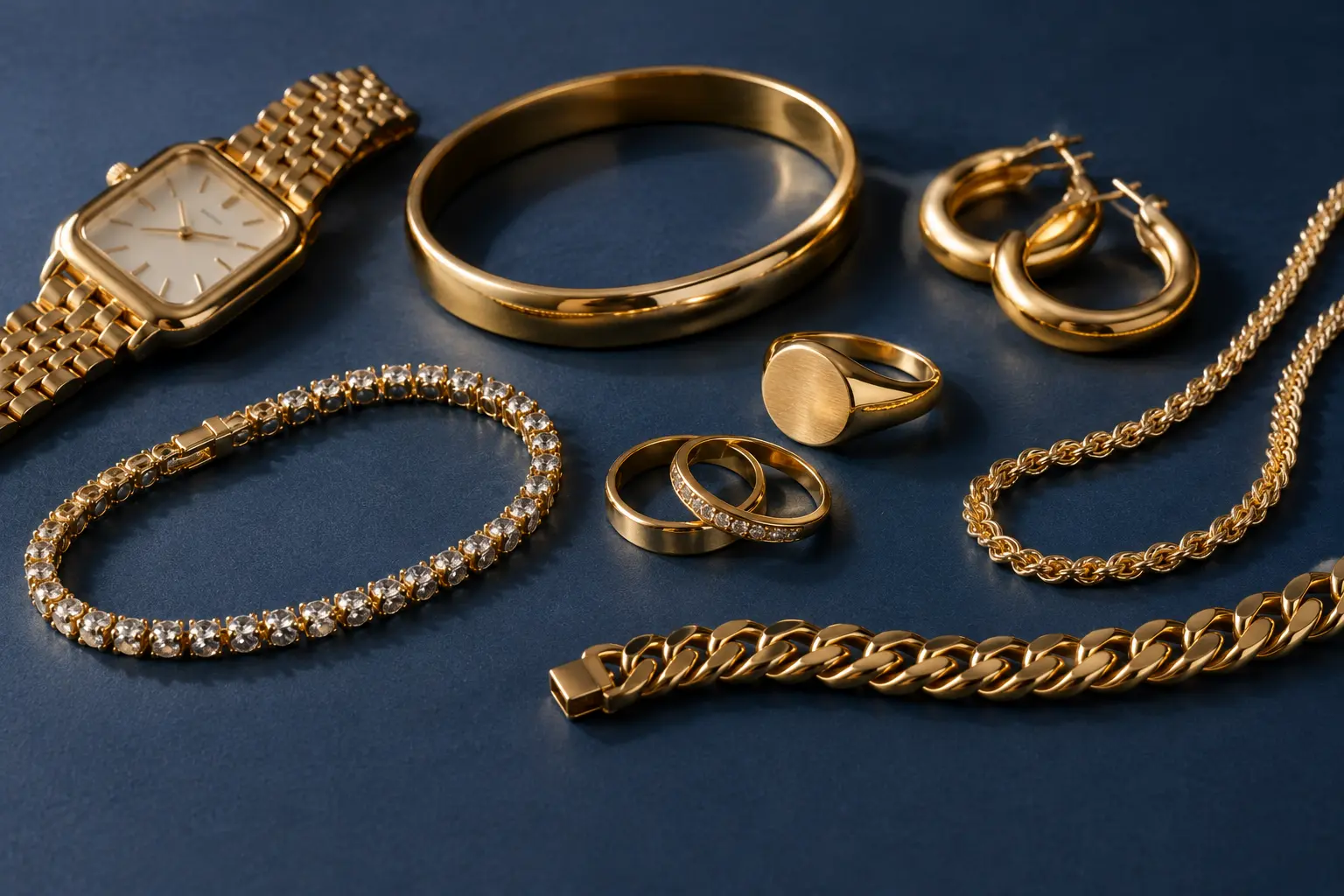
When buying or selling old jewelry, the type of gold it’s made from can play a big role in each piece’s worth. This may make it hard to evaluate what you have, especially when you’re not sure how many types of gold there are or how to tell them apart.
This guide aims to make those differences easier to recognize. Whether you’re jewelry shopping or trying to value a piece you already own, here’s how the type of gold affects cost.
How different types of gold jewelry are made
The first distinction to understand is that some jewelry is gold all the way through, while other pieces only have real gold on the surface. Here’s how common types like gold-filled and solid gold compare:
- Gold-plated jewelry: If you’re not sure what gold-plated means, imagine a brass ring overlaid with a very thin layer of gold. While that top layer is real gold, most of the ring isn’t, reducing its value. Over time, the gold layer may also wear down, especially on pieces you wear often.
- Gold vermeil jewelry: Gold vermeil is what gold-plated jewelry is called when the metal underneath is sterling silver.
- Gold-filled jewelry: Gold-filled jewelry is similar to gold-plated pieces, but there’s more actual gold involved. Instead of a thin coating, the manufacturer bonds a thick layer of gold to a base metal (again, often brass).
- Solid gold jewelry: Solid gold pieces are made from an alloy of gold mixed with other metals. Those additional metals can include copper, silver, nickel, and palladium. The amount of gold depends on the jewelry’s karat; for example, a 14K piece is 58.3% gold and an 18K piece is 75% gold.
Types of gold by color
Pure gold is yellow, while other colors come from mixing in non-gold metals to create an alloy. Keep in mind that color can’t tell you how pure the gold is: a white gold ring and a yellow gold ring can both be 14K.
These are the most popular gold jewelry colors:
- Yellow gold: Yellow is the color most closely associated with pure gold, but yellow pieces are still usually alloys. Gold is mixed with metals like silver and copper to make it stronger and more practical to wear. The higher the karat is, the more gold the alloy contains and the richer its yellow color will (usually) appear.
- White gold: White gold gets its lighter, silvery appearance from the metals mixed with it, which might include palladium, nickel, or silver. Many white gold pieces are also coated with rhodium to give them a brighter finish. That coating can wear down over time, so a piece may need to be replated to maintain its original appearance.
- Rose gold: The pinkish color of rose gold comes primarily from copper. The more copper in the alloy, the warmer or redder the finished piece will look.
Types of gold by karat
Karat tells you how much of a gold alloy is actually gold. The higher the karat, the greater the percentage of pure gold, which contributes to a higher metal price per gram.
In the U.S., you’ll see these karats most often:
- 24K gold: At 99.9% gold, 24K is as close to pure gold as you’ll typically find. That purity gives 24K jewelry a rich yellow color, but it also makes the metal relatively soft. For that reason, 24K gold is less common in pieces meant to stand up to everyday wear.
- 22K gold: 22K gold is 91.7% pure gold, with the remaining 8.3% made up of other metals. It retains pure gold’s deep yellow color, while gaining some strength from the added metals. 22K pieces are still relatively soft, though, especially when compared to lower-karat gold.
- 18K gold: 18k is 75% pure gold. The higher proportion of added metals makes this jewelry more durable than 22K or 24K gold, and it can also influence the color.
- 14K gold: 14k is 58.3% gold, mixed with plenty of more durable metals. The lower gold content makes these alloys stronger and more affordable than higher-karat designs, which is why you’ll often find 14K jewelry made for everyday wear.
While karat is important, knowing a piece is 14K doesn’t tell you what your jewelry is actually worth. A delicate chain and a chunky bracelet may have the same karat stamp, but weight affects how much gold each contains.
Types of gold by finish
The finish is the final treatment applied to the surface of gold jewelry, giving it anything from a high shine to a more textured look. Finish can also affect how quickly a piece shows scratches and how you’ll clean the gold jewelry without changing its appearance.
Here’s a quick guide to the common finishes:
- Polished gold: Polished gold has a smooth, shiny surface that reflects plenty of light. This is the classic high-gloss finish you’ll see on everything from wedding bands to chains. The shine also makes scratches easier to spot. A jeweler can usually repolish the surface, although repeated polishing removes a small amount of metal each time.
- Matte gold: Matte gold has a soft, nonreflective surface. To achieve this effect, the manufacturer creates a fine texture across the metal, which diffuses light instead of reflecting it. A matte finish tends to hide small scratches better than polished gold. But high-contact areas may get worn down over time, which makes them look smoother.
- Brushed gold: Brushed gold has fine, visible lines running across its surface. Those lines are created with an abrasive tool, and they give the metal a textured look without taking away its metallic sheen entirely. Because the pattern is directional, scratches that cut across it may be more noticeable.
- Hammered gold: Hammered gold gets its texture from small indentations made across the jewelry’s surface. Those uneven facets catch the light at different angles, giving the piece more movement than a matte or brushed finish. The irregular surface tends to hide scratches and wear better than other styles.
Calculate the value of your gold jewelry with Unvault
A broken chain or orphaned earring that you’d consider junk can still have value, depending on how much gold it contains. Even if you don’t know everything about how a piece was made, you can estimate its value as long as you know its karat and weight. Together, those details will help you estimate your gold jewelry’s value based on the amount of pure gold in the piece and the current gold price.
For jewelry that may have value beyond its gold content, appraisal methods become more nuanced. Factors like condition, gemstones, craftsmanship, and designer provenance may all affect what you receive from reselling your jewelry.
Want a gold appraisal to see what your jewelry is worth? Get your free valuation with Unvault today.
Frequently asked questions
Know what your jewelry is worth before you sell.
Monthly gold-price context and hallmark guides from Unvault’s gemologists. No spam, unsubscribe anytime.
Related posts
.webp)


Ready to see what your jewelry is worth?