New: Unvault featured on Bloomberg  

Home
›
›
Sell Silver Coins
SELL YOUR SILVER COINS

Sell your silver coins online

See what your silver coins could fetch before you decide what to do next. Start with a few photos, review your itemized estimate, then ship only if the offer feels right.

★★★★★
4.9 · See Trustpilot reviews · “Excellent”
Insured shipping
Authenticated on camera
4.9 ★ Trustpilot rating
No-obligation to sell

Free insured FedEx label · nothing owed if you decline · shipped back free · payment sent 1 business day after acceptance

Prices update daily - your offer holds for 30 days.
Jewelry photograph
SELLERS TRUST UNVAULT

Priced first. Sold only if you choose.

200,000+
Valuations completed
$140M+
Jewelry tracked
BBB Accredited
Guaranteed transparency accross valuations
ONLINE SILVER COINS VALUATION

Get a free a valuation for your silver in 3 simple steps

See what your silver coins could sell for before deciding what to do next.

01

Upload photos of your silver coins

Step illustration
02

Receive an itemized estimate

Step illustration
03

Sell when ready

Step illustration

In less than a minute, you’ll receive a detailed valuation.

Get Instant Valuation
Why Unvault

The best place to sell silver coins online

A quick buyer may reduce silver coins to a single number without showing how purity, specifications, condition, or market demand affect it. Unvault provides an estimate first, so you can understand the basis and decide whether to continue.

The old way
Pawn / mail-in
  • A fast quote with little explanation
  • Category value reduced to one simple test
  • Pressure to hand over the item before understanding the offer
  • You keep just 30–50%
The Unvault way
Value first
  • An itemized estimate before you ship
  • Relevant specifications and condition reviewed together
  • Clearer net proceeds and process terms
  • You decide whether to continue after seeing the estimate
The value breakdown

What determines the value when you sell silver coins

Silver coins are not all valued the same way. Some are worth mainly the silver they contain. Others may be worth more because of their type, age, condition or collector demand.
Section illustration

Identify each coin before grouping it as silver

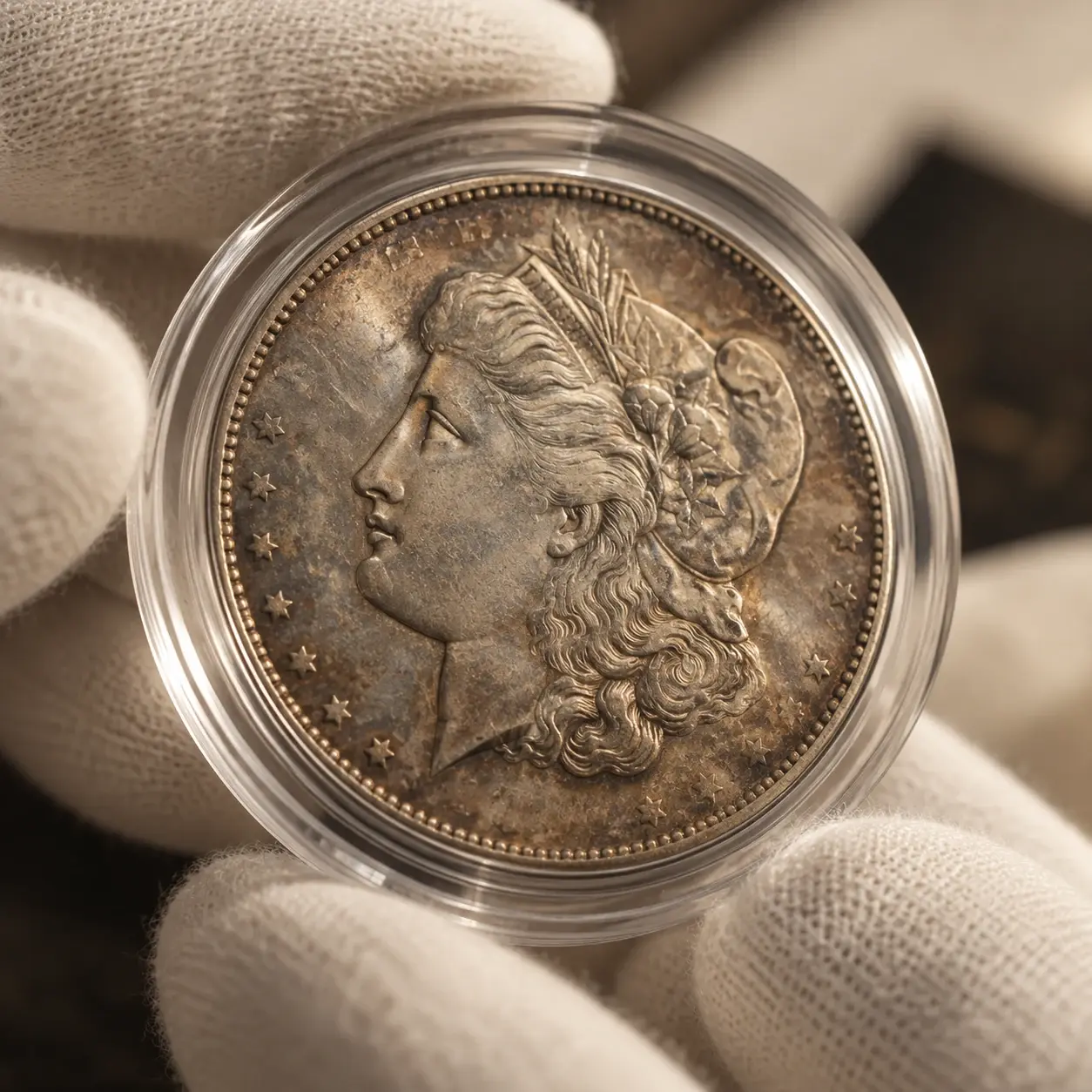
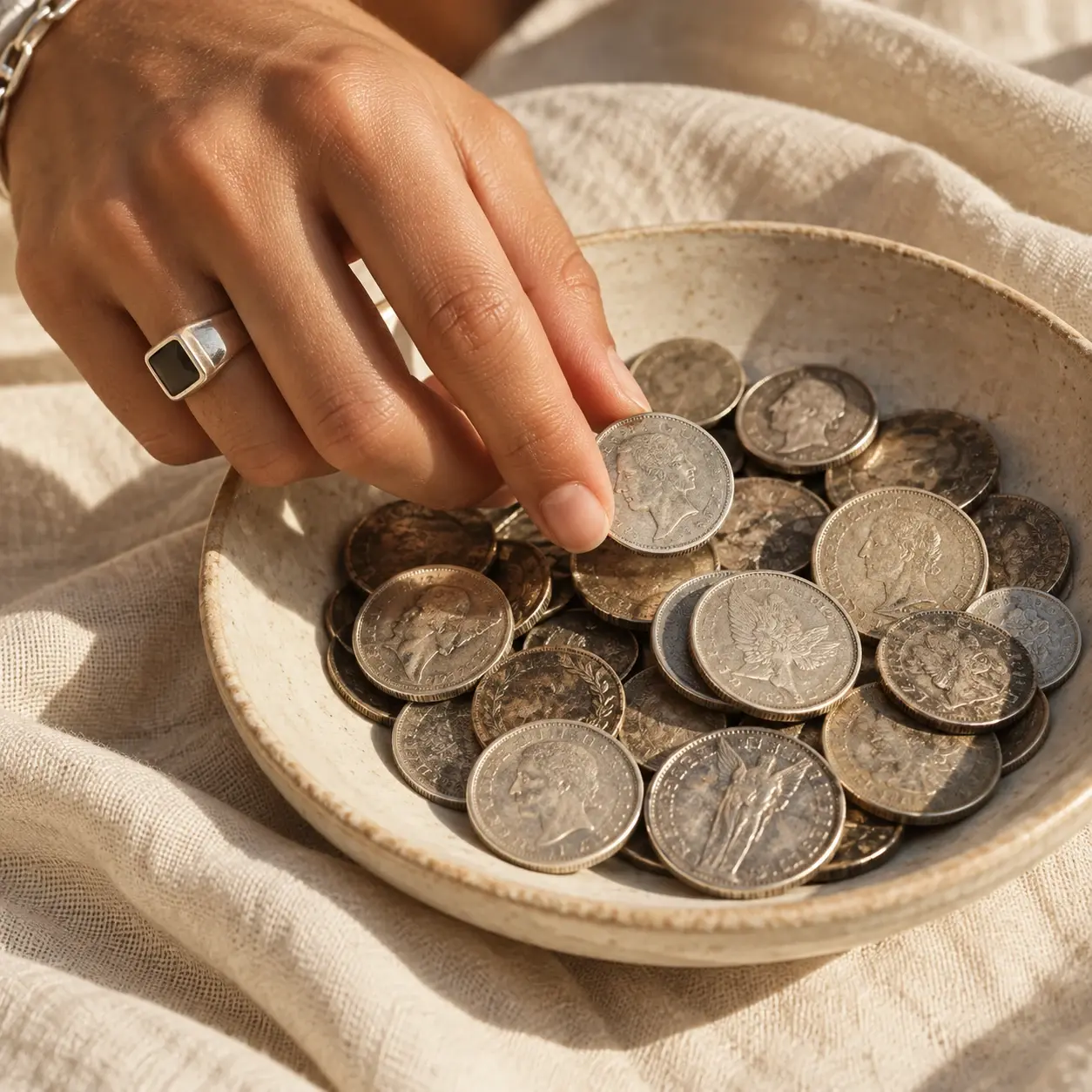
Start by working out what you have. Country, denomination, date, mint mark, weight and fineness separate a bullion round from junk silver from something a collector would pay a premium for.

In US coinage, dimes, quarters and half dollars dated 1964 or earlier are 90 percent silver. Half dollars from 1965 to 1970 are 40 percent. Nickels struck between 1942 and 1945 with a large mint mark above Monticello are 35 percent. Circulating coins after that are clad and hold no silver.

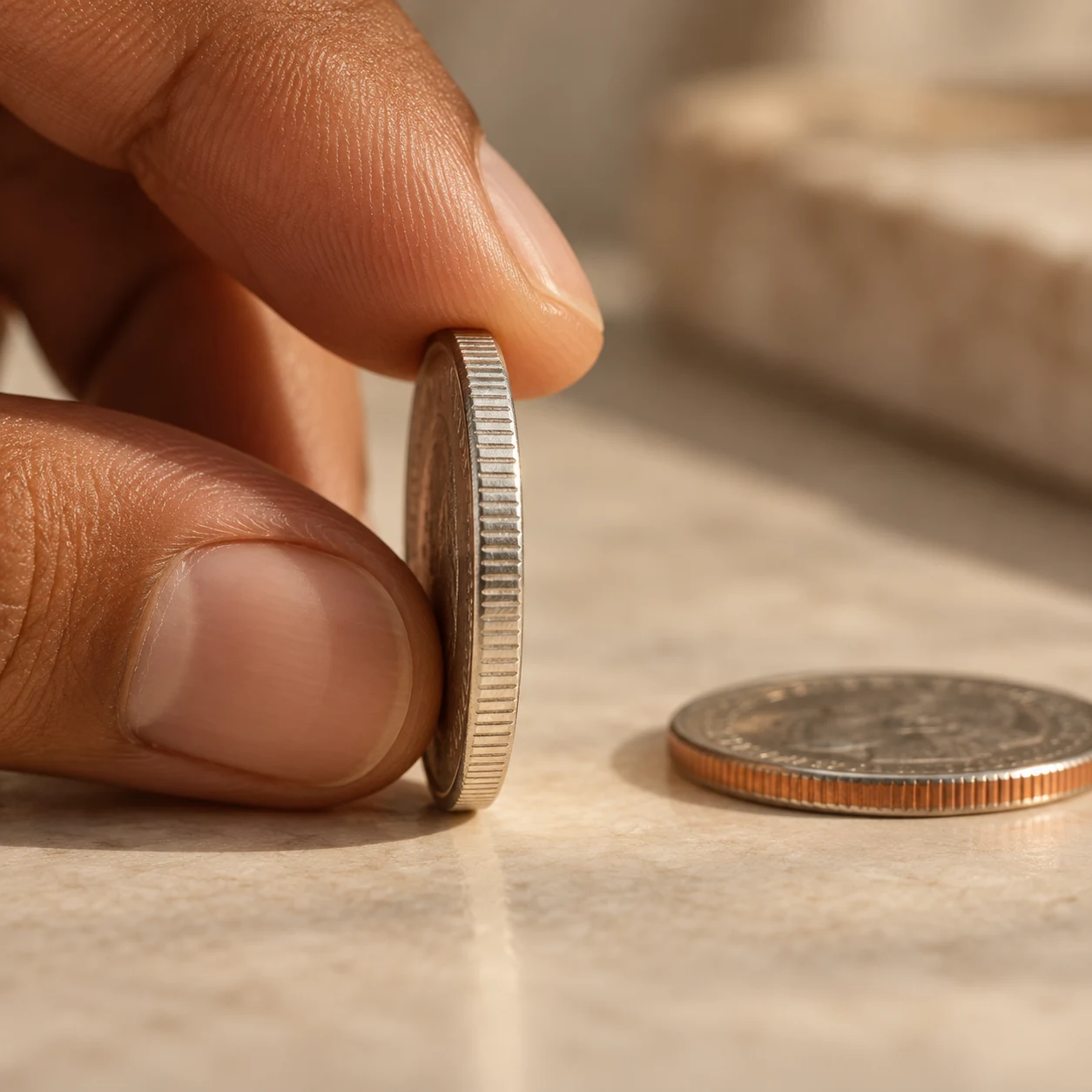
A silver colored coin is not a silver coin. The edge is the quickest tell: clad coins show a copper stripe around the rim, solid silver ones do not.
Section illustration

Metal value creates a baseline

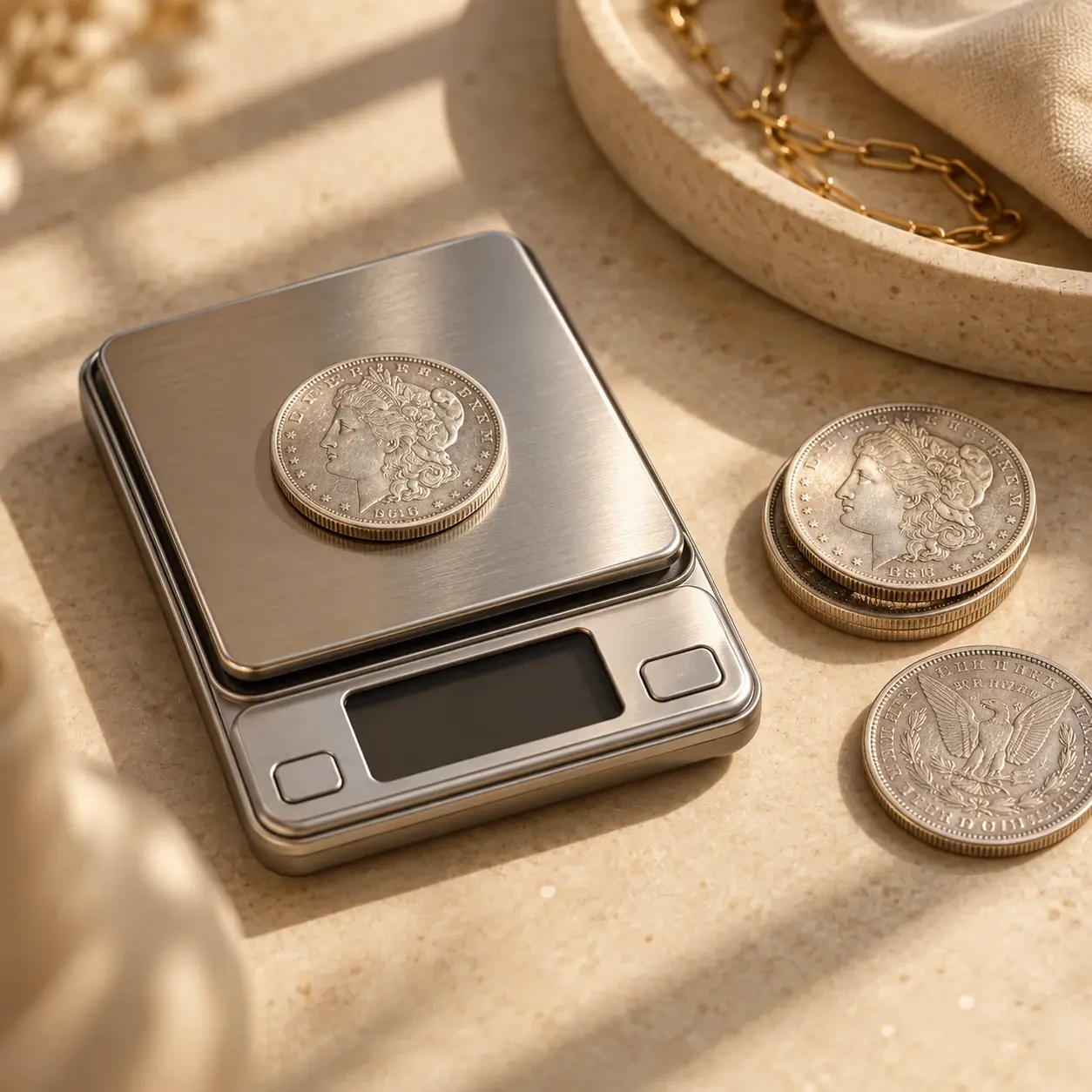
Once the coins are sorted, the metal side is arithmetic. What counts is the actual silver weight, which is neither the coin's weight nor its face value. A pre-1965 US quarter weighs 6.25 grams at 90 percent silver, so it holds roughly 0.18 troy ounces. The twenty five cents is irrelevant.

Silver is quoted per troy ounce, about 31.1 grams, heavier than the ordinary ounce most people picture. Prices move all day while markets are open, so any figure you are quoted should come with the time it was taken.

Wear matters too. A coin that circulated for fifty years has lost a little metal along the way, and buyers pricing by weight allow for that.
Section illustration

Condition, rarity, and demand may add value

Melt is the floor. Above it sit the factors that make one coin more desirable than another of the same weight: grade, mintage, minting errors, rarity by date or mint, and whether it has been certified by a recognized grading service.

Collector demand moves separately from the silver price. A common date in worn condition tracks metal closely. A key date, a low mintage year or an unusually well struck example can be worth many times its silver content, and the scale will never tell you that.

Two things not to do before anyone has looked at your coins: do not clean them, and do not crack certified coins out of their holders. The holder is part of what the market pays for.

WHAT SELLERS SAY ABOUT UNVAULT

Read what people say about selling gold bars with Unvault

4.9
★★★★★
Trustpilot rating · rated “Excellent”
BBB · A+ Accredited
Jewelers Board of Trade
★★★★★

Selling my jewelry with Unvault was easy. A great experience. I was offered a fair price for my pieces of jewelry. Even my broken chains, one only earrings with no backs, Unvault bought it all. All my jewelry was tracked. I had no stress or worries. The whole process took less than a week. Cash in hand.

✓ Verified sale
Susan Howard
United States
Read on Trustpilot
★★★★★

From sending my pieces out to the final appraisal everything was quick, easy, and super transparent! Videos for each item helped understand the process and how the final valuation was made. I would use them again!

✓ Verified sale
Steffani Atkinson
United States
Read on Trustpilot
★★★★★

Found the entire process to be very transparent and easy. Also, very satisfied with the price I was offered - unvault offered me the highest valuation compared to all other options I was considering.
✓ Verified sale
Showroop Pokhrel
United States
Read on Trustpilot

Recent Valuations

Sold
Sold jewelry item
$6,016
Ashlyn’s diamond ring
Sold
Sold jewelry item
$8,450
Alice’s oval halo ring
Sold
Sold jewelry item
$9,299
Steven’s diamond earrings
Sold
Sold jewelry item
$14,200
Priya’s diamond earrings
Sold
Sold jewelry item
$21,000
Jacquelyn’s eternity band
Sold
Sold jewelry item
$21,000
Jacquelyn’s eternity band
Questions, answered

Selling silver coins — FAQs

How do I know whether my old coins contain silver?

Date and denomination will tell you most of it. Dimes, quarters and half dollars from 1964 and earlier in the US are 90 percent silver, half dollars from 1965 to 1970 are 40 percent, and nickels from 1942 to 1945 with a large mint mark above Monticello are 35 percent. Foreign coins vary enormously and have to be checked country by country.

The edge is the fastest physical check. A clad coin shows a copper line around the rim. A solid silver one does not.

Group the coins by date and denomination before anything goes on a scale, and photograph both sides and the edge. A date check will not catch a counterfeit or a plated piece, though, and heavily worn coins can be hard to read, so weight and dimensions get confirmed properly at verification.

What is the difference between junk silver, bullion, and collectible coins?

Junk silver is circulating coinage that contains silver but has no collector value above that. The typical example is worn pre-1965 US dimes and quarters, and they trade on metal content.

Bullion coins are made to be bought for their metal. An American Silver Eagle is one troy ounce of .999 fine silver, trading against the silver price plus a variable product premium that moves with the market.

Collectible coins are worth what they are, not what they weigh. Price rests on grade, mintage, mint mark, errors and demand, and the silver content can be almost beside the point.

Most people who bring us a jar or an inherited bag have some of all three mixed together, so separate them before you request a valuation. Bars belong on the silver bars page, and a mixed household lot with flatware or jewelry in it is better handled through sell silver. The line between junk and collectible is not always obvious: a worn common date is easy to call, a scarce year in the same condition is not.

Should I clean silver coins before selling them?

No, and this is one worth being firm about. Cleaning leaves fine hairlines and flat unnatural surfaces that any grader sees right away. Certified coins get marked as cleaned and the value goes down with it. Tarnish and toning are not damage, and on some coins attractive toning is actively sought after by collectors.

Handle coins by the edge, keep them out of PVC flips, and photograph them exactly as they are. Cleaning cannot be undone, so if coins have already been cleaned, say so at the start rather than having the estimate revised later.

How is the melt value of silver coins calculated?

Actual silver weight multiplied by the silver price at a given moment. The actual silver weight is the part people get wrong, because it is neither the weight of the coin nor anything to do with its face value.

As a working figure, one dollar face value of pre-1965 US dimes, quarters or half dollars contains about 0.715 troy ounces of silver, before wear is taken into account. Multiply that by the price of silver and you have the metal baseline.

Ask any buyer for four things: the actual silver weight they calculated, the silver price they used, the time it was taken, and every deduction applied. Melt is where the offer starts rather than where it lands, since refining, handling and the buyer's margin come off it, and none of that is a fixed percentage anyone can quote you before seeing the coins.

Where is the best place to sell silver coins?

It depends on what you have, which is why sorting matters. Bullion and junk silver are commodity sales, priced by bullion dealers, online buyers and coin shops against spot with a spread. Collectible coins are a different market, and a specialist dealer or auction will usually do better on those than selling by weight.

The venue rarely decides your outcome. It is the spread, the fees, who pays for shipping and insurance, and how long you wait for the money.

Get two or three quotes on the same day, each with a timestamp, and compare what actually lands in your account rather than the headline number. Quotes taken on different days are not comparable, because the silver price will have moved between them.

What should I expect from a pawn shop or coin dealer?

Two very different things. A pawn shop is built for speed and will normally price a mixed lot by weight, which means anything collectible in the bag gets averaged away with everything else. A specialist coin dealer will generally pick out the collectible pieces and price them separately, though what they offer varies with whatever they are already holding that week.

Neither is the wrong answer. It comes down to whether you need money today or the best result on the few pieces that deserve one.

Four questions before you hand anything over.

  1. What actual silver weight did you calculate?
  2. What silver price, and at what time?
  3. What is your spread or fee?
  4. Did you assess any of these as collectible rather than as metal?

A verbal quote is not an offer. Get it in writing, with the time on it, before you agree to anything.

Can I sell silver coins without certificates or packaging?

Yes. Coins carry their own evidence: the date, mint mark, denomination, weight, dimensions and edge are all visible and verifiable, so a coin with no paperwork whatsoever is perfectly sellable.

Certification and original packaging do help. A slab from a recognized grading service settles the question of grade before anyone can argue about it, and original mint packaging counts on modern commemoratives and proof sets. Both widen the buyer pool.

Send the coins as they are and photograph any slab labels and original packaging alongside them. Without certification the grade is assessed in hand, so a preliminary estimate on a possible collectible carries more uncertainty than one on plain bullion.

How can I ship silver coins safely and avoid marketplace scams?

Coins are small, valuable and easy to dispute, which is exactly what makes them a target. Most of the trouble happens in marketplace sales where you ship first and argue afterwards, and where a buyer can claim the coin that arrived is not the coin you sent. There is more on selling online without getting scammed and on whether it is safe to ship.

The protection is documentation. Photograph every coin and the sealed package before it leaves you. Use tracked shipping with insurance that genuinely covers coins and bullion, since plenty of standard policies exclude them or cap them well below what the parcel is worth.

With Unvault you get a free prepaid, fully insured FedEx label, your coins are examined on camera and you receive video of that inspection, and the final offer is itemized. Decline it and the coins come back free with insured return shipping. Payment goes out one business day after you accept. The full process is on how Unvault works.

Before shipping anywhere, get four things in writing: who insures the parcel and up to what value, whether the inspection is documented, how long the offer stands, and who pays return shipping if you decline. Return shipping insurance is limited to the authenticated value of the items, so what you declare and what gets authenticated need to line up.

‍

Ready to see what your jewelry is worth?

Free valuation in 60 seconds. Sell if you want.
Get Instant Valuation
Questions? We’re here to help. Contact us