
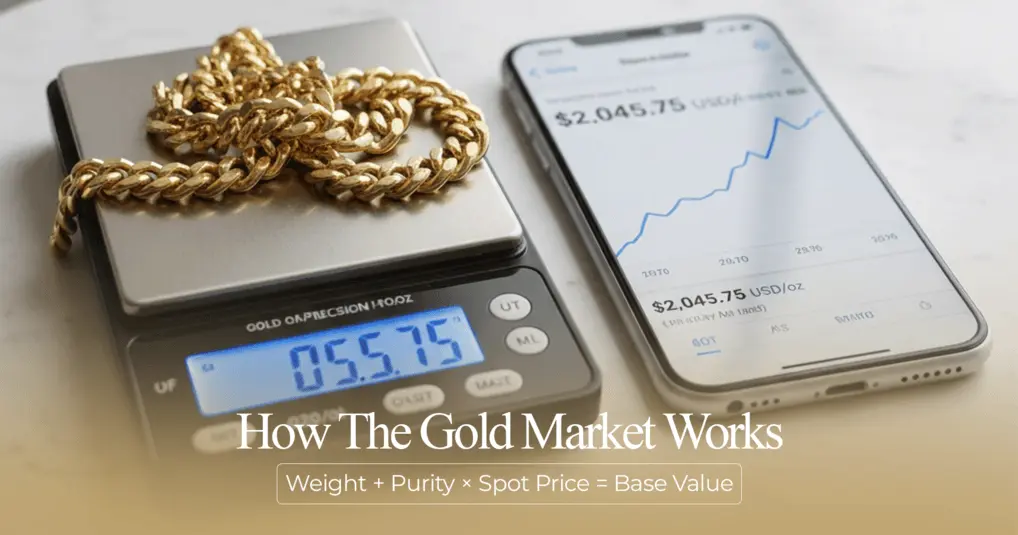
Estimate gold jewelry’s melt value by multiplying its weight by its gold-purity percentage, then multiplying the pure-gold weight by the current gold price in the same unit. The result is a baseline, not a guaranteed offer: buyers may deduct refining and operating costs, while brand, gemstones, and condition can add resale value.
Gold jewelry feels complicated until you break it down. Once you understand how pricing works, calculating its value becomes surprisingly straightforward. The problem is that most sellers are never shown the math, which makes the process feel opaque and unfair.
Gold is valued based on three main factors: purity, weight, and the current spot price. Purity refers to how much pure gold is in the piece. Common purities include fourteen karat, eighteen karat, and twenty-four karat.
The higher the karat, the more gold content the jewelry contains.
Weight is measured in grams. Even small differences in weight can change the value noticeably, which is why accurate weighing matters. The spot price is the global market price of gold and changes daily based on supply and demand. This price sets the baseline value of gold worldwide.
To calculate value, the weight of the gold is adjusted based on purity and multiplied by the spot price. This gives the raw gold value before any deductions. Buyers then apply fees related to melting, refining, and operations. These deductions are standard across the industry, but the percentage varies widely depending on transparency and business model.
The spot price is the global market price of gold and changes daily based on supply and demand. This price sets the baseline value of gold worldwide. You can see how current spot prices affect your specific piece using our free jewelry valuation tool.
What often shocks sellers is that making charges don’t carry over into resale. The intricate design that made a piece expensive at retail usually doesn’t add value once the jewelry is melted down. This isn’t unfair; it’s simply how the gold market works.
Problems arise when buyers don’t explain this clearly. Without seeing how the number was calculated, sellers assume they’re being shortchanged. Transparent valuation replaces suspicion with understanding.
Knowing how to calculate gold jewelry value gives you leverage. You can sanity-check offers, ask informed questions, and make confident decisions. Whether you choose to sell now or later, knowledge puts the control back in your hands.
Frequently asked questions
Know what your jewelry is worth before you sell.
Monthly gold-price context and hallmark guides from Unvault’s gemologists. No spam, unsubscribe anytime.
Related posts
.webp)


Ready to see what your jewelry is worth?