
Gold appraisal has two stages. Purity testing (hallmark inspection, acid, electronic, and XRF testing) confirms what the gold is. Valuation then assigns a price based on purpose: replacement value for insurance, fair market value for estates and taxes, or liquidation value for selling. XRF is the most accurate non-destructive purity test.
Why would two certified appraisers look at the same gold bracelet and come back with completely different numbers?
It's not because one of them is dishonest. It's because "gold appraisal" actually covers two separate processes, and most people only know about the first one.
Understanding the difference between purity testing and valuation methods is the key to knowing whether a jewelry appraisal is accurate, fair, or designed to work against you.
This post breaks down both sides: the physical tests that confirm what your gold is and the valuation frameworks that determine what it's worth. With the price of gold hovering at historic highs, that distinction has never mattered more.
What "Gold Appraisal Methods" Actually Means
When most people search for gold appraisal methods, they find articles about acid tests and electronic scanners. That's only half the story.
The jewelry appraisal process involves two distinct stages.
- The first is purity testing, confirming the karat, weight, and composition of the metal.
- The second is valuation, applying a methodology to assign a dollar figure based on purpose, market conditions, and scope.
Purity testing tells you what your gold is. Valuation tells you what it's worth.
Two appraisals can use identical purity results and still produce numbers thousands of dollars apart, simply because they're measuring value for different purposes.
Know the number before you make a decision. Get a free 60-second gold valuation.
How Gold Is Physically Tested
Before any valuation happens, the gold itself needs to be verified. In the precious metals industry, this verification step is technically called assaying, the process of determining the composition and fineness of a metal.
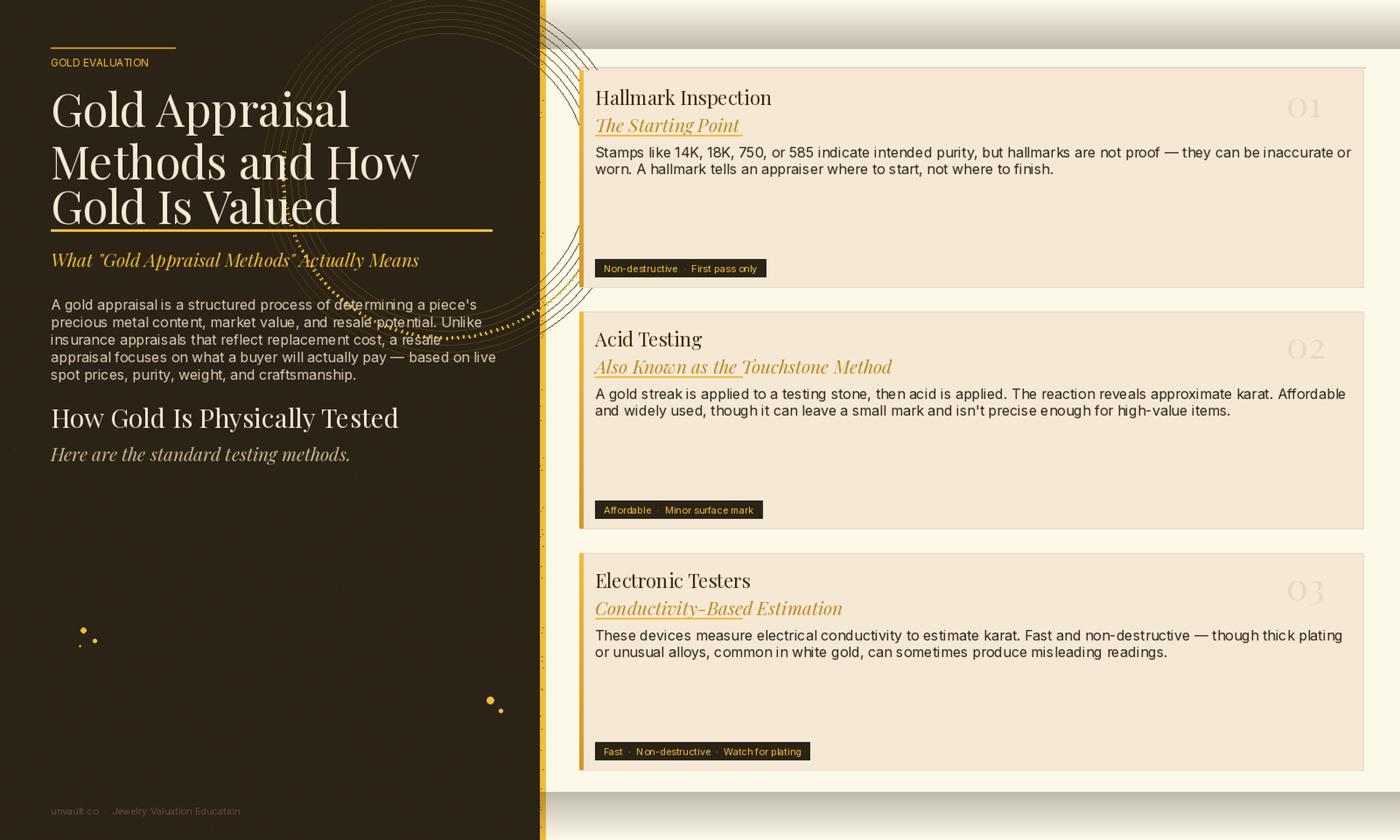
Here are the standard testing methods.
Hallmark inspection
This is the starting point. Stamps like 14K, 18K gold, 750, or 585 indicate the intended purity of gold, but hallmarks are not proof; they can be inaccurate or worn. A hallmark tells an appraiser where to start, not where to finish.
Acid testing
Also known as the touchstone method, this involves applying acid to a gold streak on a testing stone. The reaction reveals the approximate karat. It's affordable and widely used, but it can leave a small mark and isn't precise enough for high-value gold items.
Electronic testers
These measure electrical conductivity to estimate karat. They're fast and non-destructive, though thick plating or unusual alloys, common in white gold, can sometimes produce misleading readings.
XRF (X-ray fluorescence) testing
This is the gold standard for non-destructive purity analysis. It reads elemental composition with high precision,¹ identifying gold content along with silver, copper, palladium, and other alloys, without damaging the piece.
This is the method most professional appraisers and gemological laboratories rely on.
Weight and density testing
This rounds out the assessment. Gold's specific density (19.3 g/cm³) is difficult to fake, making water displacement measurement an effective cross-check.
Historically, a fire assay, which involves melting a sample to isolate pure gold, was the definitive test for bullion and coins. It's destructive, so it's rarely used for jewelry today, but it remains the benchmark for refinery-grade verification.
No single test is definitive on its own. Professional appraisals typically combine two or more methods to confirm purity with confidence.
When your jewelry arrives, Unvault verifies every piece using multiple industry-standard methods, including hallmark inspection, electronic testing, and XRF analysis. The entire process is video-documented, and your final offer reflects verified composition paired with live market data.

The Three Types of Gold Valuation
This is where your number actually comes from. Most articles skip it entirely.
Fair Market Value
The price a willing buyer would pay a willing seller, with both informed and neither under pressure. This is the IRS-defined standard for estate settlements, equitable distribution in divorce, tax purposes, and charitable donations.
It considers gold content, craftsmanship, brand, and condition.
Replacement Value
The cost to replace the piece of jewelry at current retail prices. This is the highest number you'll see and the standard for insurance purposes.
A 14K bracelet with a fair market value of $1,800 might carry a replacement value of $3,500+, reflecting full retail markup including design, labor, and brand premium.
Here's a concrete example of how these numbers diverge. That same 14K bracelet weighing 40 grams at today's market price contains roughly $1,600 in melt value. An insurance appraisal says $3,500. A resale platform might offer $2,000.
None of those numbers is wrong; they're just answering different questions.
Liquidation Value (Immediate Sale Value)
The amount your gold would bring in a prompt sale. This is the most conservative number, often centered on melt value, the raw worth of gold content based on weight, purity, and the spot price per troy ounce, minus a buyer's margin.
For bullion bars and coins, the liquidation value closely tracks the spot price. For jewelry, the gap is wider because craftsmanship and design don't factor into melt calculations.
How They Compare
- Fair market value sits in the middle. It's the standard for estate tax, charitable donations, and divorce settlements.
- Replacement value is the highest number you'll see, used almost exclusively for insurance coverage.
- Liquidation value is the lowest, reflecting what you'd actually receive selling gold to a dealer or platform.
The spread between these three can be significant, even for the same piece, because each one is measuring value² for a completely different purpose.
Why Two Appraisals Can Be So Different
Two appraisals of the same piece can differ by 40% or more. Most appraisal disputes are more about scope than dishonesty.
Different valuation types
An insurance appraisal (replacement value) and a resale valuation (liquidation) answer different questions entirely.
Different spot price timing
Gold fluctuates daily with market trends and central bank activity. An appraisal done when gold was at $4,200/oz produces a different appraised value than one completed at $5,000/oz.
Gemstones included or excluded
Some appraisals value the entire piece, including diamond grading based on the 4 Cs: cut, clarity, carat weight, and color. Others focus on metal content only. This single variable can swing the number dramatically.
Brand and historical significance
A Cartier piece carries brand equity that affects the selling price. A vintage heirloom may carry collector premiums that a generic chain does not. Some appraisals factor this in; others don't.
Documentation quality
A written appraisal from a GIA-credentialed Graduate Gemologist carries more weight than a verbal estimate from a counter clerk with an electronic tester. The rigor behind the process directly shapes the reliability of the result.
How to Tell If an Appraisal Is Legitimate
Not all appraisals are created equal. Before you trust a number, make sure it answers these five questions.
What type of value does it state?
A legitimate jewelry appraisal specifies whether the figure represents fair market, replacement, or liquidation value. If it just says "value" with no qualifier, that's a problem.
What testing methods were used?
The report should document whether purity was confirmed via XRF, acid test, or another method. Vague language like "tested" without specifics is a concern.
Is it a written, signed document?
A credible appraisal certificate includes the appraiser's name, credentials, and date. Look for affiliations with recognized organizations like the Gemological Institute of America (GIA), American Gem Society (AGS), or National Association of Jewelry Appraisers (NAJA). Verbal estimates don't carry weight for insurance, tax, or legal purposes.
Are gemstones evaluated separately?
If the piece contains diamonds or colored stones, the appraisal should address them individually, including carat weight, clarity, and cut grade where applicable.
Is the gold spot price disclosed?
A transparent appraisal references the LBMA or COMEX spot price used in the calculation, so you can see how market changes would shift the number.
One more thing worth knowing. Avoid appraisers who charge a percentage of the appraised value.
A commission-based fee structure creates a direct incentive to inflate the number. Reputable appraisal services charge flat fees or hourly rates. Get your Valuation now.
Should You Get an Appraisal Before Selling?
- A formal appraisal makes sense for insurance documentation, estate planning, high-end designer pieces, and tax deductions on charitable donations. Expect to pay $50–$150 per item.
- A valuation is often enough when you're considering selling gold jewelry, testing liquidity, or simply curious about value after watching gold prices climb to historic highs.
The distinction matters. A formal appraisal has legal standing. A valuation is a market-based estimate designed to help you make informed decisions.
If your primary goal is clarity, starting with a no-obligation valuation saves time and money.
Unvault's free 60-second AI valuation gives you an instant, data-backed starting point using live precious metal pricing, no commitment, no shipping, no pressure. Over 200,000 valuations have been completed on the platform to date.
Traditional Appraisal vs. Modern Online Valuation
Traditional in-person appraisal
Typically takes days to weeks, costs $50–$150+ per item, and requires a physical visit to a jeweler or appraiser's office. You walk away with a formal written report, and it's the right choice when you need documentation for insurance, legal proceedings, or estate purposes.
Modern online valuation
You can get an initial estimate in minutes, often for free, by submitting photos from home. The output is a digital valuation backed by live market data. It's best suited for selling decisions, exploring liquidity, or simply understanding what your jewelry is worth in today's market.
Both approaches have a role. Traditional appraisals remain essential for insurance and legal documentation. Online valuations excel at giving you fast, transparent market intelligence so you can decide what to do next.
Unvault bridges these two worlds, starting with AI-powered photo valuation backed by live market data, then offering insured shipping, video-documented jewelry authentication using accurate gold appraisal methods and transparent pricing if you choose to sell.
The platform fee is communicated upfront. If the final offer doesn't work, your pieces are returned at no cost. Unvault is BBB accredited with a 4.9-star Trustpilot rating and $140M+ in jewelry tracked.
Frequently asked questions
Know what your jewelry is worth before you sell.
Monthly gold-price context and hallmark guides from Unvault’s gemologists. No spam, unsubscribe anytime.
Related posts
.webp)


Ready to see what your jewelry is worth?