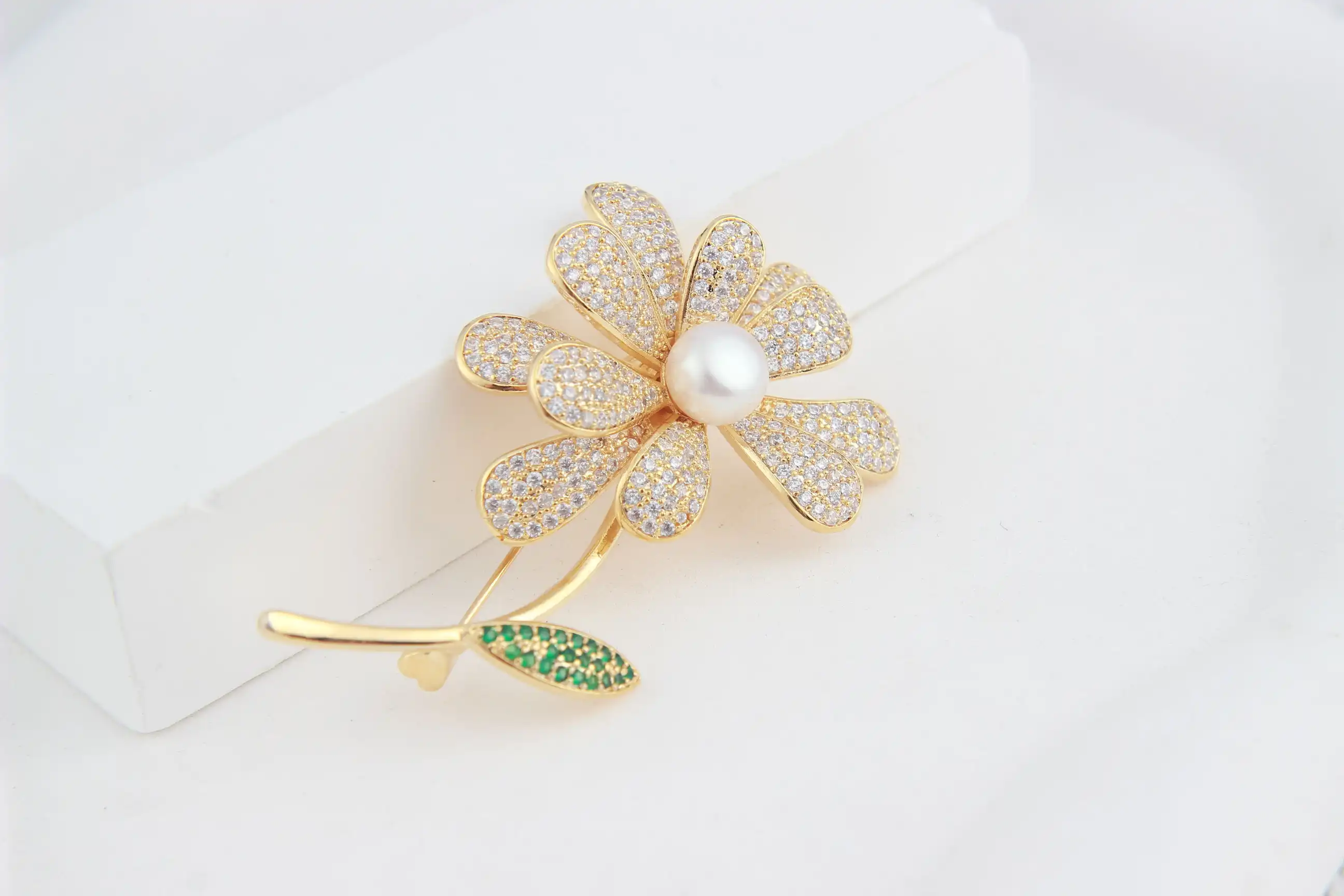
A brooch is a decorative piece of jewelry worn pinned to clothing, such as a jacket, scarf, or dress, rather than on the body. It attaches with a pin and clasp on the back. Brooches can be made of gold, silver, or costume materials, so value depends on the metal, gemstones, age, and maker.
Brooches have a habit of turning up in places like an estate collection or a small box passed down through the family. You may recognize the piece as jewelry without having much idea of who bought it, what kind it is, or whether it has any real value.
So, what’s a brooch, and what should you look at before deciding what to do with one? In this guide, we’ll start with how the piece is used and its history. Then, we’ll walk you through a few details to look at on the piece itself: They can tell you whether it needs a closer inspection from a professional.
What’s a brooch?
A brooch is a kind of jewelry that fastens to fabric, usually with a hinged pin and catch on the back.
Historically, brooches were used practically to secure clothing and cloaks. Over time, they became more ornamental accessories, adding gemstones and elaborate handwork. Today, they’re used mostly for decorating outfits.
The terms brooch and pin overlap, but brooch usually refers to a larger decorative piece, while a pin often describes a smaller accessory secured with a short post and backing. The pin mechanism on the back of the brooch is what’s called a brooch pin. In everyday conversation, you may hear people use all those words interchangeably.
Types of brooches
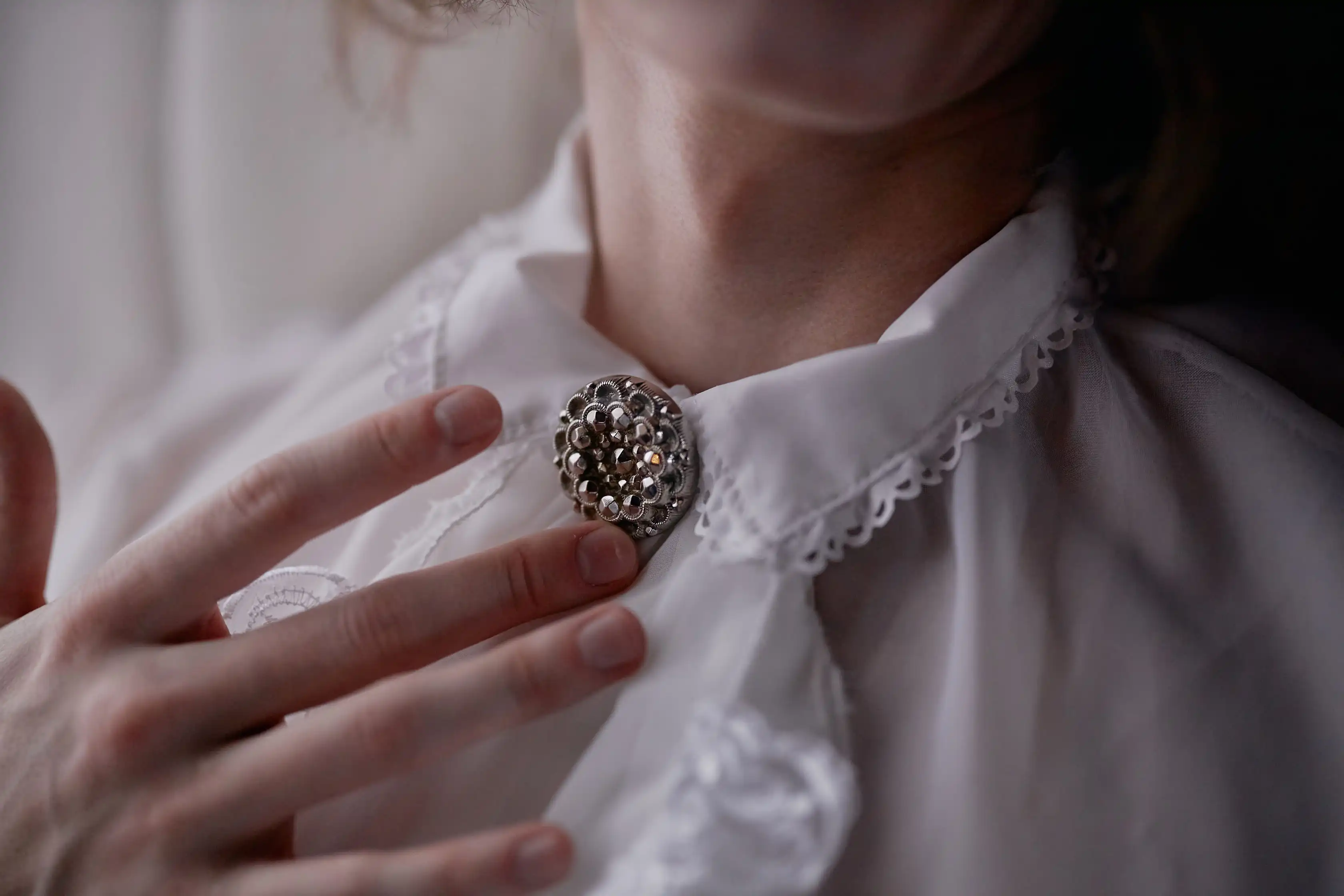
Brooches can be grouped by age, materials, or jewelry category, and those labels can overlap. A diamond brooch from the 1880s, for example, can be both antique and fine jewelry.
Antique brooches
Antique jewelry refers to pieces that are at least 100 years old. Older jewelry may feature handwork and construction techniques that are less common in modern pieces, especially in Georgian, Victorian, and Edwardian brooches. For example, you might find an aigrette (a brooch with a feather) or a cameo brooch (a carved relief portrait in an oval frame) from these periods.
Age can contribute to collector interest, but its value and resale prices still depend heavily on the particular brooch.
Vintage brooches
Vintage usually describes older jewelry that hasn’t yet reached antique age. That could include a mid-century floral brooch or an enamel piece from the 1920s.
Like “antique,” the label “vintage” tells you roughly when the piece was made — it says very little about quality or value on its own.
Gemstone or fine jewelry brooches
Fine brooches are made with precious metals like gold and platinum, and are often set with precious stones. A diamond brooch, for example, carries value from the setting and the diamonds themselves. It’s common to see brooches with multiple smaller gemstones, or one larger central gem and smaller accent stones or elaborate gold handiwork.
When you’re figuring out how much a brooch may be worth, the stones need to be judged on their own merits. For instance, an old diamond’s value depends on its quality based on the 4Cs and the current market. Just finding diamonds in a brooch doesn’t establish their resale value.
Costume brooches
Costume brooches typically use inexpensive metals like sterling silver and decorative materials like glass and enamel rather than gold or platinum and natural gemstones.
Their resale value depends more on the brooch’s design and collector interest than on its precious metal content. Even when the materials themselves are inexpensive, signed and unusual costume pieces can still attract collectors and raise a piece’s value.
What makes a brooch valuable?
A brooch may be valuable because of its materials, historical context, or handicraft:
- Precious materials: Gold and platinum give some brooches value regardless of their styles. Those metals provide a material baseline, and any natural gemstones set in the brooch or designer stamps can add to it.
- Historical value: Collectors seek out pieces from particular periods. For example, Victorian mourning brooches and geometric Art Deco designs appeal to very different markets, so they can carry more value in certain markets.
- Brand name: A recognizable maker can put a brooch in a different value category altogether. Signed jewelry from a sought-after designer or house may be treated as a collectible piece, spiking its value over other similar designs.
None of those reasons means an old brooch is automatically valuable. It’s worth identifying what you have with a professional jeweler or platform like Unvault before treating it as costume jewelry or selling it for its metal at melt value.
After all, an inherited brooch can represent usable value instead of another item to store. That can matter when a family is dividing an estate — turning one indivisible piece that won’t be worn into cash can make inheritance distributions simpler.
5 elements that change a brooch’s value
Once you know can identify what kind of brooch you have, the following five details can provide stronger clues about what it may be worth:
- Metal: Look on the back for purity or metal marks such as 18K, 925, or PLAT. Solid precious metal is mixed with alloys, but they give the piece an underlying material value that plated or base-metal jewelry doesn’t have. The same applies across colors — yellow, rose, and white gold all rise in value when the piece is made from solid gold.
- Gemstones: Natural stones generally have a higher resale market than lab stones, which can be made easily and inexpensively today. A large stone isn’t automatically a valuable one, and gemstone quality matters, too.
- Maker and handwork: Check for a signature or maker’s mark near the clasp or on the back of the brooch. Construction can also provide clues. Detailed enamel, engraving, or filigree work may point to a more labor-intensive or collectible piece that can go for more on the resale market.
- Condition: Missing stones or damaged hardware can lower what a buyer will pay for the piece up front. So will signs of wear and tear, like scratches and tarnished metals. Look at the clasp for clues about age and whether the piece has been altered.
- Age and rarity: A particular period, like Georgian or Victorian, can add collector appeal because of its history and rarity. But a common antique brooch may still be worth less than a recent but uncommon piece with stronger demand.
If possible, don’t repair or replace any parts before you know what you have. Cosmetic changes can work against you when the original condition or construction is part of what collectors value.
How much is a brooch worth?
There’s no standard price for a brooch. Its materials and maker establish important clues, and rarity or buyer demand can push the value further. Pieces that look similar at first glance can have very different materials and resale markets.
How the piece will likely be sold matters too. A plain gold brooch may get most of its value from the metal, while a signed Art Deco diamond brooch could worth much more as collectible jewelry. You can get a better understanding of the current market by shopping for appraisals at places like jewelers, pawn shops, and online selling platforms like Unvault.
Once you have an idea of what the piece may be worth, compare online and local options for selling old jewelry rather than assuming your first quote is the best one. For collectible or higher-value pieces, the best place to sell jewelry online may also depend on whether the platform has experience with and the audience for collectible and estate pieces.
Find out what your brooch is really worth with Unvault
Marks and visible details can help you identify a brooch. Putting a dollar figure on the complete piece takes a closer evaluation.
With Unvault, you can upload photos for a free online jewelry appraisal and get an estimate based on the piece itself and current market information. If you decide to move forward, you can see exactly how our selling process works before sending the jewelry in.
Get an instant valuation and find out what your brooch is worth.
Frequently asked questions
Know what your jewelry is worth before you sell.
Monthly gold-price context and hallmark guides from Unvault’s gemologists. No spam, unsubscribe anytime.
Related posts

Ready to see what your jewelry is worth?