
Selling Inherited Jewelry with Unvault: Fair Prices, Clear Steps, and Room to Grieve

Inherited jewelry often arrives at the worst moment: after a loss, during probate, or when a relative asks you to "just deal with it." You may feel guilty for thinking about money, anxious you will be lowballed, or stuck if siblings want different outcomes.
This guide is for anyone searching selling inherited jewelry with Unvault or trying to understand whether Unvault is a trustworthy option for estate pieces. You will get both sides: the emotional work and the practical path, including how Unvault's value-first model differs from pawn shops, consignment, and opaque online buyers.
Understanding the emotional journey of selling inherited jewelry
Acknowledge your feelings
Grief, nostalgia, and relief can show up in the same afternoon. A ring may be the last tangible link to someone you loved. Selling is not "getting over" them; it is one decision about objects that no longer fit your life.
Give yourself permission to:
- Keep pieces that still feel right to wear
- Photograph and value everything without committing to sell
- Take breaks if sorting the jewelry box overwhelms you
Seeking support from family and friends
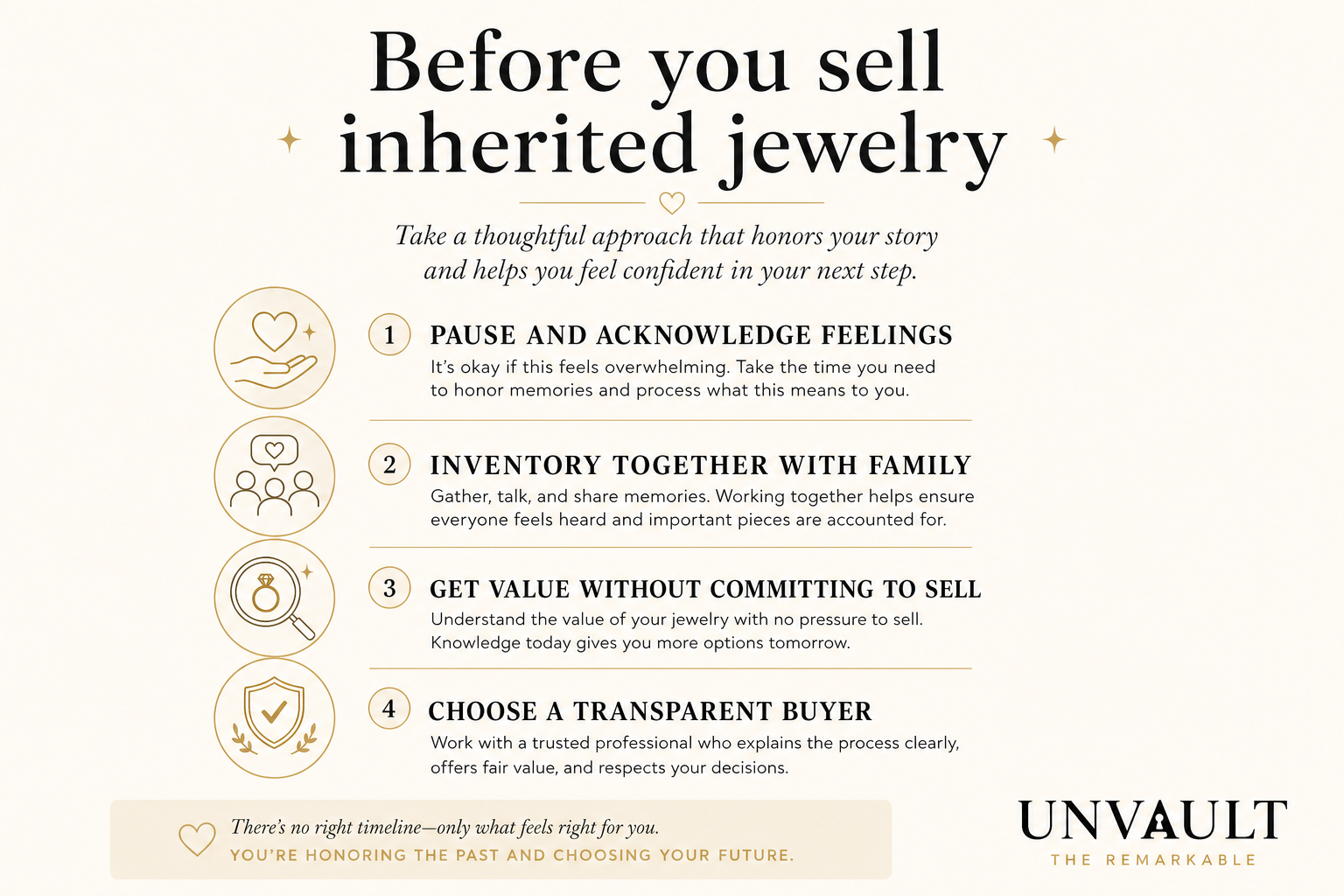
If you are the executor or the sibling who inherited the jewelry bag, you do not have to decide alone. A short family call with ground rules helps:
- Agree whether the goal is cash, fair division, or keeping specific items
- Put sentimental choices before price talks ("Who wants Grandma's locket?")
- Use a neutral written inventory so stories do not replace facts
Unvault customer stories on unvault.co include people who only wanted to know value for insurance and never sold. That matters for inherited jewelry: sometimes the win is clarity, not cash.
What to do if jewelry has sentimental value but is not wearable
Not wearable does not mean worthless. Broken clasps, missing stones, or outdated styles still hold gold, platinum, and gem material value.
Your options:
- Restore and keep if the cost of repair is reasonable and you will wear the piece.
- Remount stones into new settings using a local jeweler you trust.
- Sell for material value if the piece sits in a drawer and the memory lives elsewhere (photos, other heirlooms).
- Appraise without selling so the item is listed on homeowners or scheduled jewelry insurance.
Unvault is built for option 4 as much as option 3. You can upload photos, receive a detailed estimate in about 60 seconds, and stop there. One published testimonial describes learning a grandmother's collection was worth about $8,000 and choosing not to sell while updating insurance. Inherited jewelry often needs that pause before any shipment.
How to handle family disagreements over inherited jewelry
Disputes usually fall into three buckets:
| Situation | Practical approach |
|---|---|
| One sibling wants to sell, another wants to keep | List every item; assign keep/sell/undecided; use independent value for buyouts |
| Unequal splits ("I got the ring, you got cash") | Get written estimates per item so buyouts reflect market value, not guesses |
| No will guidance on jewelry | Follow estate attorney advice; use third-party pricing to reduce suspicion |
A transparent online estimate helps because everyone sees the same breakdown (metal weight, stone notes, market-based pricing) instead of one sibling quoting a pawn shop offer from memory.
If you use Unvault to sell after agreement:
- Only the agreed pieces go forward
- Document who authorized shipment
- Save estimate PDFs or screenshots for estate records
Preparing to sell: the essential steps
Inventory your jewelry
On a well-lit table, lay out each piece and record:
- Item type (ring, bracelet, watch, brooch)
- Metal stamp (14K, 18K, PT950, etc.)
- Visible stones and any paperwork (GIA, receipts, boxes)
- Condition notes (worn prongs, bent band, missing back)
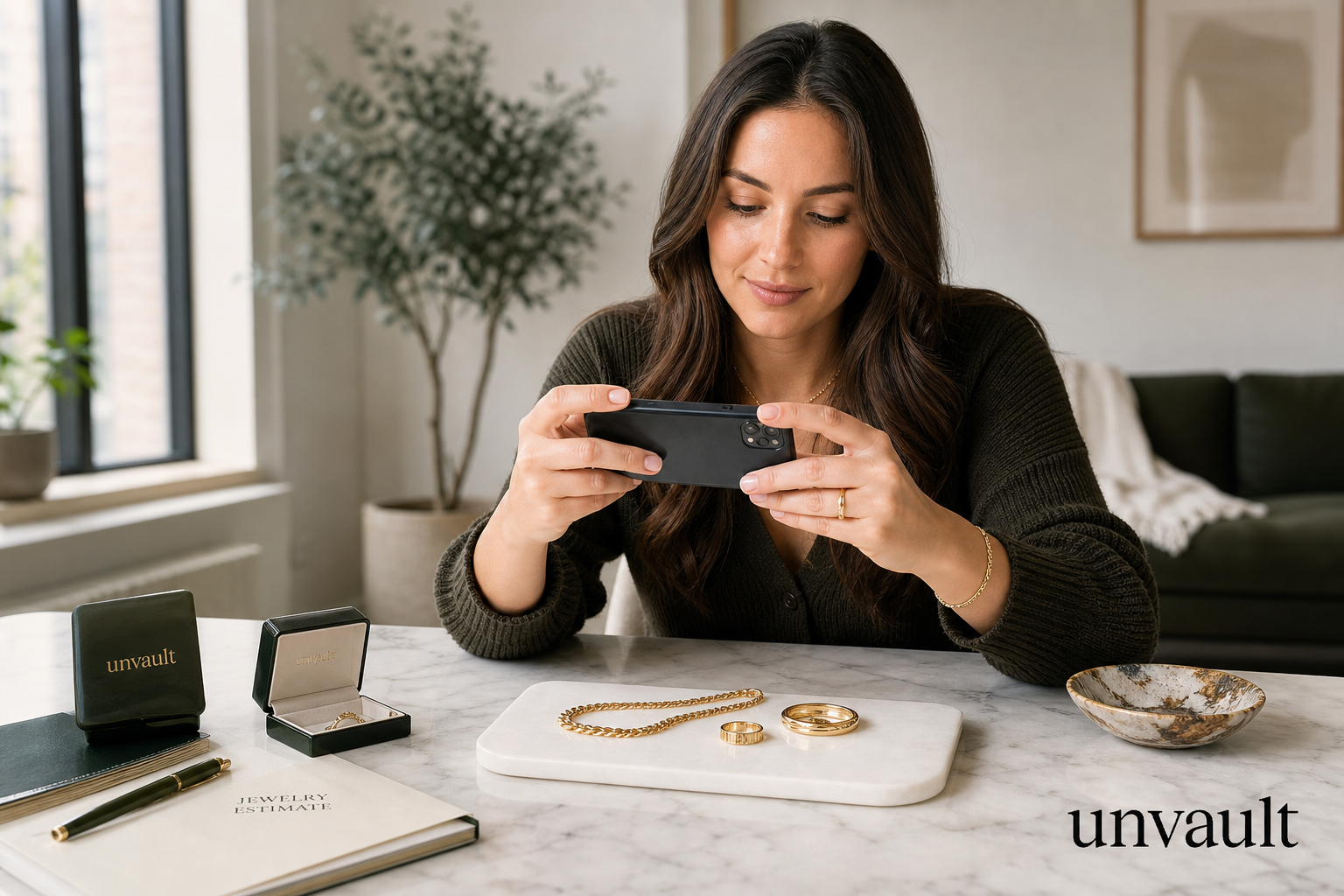
Phone photos are enough for a first pass. Unvault's flow starts with uploading photos at home, not shipping blind.
Gather documentation and appraisals
Helpful documents:
- Prior appraisals (even if dated)
- Purchase receipts or estate inventories
- Photos of the original owner wearing the piece (for your records, not required to sell)
Old appraisals often inflate insurance replacement value. Resale value is usually lower. Unvault focuses on current market and material value, which is what you need when dividing an estate or comparing offers.
Assessing condition and value
Factors that move inherited jewelry value:
- Gold and platinum spot prices
- Diamond quality (when certificated or gradable from photos)
- Brand names (some designer pieces command premiums)
- Completeness (sets vs. single earrings)
Pieces do not need to be "pretty" to be valuable. Unvault states it can value vintage, broken, or mismatched jewelry because refiners and collectors still pay for raw materials and salvageable stones.
Finding the right buyers for inherited jewelry
Online platforms vs. local jewelers
| Channel | Best for | Watch-outs |
|---|---|---|
| Local jeweler buyback | Quick in-person quote, relationship trust | May offer one number with little breakdown |
| Consignment | Rare high-end designer pieces | Long timelines, split commissions, unsold risk |
| Pawn shop | Fast cash emergencies | Often lowest % of true value |
| Auction houses | Important signed pieces | Fees, long lead times, reserve prices |
| Unvault (online) | Estate mixes, gold-heavy pieces, value-first decisions | Must ship if you accept final offer after authentication |
For inherited sets (chains, bands, pins, one earring), a digital-first platform with transparent pricing often beats driving piece by piece to counters.
Red flags to watch for
- Buyer will not explain how they calculated the offer
- Pressure to ship before you see itemized value
- No insured shipping or clear custody chain
- "Too good" offers with no authentication step
- Mixed reviews under a different brand name
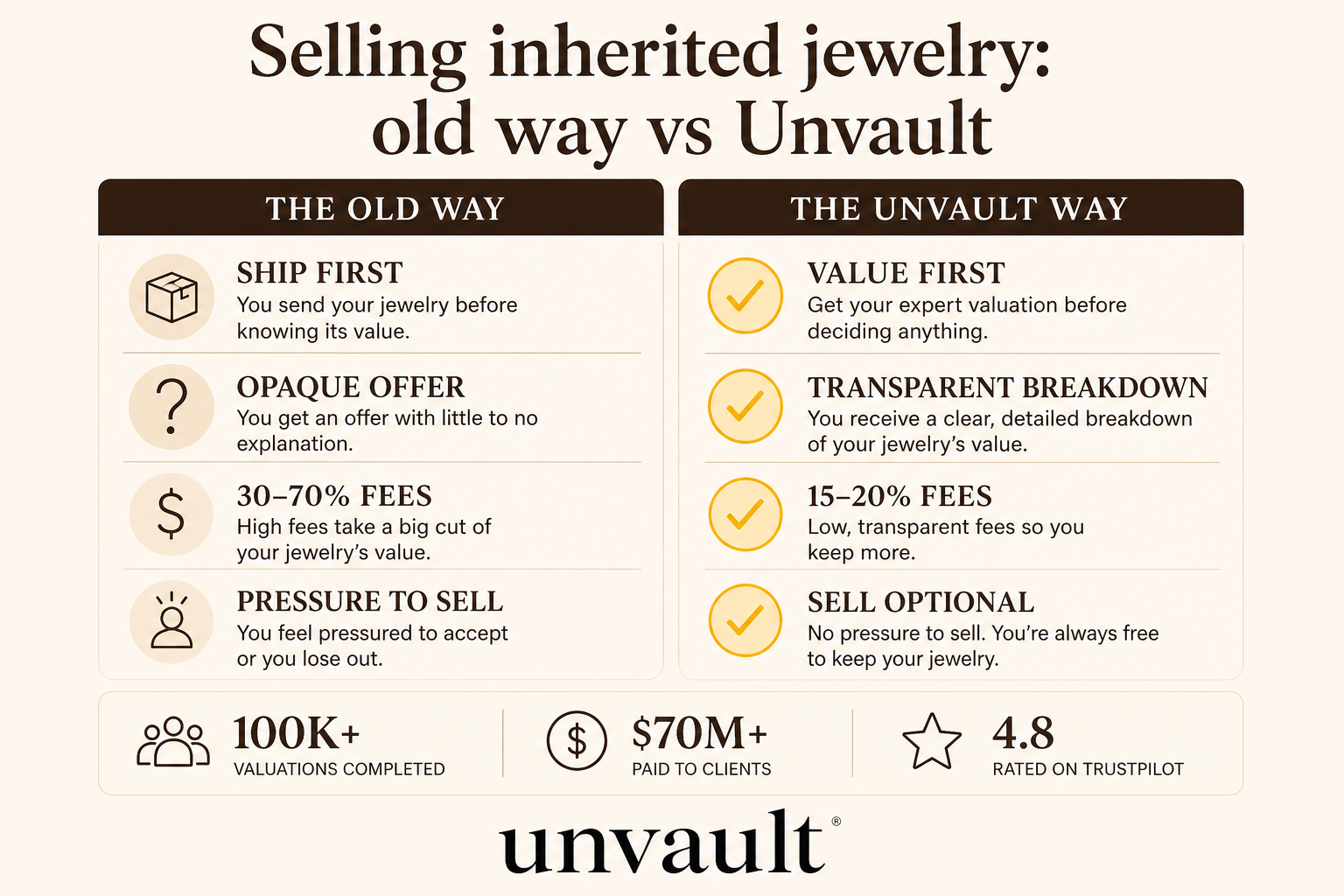
Unvault publishes comparison messaging: the "old way" often means ship first, one opaque number, 30-70% effective fees; the Unvault way emphasizes value first, full breakdown, about 15-20% transparent fees, with sellers designed to keep roughly 80-90% of true value (verify on unvault.co for your item).
Why Unvault fits inherited jewelry specifically
- No obligation after estimate: useful for insurance and family meetings
- Transparency: AI plus market data shown before you commit
- Scale: 100,000+ valuations completed, $70M+ in jewelry value tracked/paid (per site), 4.8 stars on Trustpilot
- Press coverage: featured in outlets including Bloomberg, Business Insider, Wall Street Journal, Fashionista (as listed on site)
- Authentication on camera after you choose to sell, so final offer matches inspected reality
Selling inherited jewelry with Unvault: how the process works
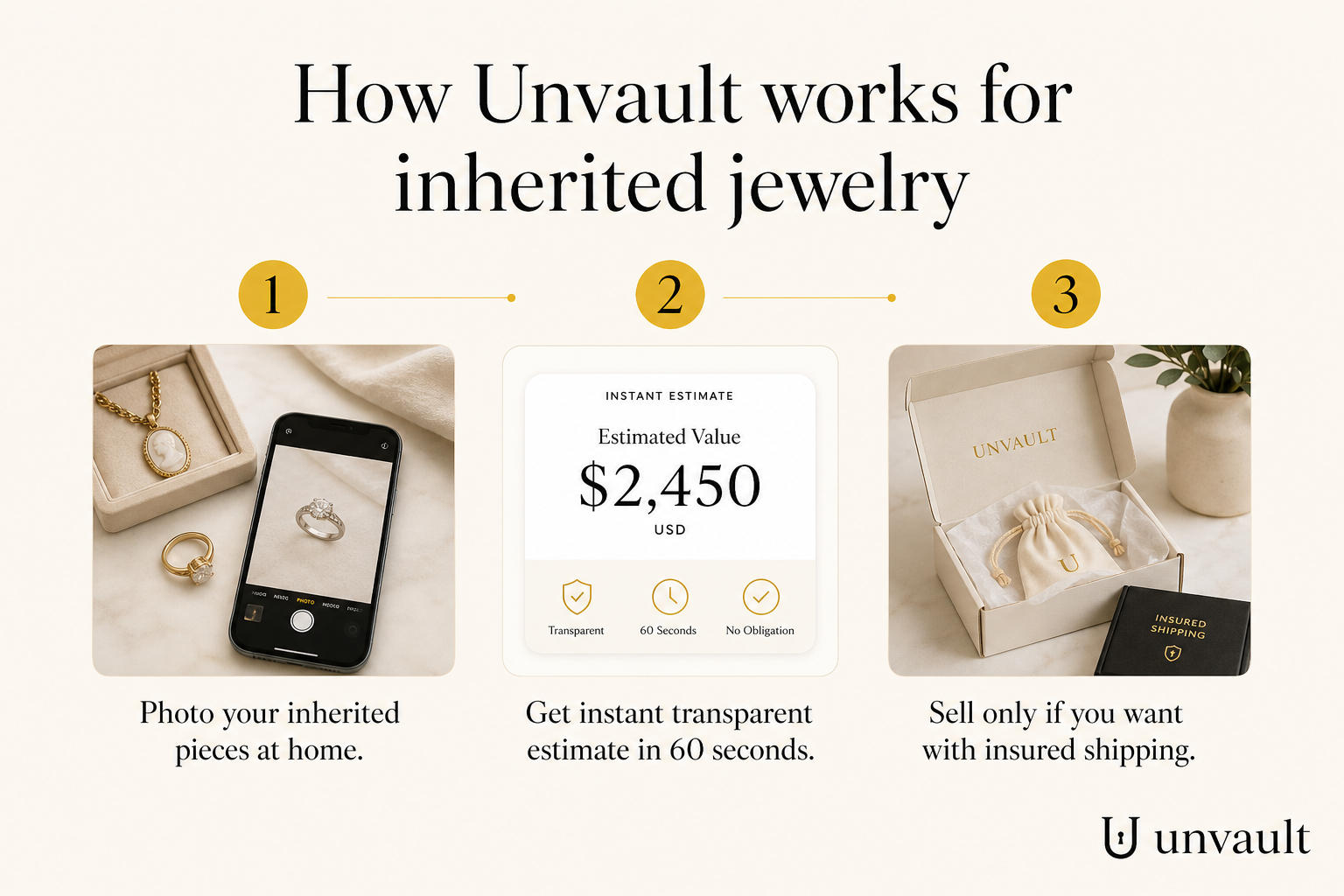
Step 1: Photograph at home
Use natural light and plain background. Capture stamps inside rings and any hallmarks. You are not committing to sell; you are building a record.
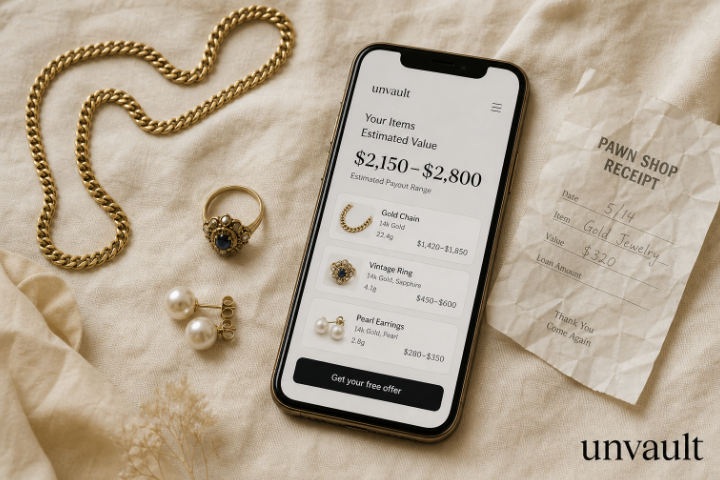
Step 2: Get an instant estimate (about 60 seconds)
Unvault returns a detailed valuation with transparent pricing logic. Share screenshots in family chats or with your estate attorney if needed.
Step 3: Decide keep, insure, or sell
- Keep: file the estimate for insurance updates
- Sell: proceed when the number and terms work for the estate
- Partial sell: choose only pieces no one wants; keep heirlooms others will wear
Step 4: If you sell, ship securely
When you accept, Unvault's model includes professional authentication (including on-camera inspection) and insured shipping (confirm current policy on site before you send high-value estates). Communication through payout is a common theme in customer reviews (speed, fairness, clarity).
Get an instant estimate at unvault.co
Closing the sale: what to expect
Negotiating fair prices
With inherited jewelry, "negotiation" often means comparing transparent numbers, not haggling in a strip-mall parking lot. Before you accept any buyer:
- Compare Unvault's breakdown to one local quote (optional sanity check)
- Confirm final offer after authentication matches what was explained upfront
- Record proceeds for estate accounting if required
Payment and shipping
Expect a defined timeline from acceptance to payout. Ask support about:
- Insurance limits in transit
- What happens if authenticated value differs from estimate
- How payouts are sent (ACH, check, etc., per current site terms)
Estate tip: deposit proceeds to the estate account if probate is open; your lawyer can confirm.
Best platforms for selling inherited jewelry (quick comparison)
- Unvault – Best when you want instant transparent value, optional sale, and online convenience for mixed estates.
- Specialty estate buyer (local) – Best when you want hand-holding for a single important piece.
- Consignment – Best for high-fashion signed jewelry with time to wait.
- Auction – Best for rare antiques with documented provenance.
- Pawn shop – Best only when speed matters more than maximum payout.
For most people sorting a parent's drawer of gold and diamonds, value-first online appraisal reduces regret and family conflict.
Real stories and what experts would tell you
What sellers say (from Unvault's site)
- A Brooklyn customer described a quick, easy transaction even around a holiday.
- A San Francisco customer learned inherited pieces were worth thousands and chose not to sell, using the estimate for insurance instead.
- An Austin customer sold pieces unworn for a decade, citing fair offer and strong communication.
Those patterns match inherited jewelry needs: speed when you are ready, and permission to stop when you are not.
What appraisers emphasize (independent practice)
- Separate sentimental, insurance, and resale values
- Photograph and weigh when possible; never clean aggressively before identification
- Get lab reports for important diamonds before major decisions
- Document chain of custody if multiple heirs touch the box
Unvault does not replace a formal written appraisal for legal disputes or tax scenarios that require a credentialed appraiser. It does give a fast, market-grounded starting point for whether to sell and how to split fairly.
Common questions about selling inherited jewelry with Unvault
Can I use Unvault if I am not ready to sell?
Yes. The estimate is designed to be useful even when you only want knowledge or insurance numbers.
What if pieces are broken or only one earring?
Material value often remains. Unvault markets acceptance of broken and mismatched gold jewelry.
How do I avoid getting ripped off online?
Choose buyers who show pricing before shipment, publish fees, and authenticate before final payout. Avoid single opaque numbers.
Is there a catch?
Unvault states it earns when items resell through its network, which is why it can pay higher market rates than high-overhead pawn shops. Read current FAQs on unvault.co.
How is this different from a free jewelry appraisal at a store?
Store appraisals may anchor to insurance replacement or future retail sales. Unvault focuses on what you would net if you sell now, with fees shown upfront.
What about estate taxes?
This article is not tax or legal advice. Consult your estate attorney or CPA for reporting obligations.
Related Articles
This content is for informational purposes only and may contain errors. Please contact us to verify important details.