How to tell if a Rolex is real and what to check first

Find out your jewelry's worth in 60 seconds.
Instant ValuationIf you inherited what looks like a genuine Rolex and want to know if it’s real, a few quick checks can help you determine its authenticity and approximate value. It’s possible to do a lot of the detective work at home with good lighting and a magnifying glass, but if you want a definite answer, you’ll need professional verification.
In this guide, we’ll cover eight ways to tell if your Rolex is real, what common warning signs look like, and when it’s time to get a professional’s opinion.
How to tell if your Rolex is real: 8 features to compare
Genuine Rolex watches can have replacement or serviced parts, especially if they’re vintage, so one unusual feature doesn’t always mean the watch is fake. You’ll need to look at several details together.
If you know the reference number, keep it handy. Rolex details vary by model and year, so comparing your watch with the exact reference is critical. You may also need a magnifying glass to check out smaller details and engravings.
Here are eight features to check while you’re determining if your Rolex is real.
1. Serial and reference numbers
First, look for the watch’s identifying numbers. The reference number is engraved on the case and identifies the model or configuration; the serial number identifies the individual watch and is typically stamped on the side of the case around 6:00. The engraving for both numbers should be clean and look professionally done.
Knowing exactly which watch you’re working with ensures that all the information you reference is correct for your model. If a valid-looking number is on the wrong dial or case, it could mean parts have been mixed or copied.
A valid number alone isn’t proof that the Rolex is real. Counterfeits can use numbers copied from genuine watches.
2. Weight
Rolex makes watches from solid materials like Oystersteel (a proprietary stainless steel), gold, and platinum. A watch that feels unusually lightweight could be a warning sign of plating or a cheaper, lighter alloy used in counterfeits.
That said, there’s no universal “correct Rolex weight.” Case size, metal, and age all change the watch’s heft. Vintage watches tend to use lighter components, so don’t be alarmed if your older watch weighs less than a contemporary model with solid links. Weight is a clue, not a pass-or-fail test.
3. Caseback
Rolex watches have a fluted screw-down caseback made out of steel and other solid metals. Modern casebacks tend to be blank and polished, while vintage casebacks are more likely to be engraved by a previous owner. A few specific models (such as the vintage Sea Dweller and military Submariners) have particular engravings on the caseback that can verify their identity.
A big red flag: Rolex doesn’t use transparent casebacks. Any caseback that isn’t obviously solid metal is worth a closer look.
4. Crown and clasp
Look at the Rolex coronet symbol on the crown and the markings on the clasp first. They should look crisp, not blurry, uneven, or roughly engraved.
Not every model uses the same crown. For example, current Oyster Perpetual models use the Twinlock screw-down crown, while Submariners use the Triplock system. If the crown doesn’t match the reference, the watch might have been modified or repaired with a non-original part, or it could be counterfeit.
If the watch is made of gold or platinum, you’ll also find identifying purity markings on the inside of the caseback. A 750 stamp refers to 18K gold, while a 585 stamp is used for 14K gold, for example. Those stamps can help you estimate the gold piece’s value.
5. Dial and hands
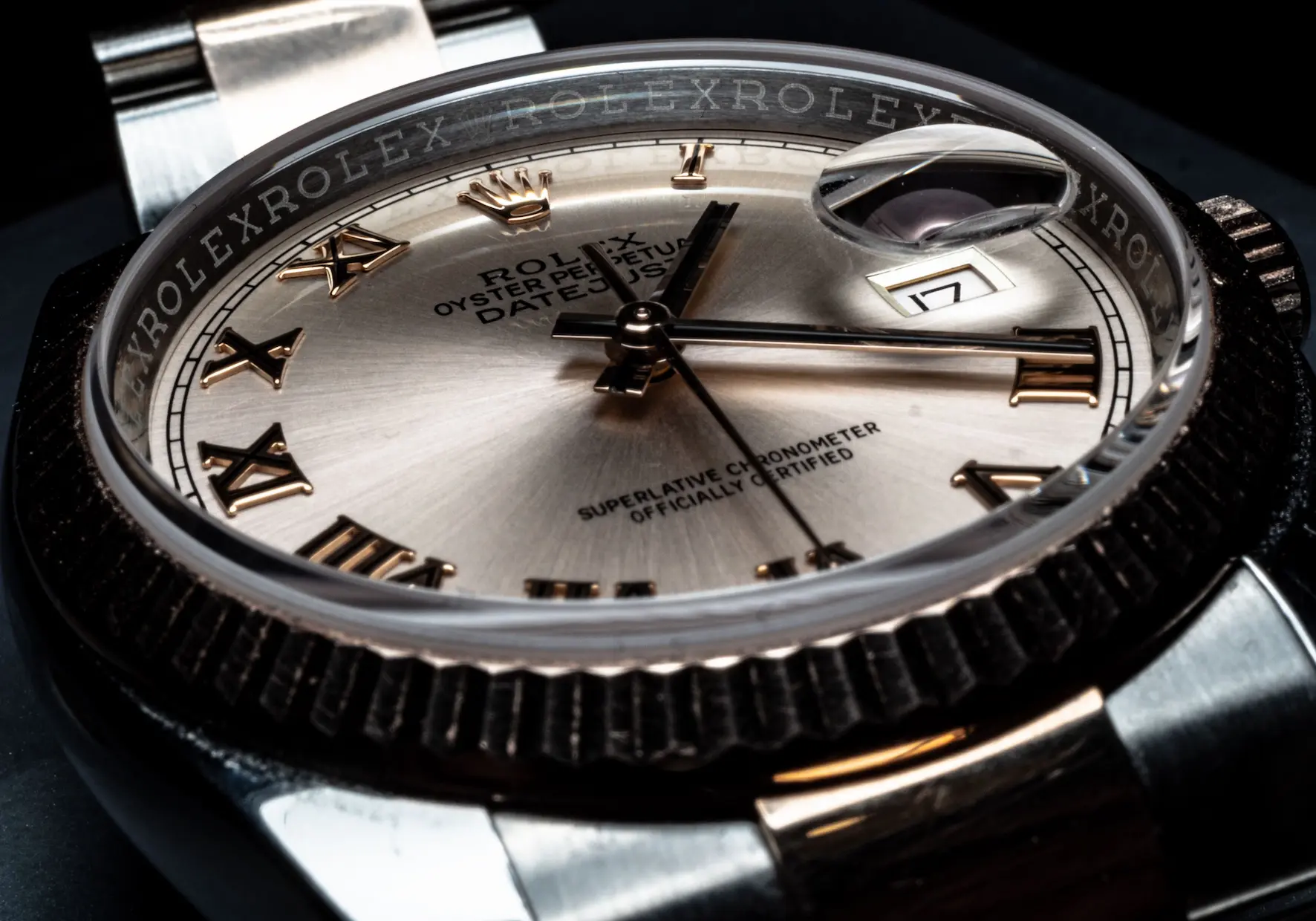
That magnifying glass will come in handy when it’s time to inspect the dial. Real Rolex dials have very precise details with consistent, even spacing and clean fonts. Vintage dials can fade, and genuine service parts may look newer than the rest of the watch. But if you see crooked or blurry text, inconsistent fonts, or misaligned markers, you may need to take it to a professional for further inspection.
6. Cyclops lens
The Cyclops is the raised magnifying lens over the date on many vintage and contemporary Rolex models. First, check if the model should have a Cyclops at all. For example, the current Oyster Perpetual has no date window or Cyclops, but the Submariner Date does.
If your watch has (and is supposed to have) a date window with a Cyclops lens, the date should be centered and easy to read. On fake watches, the lens might not line up properly and cut off numbers or display them at a slight angle.
7. Movement
Many Rolexes use mechanical self-winding movements. The second hand advances several times per second, creating a smoother-looking sweep than the once-per-second jump of a typical quartz watch.
A smooth sweep is a useful clue, but it doesn’t prove a Rolex is real. Since Rolex invented the tech in 1931, some counterfeit producers have learned how to mimic it. A professional will be able to inspect the movement’s small details more reliably.
Most importantly, don’t open the watch yourself to inspect any mechanisms. The case’s seal is a large part of what makes the watch water-resistant, and improper handling can cause damage that hurts its value if you decide to sell.
8. Documentation
Original paperwork can help you see where a Rolex came from. Depending on how old the watch is, you might have a guarantee card, certificate, or service records, among other documents.
Here are the most common documents you may find with your Rolex.
While paperwork helps, it can also be lost (especially for inherited watches) or faked. A guarantee card with a different serial number, an appraisal describing another model or metal, or service records tied to another reference all mean the watch needs a closer look.
Rolex Certified Pre-Owned paperwork carries more weight than other documents. Watches in that program are certified authentic by Rolex and come with a guarantee card and seal.
When to get professional verification
At-home checks can help you spot obvious problems, but an untrained eye can miss subtle signals. Official Rolex dealers and service centers have the right expertise to check the authenticity of each part. Typically, they’ll open the watch case and study internal movement, and have the tools to do so safely.
Professional verification can give you a clearer picture of what you have before you decide to insure or sell the watch. Here are a few ways to tell if it’s time to get your Rolex inspected by a pro.
The watch is vintage, serviced, or modified
Older Rolex watches can be harder to assess because they may have decades of service history behind them. “Genuine” and “all original” aren’t always the same. A genuine vintage watch might have a replacement dial, hands, and crown that don’t match the original specs.
Note that even small differences can affect resale value. If you choose to sell your modified vintage Rolex, get a valuation through a company like Unvault to understand the modification’s impact first.
The model is commonly counterfeited
A good fake watch can look right on the outside and still have the wrong movement inside.
More popular models are more likely to be counterfeited. Some of the models you should consider taking to an expert include:
- Submariner
- Datejust
- GMT-Master II
- Daytona
- Oyster Perpetual
You may have a high-value piece
Vintage Rolexes can be worth hundreds of thousands of dollars (or more) for the right model in excellent condition. If you suspect your watch is valuable, have it checked by a professional before assuming what it could be worth at resale. Even small differences in condition or parts can swing its value.
Documentation is missing or inconsistent
Missing paperwork is common with inherited watches, especially if they’ve been in the family for years. This doesn’t automatically mean the watch isn’t real. But if serial numbers and visual references conflict with what you’ve been told, professional verification can help resolve the discrepancy.
You plan to insure or sell the watch
A professional inspection of the watch removes a lot of the guesswork that comes with valuation and appraisals down the road.
Before deciding if it’s time for your heirloom to become a financial asset, you need to know what it is, whether its parts are genuine, and what condition it’s in. A professional can tell you if it needs any repairs or if there are any details that change its value. That documented confirmation of the Rolex watch’s authenticity can also help you get a better offer from resellers.
Get your Rolex valued with Unvault
The checks we’ve covered can give you a sense of whether your Rolex is authentic. But exterior clues and paperwork alone aren’t enough. If you want to be sure, check with a professional.
When you know if you have a real Rolex on your hands, the next step is finding out how much it’s worth. Whether you plan to part with a gold Rolex watch or want to insure it and keep it in the family, Unvault can help you understand what it’s worth.
To get a free valuation from Unvault, just upload a few photos. You’ll receive an estimated value in 60 seconds with a breakdown that considers more than its raw gold content, with no commitment to sell.
Find out what Unvault can value, then start your free valuation when you’re ready.
Frequently Asked Questions