
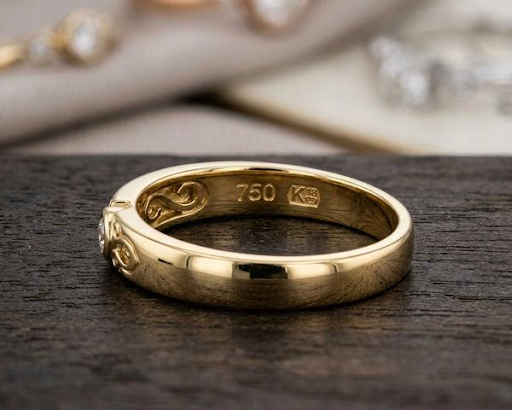
What does 750 mean on jewelry? A 750 stamp usually indicates that the piece is made of 18-karat gold. It shows that the metal contains 75% pure gold and 25% other metals added for strength, color, and durability.
The mark may appear inside a ring, near a necklace clasp, on a pendant, or on an earring post. It is widely used on fine gold jewelry in Europe and other international markets.
What Does 750 Mean on Jewelry in Simple Terms?
The 750 mark measures gold purity in parts per thousand. A piece stamped 750 contains 750 parts pure gold out of 1,000 total parts.
That equals:
- 75% pure gold
- 25% alloy metals
- 18 karats out of 24
For this reason, 750 gold and 18K gold generally mean the same thing. The remaining 25% may include silver, copper, palladium, nickel, or other metals.
Is 750 Gold Real Gold?
Yes. Jewelry marked 750 is real gold jewelry. It contains a high percentage of pure gold while remaining strong enough for regular wear.
Pure 24K gold is soft and can be scratched or bent easily. Mixing it with other metals makes 18K gold more suitable for rings, bracelets, chains, earrings, and watches.
A 750 stamp is a useful quality indicator, but the mark alone does not guarantee authenticity. Counterfeit or plated pieces can carry false stamps, so valuable jewelry should be professionally tested.
Is 750 the Same as 18K Gold?
Yes. A 750 purity mark is the numerical equivalent of 18K gold.
Gold karats are based on 24 parts. Since 18 out of 24 parts are pure gold, 18K gold is 75% pure.
The same jewelry may be marked:
- 18K
- 18KT
- 18ct
- 750
- Au750
“Au” is the chemical symbol for gold, so Au750 also indicates 75% gold.
Where Is the 750 Stamp Found?
Jewelry makers usually place purity marks in discreet areas, including:
- Inside a ring band
- Near a bracelet or necklace clasp
- On the back of a pendant
- On an earring post
- Under a watch case
- On a small chain tag
The hallmark can be very small or may fade over time because of regular wear, resizing, polishing, or repairs. Its absence does not necessarily indicate fake jewelry, since some antique, handcrafted, or modified pieces may not display a visible mark.
What Colors Can 750 Gold Be?
The 750 mark describes purity, not color. Eighteen-karat gold may be yellow, white, or rose, depending on the alloy metals used.
Yellow Gold
Yellow 750 gold is typically created by blending pure gold with silver and copper, giving it the classic warm, rich tone associated with traditional gold jewelry.
White Gold
White 750 gold may contain palladium, silver, nickel, or similar metals. Many pieces receive a rhodium coating for a brighter finish.
Rose Gold
Rose 750 gold contains more copper, which gives it a pink or reddish tone.
All three colors can have the same 75% gold purity.
How Can You Check Whether 750 Gold Is Genuine?
Home checks may provide clues, but they are not always conclusive.
Inspect the item for 750, 18K, Au750, a maker’s symbol, or another hallmark. Irregular or unclear markings should be inspected more carefully.
Check for fading or peeling. If the gold-colored surface wears away and reveals a different metal, the item may be plated.
Gold is not strongly magnetic, so a strong attraction to a magnet may suggest another metal. However, clasps and small parts may be magnetic.
A jeweler can use acid, electronic, or X-ray fluorescence testing. Professional testing is the safest choice for inherited, branded, or valuable jewelry.
How Much Is 750 Gold Worth?
The value of 750 gold depends on weight, current gold prices, condition, design, brand, and gemstones. Its basic metal value reflects the fact that 75% of its weight is pure gold.

A gold calculator can provide a rough estimate when you enter:
- Item weight
- Gold purity
- Current gold price
- Preferred currency
For example, a 10-gram piece of 750 gold contains about 7.5 grams of pure gold. A buyer’s offer may be lower than the calculated metal value because of testing, refining, operating costs, and profit margins.
Designer pieces may sell for more than their gold content because craftsmanship, rarity, and brand demand can add value.
Does 750 Mean Gold Plated?
No. A plain 750 stamp normally indicates a solid 18K gold alloy rather than gold plating.
Plated jewelry may use marks such as:
- GP for gold-plated
- GEP for gold electroplated
- HGE for heavy gold electroplate
- RGP for rolled gold plate
False stamps do exist. Professional testing is recommended when a piece feels unusually light, shows peeling, or is priced far below its expected value.
How Should You Care for 750 Gold Jewelry?
Eighteen-karat gold is durable but can still be scratched.
- Store pieces separately in soft pouches.
- Remove jewelry before swimming or cleaning.
- Keep it away from chlorine and harsh chemicals.
- Wipe it with a soft cloth after wearing.
- Clean it with mild soap and warm water.
- Ask a jeweler to handle delicate gemstones.
White gold may need occasional rhodium replating, while rings worn frequently may benefit from a professional inspection.
Frequently asked questions
Know what your jewelry is worth before you sell.
Monthly gold-price context and hallmark guides from Unvault’s gemologists. No spam, unsubscribe anytime.
Related posts


Ready to see what your jewelry is worth?