

Most people approach jewelry resale the wrong way by picking a platform first and figuring out value second.
That order of operations is exactly why so many sellers feel uncertain after the fact, wondering whether they got a fair price, or whether they moved too quickly without enough information.
Understanding how jewelry resale value works, before choosing where to sell, changes the outcome.
This guide walks through what determines what your pieces are worth, how different selling options compare, and how to move forward with confidence.
See how Unvault approaches jewelry valuation differently.
Why Selling Jewelry Feels Complicated
Many people first consider selling jewelry during a moment of reorganization: cleaning a drawer, going through an inheritance, or preparing for a move. The pieces are there but the decision isn't.
Jewelry is unlike almost any other personal asset. It carries emotional weight, but it also carries financial weight, and those two things rarely get discussed together.
When the idea of selling eventually surfaces, the first question is almost always the same.
How much is my jewelry worth?
The honest answer depends on more variables than most people realize. And the industry has historically done very little to explain those variables clearly. That opacity is not accidental.
When sellers don't understand value, only buyers benefit.
Where to Sell Different Types of Fine Jewelry
Not all jewelry should be sold the same way. The right platform depends on what gives the piece its value.
Gold-based luxury jewelry
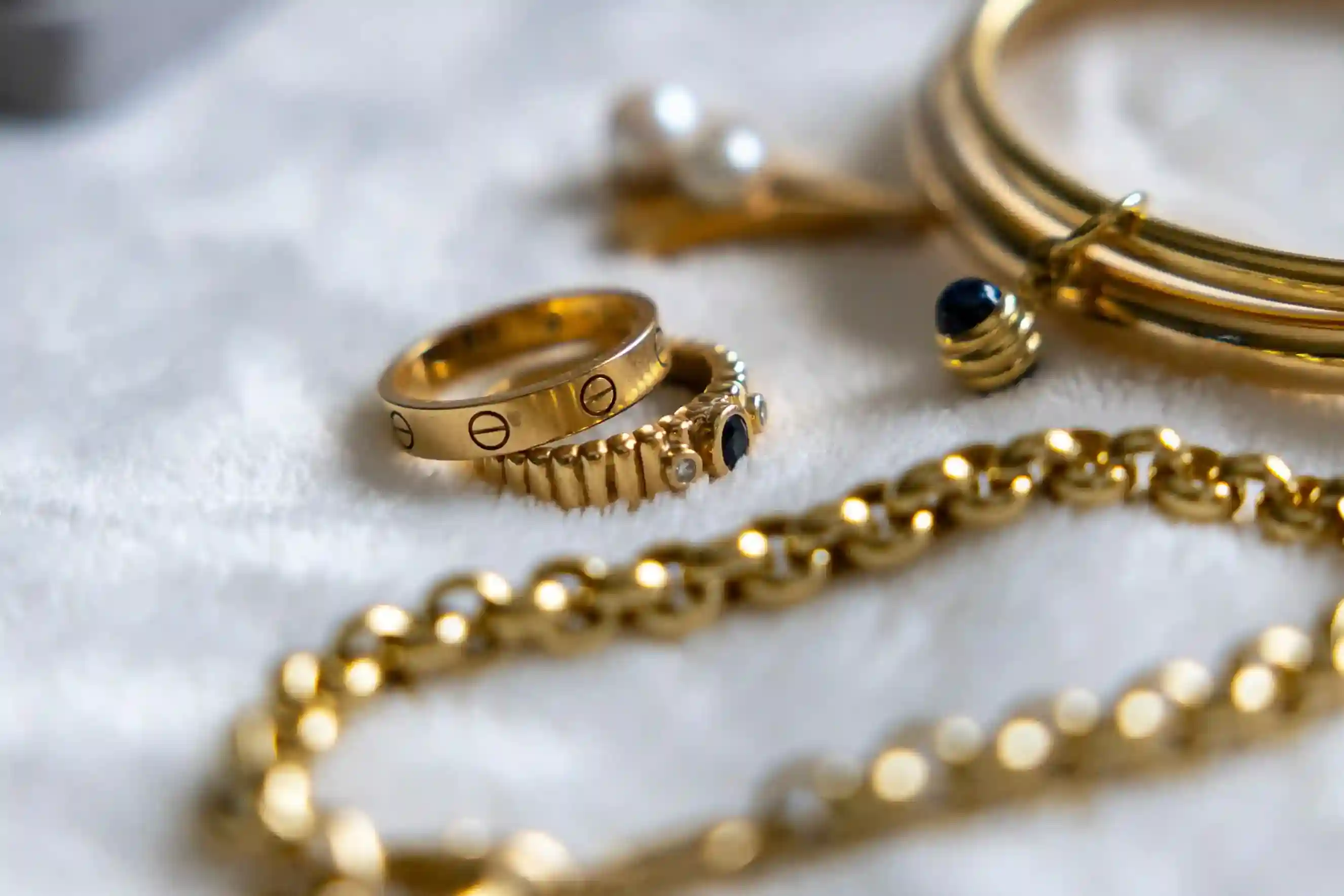
Pieces from houses like Cartier, Van Cleef & Arpels, and Bvlgari often carry brand value well beyond their metal and stones.
When the piece is primarily gold, platforms like Unvault can factor in both the metal value and the maker's premium. Unvault's AI-powered valuation is grounded in live precious metal pricing, which makes it particularly well-suited for gold-based pieces from recognized houses.
One important distinction: not all luxury brand jewelry is the same. A Tiffany gold bracelet and a Tiffany silver bracelet are valued very differently.
Silver-dominant pieces are typically outside what gold-focused platforms like Unvault evaluate, and are better directed to specialty silver buyers or luxury resale platforms that handle the full range of a brand's catalog.
Diamond engagement rings
Diamond rings are usually evaluated based on the stone's grading and certification. Jewelry buyers and resale platforms that work with gemologists tend to provide the most accurate pricing.
Because AI-based photo valuations are more precise for metal content than for complex gemstone assessment,¹ pieces where the stone drives most of the value may benefit from gemologist review alongside a platform valuation.
Plain gold jewelry
Chains, simple bands, and broken pieces are often valued primarily for their metal content. Platforms like Unvault that price based on live gold spot prices and karat purity tend to offer more transparency than local buyers who work within fixed margins.
Vintage or estate jewelry
Older pieces with distinctive craftsmanship or strong historical interest may attract collectors. Auction houses and specialty estate jewelry buyers sometimes achieve stronger prices for these pieces, particularly when provenance or rarity is part of the value story.
The Three Numbers Behind Every Piece
Before you consider where to sell jewelry, it helps to understand the three distinct ways a piece of jewelry can be valued. Confusing them is the source of most seller frustration.
Melt value
Here’s your baseline, which represents what the raw metal content is worth if the piece were melted down today. For a sell gold jewelry calculation, this starts with the weight of the piece, the karat, and the current gold spot price.
A 14K piece is 58.3% pure gold. Melt value reflects only that portion at market price.
Fair market value
This sits above melt value for most pieces. It accounts for the maker, the design, the condition, and current collector demand. A signed Cartier bracelet or a Van Cleef & Arpels piece with provenance will carry value beyond its metal content.
Fair market value is what a knowledgeable buyer in a real secondary market would pay for the piece as a whole.
Retail replacement value
This is the number on your insurance appraisal. It reflects what it would cost to replace the piece with something comparable at retail today. This number is almost always the highest of the three, and it has almost nothing to do with what you will receive when you sell.
Many sellers arrive at the selling process anchored to their insurance appraisal number and feel shortchanged when offers come in lower. The appraisal number is not a resale number. It was never meant to be.
This knowledge gap is exactly what platforms like Unvault are working to solve.
Before you commit to anything, you can upload photos of your piece and receive an instant AI-powered valuation grounded in live precious metal pricing. You understand the range upfront, rather than learning it after the fact.
Get a free valuation in 60 seconds.
What Affects Your Jewelry's Resale Value
Metal content and purity are the foundation, but several other factors shape what jewelry resale value looks like in practice.
Karat and weight
Yellow gold and white gold jewelry ranges from 10K (41.7% pure) to 24K (99.9% pure). The higher the karat, the more pure gold the piece contains, and the more its metal content alone is worth.
Brand and maker
Designer jewelry from houses like Tiffany & Co, Cartier, Bvlgari, or Van Cleef & Arpels tends to retain value well beyond its metal content.
Signed jewelry from recognized luxury makers² often sells above melt because buyers are paying for the provenance and the name. Unsigned pieces are typically valued closer to melt.
Condition
Scratches, missing stones, and worn prongs all affect what buyers will offer. Minor wear rarely eliminates value, but significant damage to the setting or stones will factor in.
Gemstones
Diamond and gemstone quality follows the four Cs: cut, color, clarity, and carat weight. A diamond ring or engagement ring with strong stone grades can be worth considerably more than its metal content alone.
AI-based photo valuations are more precise for metal content than for complex gemstone assessment, and transparent platforms will acknowledge this.
Some will recommend gemologist review for pieces where stones represent meaningful value.
Current gold prices
Gold has gained more than 35% over the past three years. Jewelry often sits in safes for decades, quietly appreciating in metal value while its owners never check the price of gold.
That price movement represents real upside many sellers have not fully tracked.
Why Unvault Is the Smarter Way to Sell Jewelry
The Problem With Most Selling Options
Most options for selling jewelry ask you to commit before you have the information you need.
- Local jewelry buyers make offers within their own margins and rarely explain how they arrived at a number
- Consignment through luxury resale platforms can take months, with no guaranteed sale price and no certainty until the process is already underway
- Auction houses work well for estate jewelry or vintage jewelry with strong collector appeal, but for most fine jewelry, the timeline and fees rarely justify it.
Start With a Transparent Valuation
Unvault is built differently. The process starts with a transparent valuation before you commit to anything.
Upload photos of your piece, receive an AI-powered valuation grounded in live precious metal pricing, and understand what your jewelry is worth. Then decide whether selling makes sense for you.
A Process Built Around Your Protection
If you move forward, Unvault handles fully insured shipping and video-documented authentication. Offers are calculated clearly, with no hidden fees.
If the final offer doesn't work, your jewelry comes back at no cost. If it does, you receive immediate payment within one business day of accepting.
The core advantage is information parity. You enter the process knowing what the buyer knows. That changes everything about where to sell jewelry and how the outcome feels.
The Trust Problem in Jewelry Resale
Anyone who has tried to sell jewelry before has likely noticed something unsettling: the same piece can receive dramatically different offers depending on where you take it.
Trust is the central issue³ in this market. Scams are real. Lowball offers are common. The luxury jewelry resale industry has historically operated in a way that benefits the buyer precisely because the seller lacks information.
Getting an independent valuation before committing to any jewelry buyer is the single most effective step a seller can take. When you know what your piece is worth, you can evaluate an offer rather than simply accept or reject it based on instinct.
Red flags worth knowing: any buyer who pressures you to decide on the spot, any process that requires you to ship a piece of jewelry before receiving valuation information, and any offer that arrives without a clear explanation of how it was calculated.
Understand what your jewelry is worth before you decide anything. Get your free valuation from Unvault.
How to Prepare Before You Sell
A small amount of preparation makes the entire selling experience smoother and typically leads to better outcomes.
Gather documentation
Original receipts, certificates of authenticity, GIA reports for diamonds, and original packaging all support a stronger valuation.
If you do not have documentation, that is not disqualifying. It simply means the piece will be evaluated on its own merits.
Look for hallmarks
Gold jewelry is typically stamped with a karat mark (10K, 14K, 18K, 24K) or a millesimal fineness number (417, 585, 750).
Maker's marks from recognized houses add a layer of value that hallmarks alone don't capture. Silver is often marked 925. Platinum may be marked PLAT or PT950.
Photograph your pieces
Clear photographs from multiple angles, in good natural light, help evaluators do their best work. Include close-ups of any hallmarks or maker's marks.
Moving Forward on Your Own Terms
Many people delay selling not because they have decided against it, but because the selling process feels opaque and the stakes feel high. Starting with a transparent evaluation, one that explains what your pre-owned jewelry is worth before you commit to anything, removes the biggest source of anxiety.
Unvault's evaluation process is designed exactly for this. Upload photos, receive an AI-powered valuation backed by live market data, and understand your piece's value before deciding on next steps.
There is no pressure to sell. If the final offer doesn't work, your jewelry comes back at no cost.
Selling Fine Jewelry is a Financial Decision
The pieces sitting in your drawer represent real value, particularly given where gold prices have moved in recent years.
If you are curious what your jewelry might actually be worth, starting with a transparent evaluation gives you that clarity before you decide anything else.
References
- pmc.ncbi.nlm.nih.gov/articles/PMC11336078/
- abacademies.org/articles/brand-equity-in-the-luxury-market-a-study-of-consumer-perceptions-and-premium-pricing-17539.html
- https://www.iastatedigitalpress.com/itaa/article/11827/galley/19213/view/
Know what your jewelry is worth before you sell.
Monthly gold-price context and hallmark guides from Unvault’s gemologists. No spam, unsubscribe anytime.
Related posts

Ready to see what your jewelry is worth?