
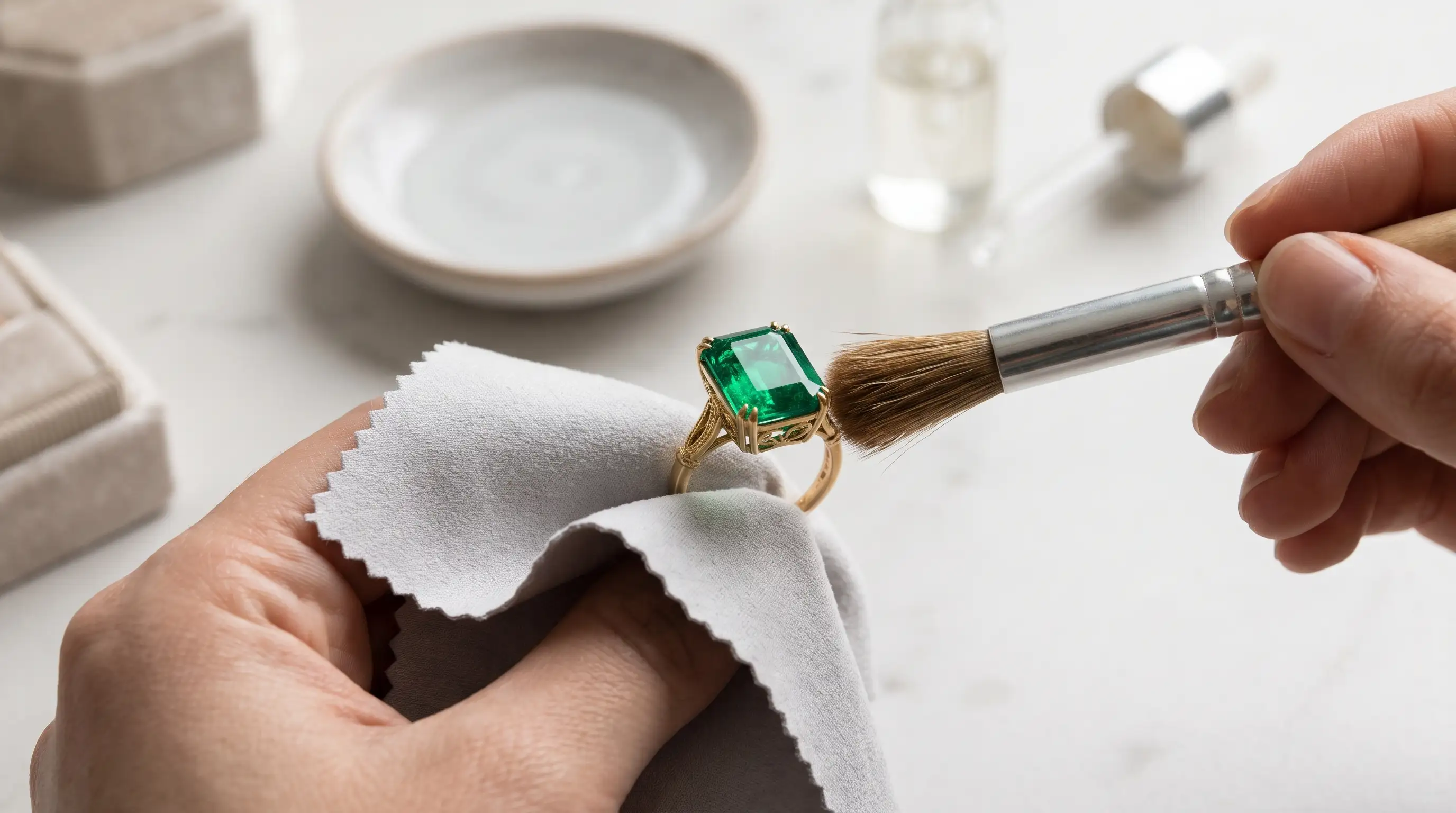
Emeralds can be cleaned with lukewarm water, a few drops of mild soap, and a soft brush or cloth, then rinse and pat dry. Skip ultrasonic and steam cleaners, solvents, and long soaks. Most emeralds have fractures filled with oil or resin, and heat, vibration, or harsh chemicals can loosen those fillers or worsen the cracks.
Maybe you wear an emerald engagement ring every day and dried hand lotion has settled in around the stone. Perhaps you’ve opened an inherited jewelry box with a pair of emerald earrings that haven’t been worn in years. In either scenario, it’s helpful to know how to clean emeralds safely and effectively.
Emeralds require gentler cleaning than most other gemstones. Many have tiny fractures filled with oil or resin, and high heat or harsh cleaners can cause damage to those fillers. This guide covers how to clean an emerald ring or other jewelry at home, what to avoid, and how to protect your pieces between cleanings.
3 reasons emeralds need gentle cleaning
If you’re used to cleaning diamonds or other gemstones, your emeralds will require going easier on the elbow grease. Emeralds need a gentler touch for three main reasons.
1. Hardness and toughness
Emerald gemstones have a 7.5–8 score (out of 10) on the Mohs Hardness Scale, which measures how well a stone resists scratches. Diamonds score a 10. While emeralds are still hard enough to resist everyday scuffs, harsh cleaning methods could scratch their surface.
Emeralds also have lower toughness, meaning they’re more prone to chipping and breaking from aggressive cleaning, rough bumps, or high pressure.
2. Inclusions (natural fractures)
Look closely at an emerald and you might notice tiny crystals, pockets of fluid, or wispy lines. Gemologists call these internal features inclusions, and the mossy patterns they sometimes form are called jardin, the French word for “garden.”
Many of these wispy lines are natural fractures, and some may reach the stone’s surface, making emeralds more vulnerable to damage from heat and harsh chemicals.
3. Oil and resin fracture fillers
Jewelers often use oil or resin to make an emerald’s fractures less visible. Harsh cleaning methods can strip these treatments away, leaving the stone looking dull or cloudy.
What you need to clean emeralds at home

Cleaning your emerald jewelry requires just a short list of basic supplies:
- Mild soap: A few drops of plain liquid dish soap work well.
- Lukewarm water: Use water that feels slightly warm, but not hot, to the touch.
- Two small bowls: One for soapy water, and one for rinsing.
- A clean, soft-bristle brush: Use fine bristles around an emerald’s secure setting or anywhere your cloth can't completely reach.
- A soft, lint-free cloth: Microfiber cloths work well for both wiping and drying.
How to clean emeralds at home in 5 steps
The best way to clean emerald rings or other jewelry is hand-washing with mild soap, lukewarm water, and a soft touch. Before you begin, take a closer look at the piece’s prongs (the small metal tips that hold the stone in place). If any are bent, or you can feel the emerald shift as you handle it, have a jeweler inspect the piece for any damage before you clean it.
Here’s how to clean emerald rings or other jewelry.
1. Mix a gentle soapy solution
Add a few drops of mild dish soap to one bowl of lukewarm water. Fill the second bowl with plain lukewarm water so it’s ready when you need to rinse.
2. Wipe the emerald with a soapy cloth
Dip a corner of your microfiber cloth into the soapy water and wring it out. Wipe the face of the emerald and the metal around it. If you’re just removing fingerprints or hand lotion, a quick wipe may be all you need.
3. Brush gently around the setting
Dip your brush in the soapy water and gently sweep it around the emerald’s setting, including the base of any prongs. If the setting has an open back, lightly brush away any buildup you can reach behind the stone. Brush along the inside of rings’ bands, too.
4. Rinse with lukewarm water
Swish the piece briefly in the bowl of plain water to remove the soap. Using a bowl instead of running water keeps small pieces away from sink drains.
5. Pat dry with a soft cloth
Pat the stone and metal dry with a clean portion of your cloth. If there’s still moisture under the setting, let your jewelry air dry before you wear it or put it back in its box.
When it comes to everyday wear and buildup, a gentle hand wash is typically all you need to keep your emerald jewelry looking its best.
What to avoid when cleaning emeralds
Some of the products and tools you may use to clean gold and other jewelry can damage an emerald or the material filling its fractures. Here are some things to avoid when caring for emeralds at home:
- Ultrasonic cleaners: Ultrasonic cleaners use rapid vibrations to loosen dirt or debris in hard-to-reach spots. While effective, ultrasonic vibrations can extend tiny cracks or weaken emeralds’ existing fractures. Ultrasonic cleaners can also flush out the oil or resin used by jewelers to make fractures less visible, leaving emeralds looking cracked, cloudy, or dull.
- Steam cleaners: Hot steam can draw oil or unhardened resin out of emerald fractures. If some filler comes out, lines that were previously barely visible may become more noticeable.
- Solvents and harsh chemicals: Rubbing alcohol, acetone, bleach, ammonia, and other strong cleaning solutions can degrade the oil or resin in emeralds. Some solvents may also damage the metal setting around a stone
- Long soaks in soapy water: Leaving your emeralds submerged in soapy water can disturb the filler oils, making fractures easier to see. To safely remove everyday buildup from your jewelry, wipe the piece with a damp, soapy cloth, then give it a quick rinse
- High heat and sudden temperature changes: High heat can make existing fractures in an emerald spread or damage some fillers, making fractures more visible. Sudden temperature changes may also damage an emerald. If you move the stone from hot water straight into a cold rinse, the abrupt change may stress the stone and could cause it to crack.
How to protect emeralds between cleanings
Properly storing your emerald jewelry can help prevent chips, scratches, and debris buildup between cleanings. Here are a few ways to protect your pieces while you wear them and when you put them away.
Store each piece separately
Give each piece its own pouch or lined jewelry box compartment so harder gems like diamonds can’t rub against and scratch your emeralds.
Check the setting periodically
Give your jewelry regular spot checks or a quick inspection before wearing it for the day. If a prong begins snagging on a sweater or you notice the stone shifting, set the piece aside for a jeweler to check out.
Take jewelry off before chores and sports
Leave your jewelry somewhere safe before working out or engaging in activities like gardening, lifting weights, or swimming. That keeps gemstones away from dirt, hard surfaces, and pool chemicals.
Protect jewelry from hard knocks
Remove jewelry before moving furniture or handling tools, and watch out for potential bumps or impacts in day-to-day life. A single hit against a hard edge can chip an emerald even if the setting stays intact.
Let lotions dry
Give hand creams, sunscreens, or other personal care products time to dry before putting on your jewelry. You’ll have less residue to clean off later.
Find out what your emerald jewelry is worth with Unvault
You can safely clean emeralds by simply dampening a soft cloth with lukewarm water and mild dish soap. Wipe the piece, use an extra-soft brush to loosen buildup around the setting, then rinse briefly and pat dry. Avoid ultrasonic cleaners, steam, harsh chemicals, and long soaks.
Between cleanings, store emerald jewelry individually and occasionally check the setting for loose stones. Take off rings and other jewelry before high activity or working with your hands, and let any lotions dry before putting them back on.
After cleaning a piece you rarely wear, knowing what it might sell for can help you decide whether to keep it. Unvault values jewelry set with natural gemstones, including emerald rings, earrings, and pendants. You can upload a few clear photos and get a free estimate of your jewelry’s resale value in about 60 seconds. If you choose to move forward with Unvault’s selling process, we provide insured shipping, video-recorded authentication, and a transparent final offer you can review before taking the next step.
Start a free online jewelry valuation today to see what your emeralds are worth.
Frequently asked questions
Know what your jewelry is worth before you sell.
Monthly gold-price context and hallmark guides from Unvault’s gemologists. No spam, unsubscribe anytime.
Related posts



Ready to see what your jewelry is worth?