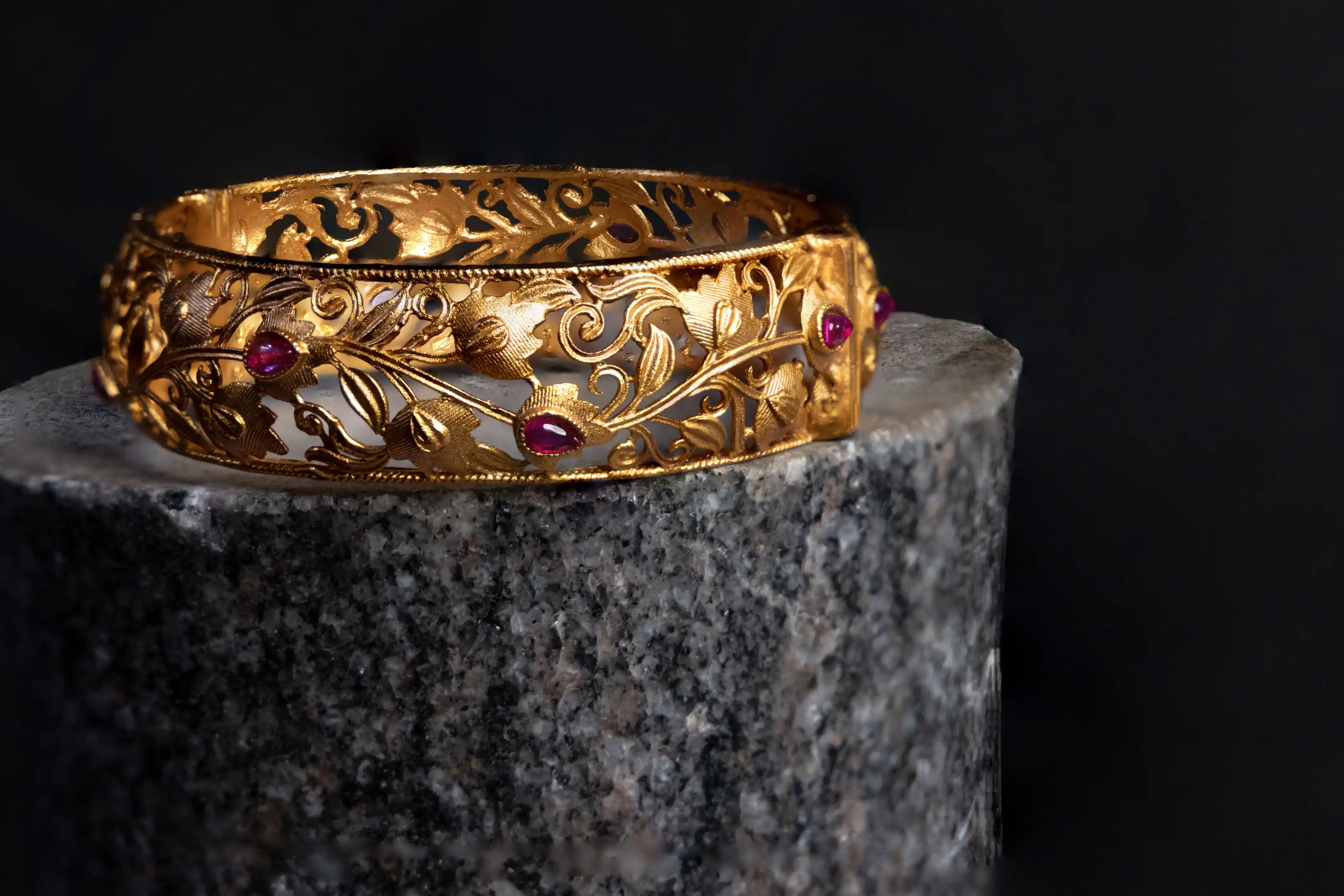
Filigree jewelry is made by twisting and soldering fine threads of metal, usually gold or silver, into delicate, lace-like patterns. The technique is thousands of years old and appears in rings, earrings, and pendants. Value depends mainly on the metal's weight and purity, plus craftsmanship and age for antique pieces.
Filigree has a way of making metal look almost weightless. If you inherited a delicate ring, brooch, or pendant with fine curls and open spaces, you may be looking at a jewelry-making technique that’s thousands of years old.
Filigree jewelry is decorated or constructed with fine metal wire shaped and soldered into detailed patterns. That artisanship can tell you quite a bit about how a piece was made. Figuring out what it’s worth requires taking a closer look at the jewelry.
What’s filigree jewelry?
Filigree is a metalworking technique featuring very fine wire. A jeweler shapes the wire into coils, curves, or repeating forms, then solders the individual elements together. The finished work often has a lace-like appearance, with open space being part of the design.
The name comes from the Latin words filum, meaning thread, and granum, meaning grain. Filigree has been used across cultures for thousands of years. In Western jewelry, it became especially recognizable in Victorian and Edwardian pieces, with later examples reflecting Art Nouveau and Art Deco design.
How much is filigree jewelry worth?
Filigree jewelry’s value depends on the piece itself, and materials set an important baseline. Artisanship and condition also make an impact, while provenance or collector demand can add value. For gold filigree, purity changes that material baseline. 14K gold contains 58.3% gold, while 18K gold contains 75%.
Because open space is part of the construction, filigree can look substantial while containing less metal than other jewelry. That makes visual size a poor shortcut for determining value. A large openwork brooch, for example, may have modest melt value, while a smaller but more dense piece can attract more interest.
Types of filigree jewelry
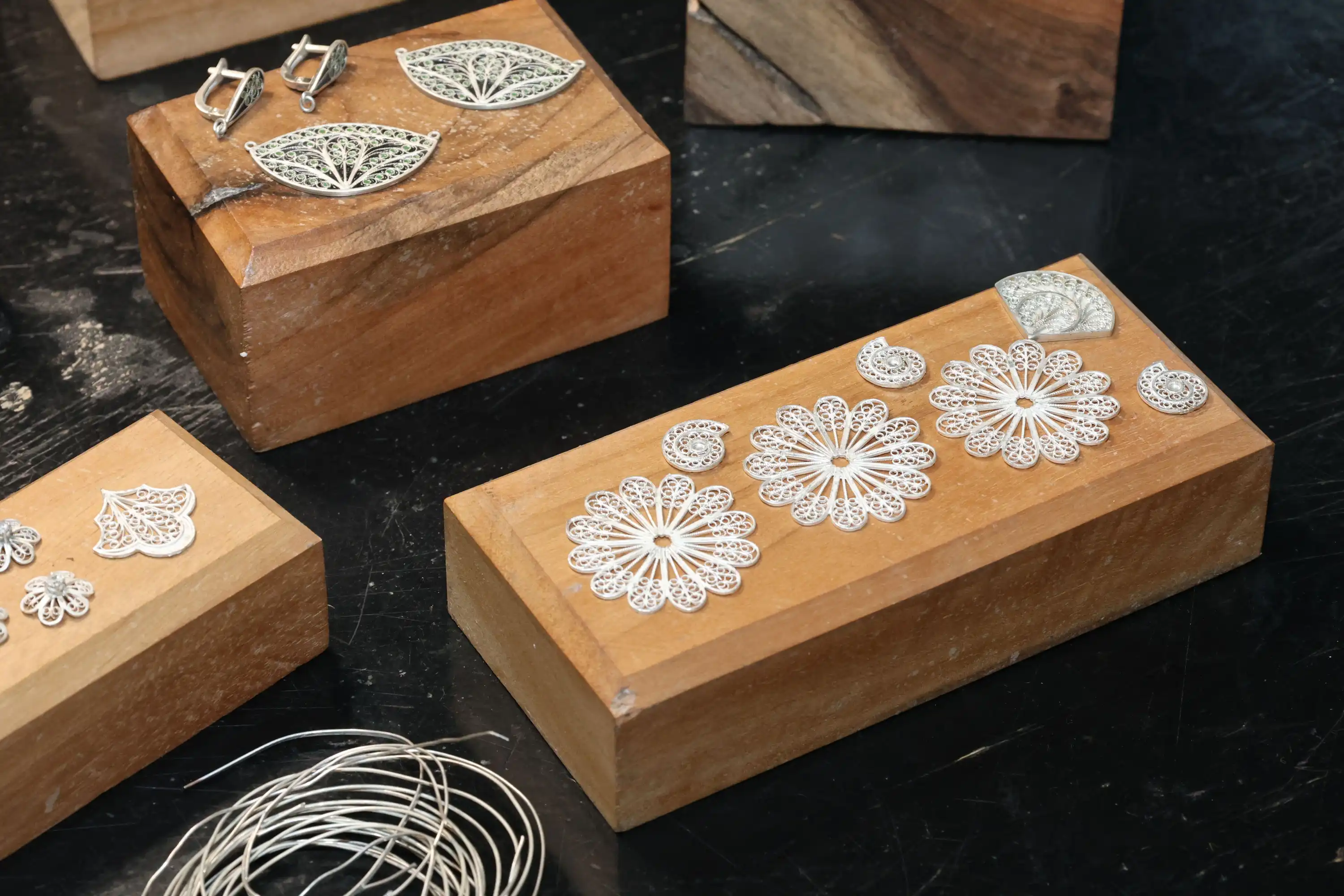
Most filigree jewelry falls into one of two structural categories. The first is openwork filigree, in which the wire forms the structure itself with no solid sheet of metal underneath. Connected wires create the airy appearance people often associate with antique filigree. Durability can become an issue with some older pieces because of how the wires support one another.
The second type is metal-supported filigree, with decorative wire soldered onto a solid metal backing. The backing adds support and gives the jeweler a surface for more delicate detail.
Turn the piece over and the difference becomes easier to see. Some items combine the two methods, such as rings with openwork around the shoulders and supported detailing near the setting.
How is filigree jewelry made?
Here’s a rundown of the process jewelers typically follow to make filigree jewelry:
- Prepare the wire: Jewelers draw precious metal into fine strands, flattening or twisting depending on the desired texture.
- Shape the design: Small tools help bend the wire into curves, coils, and other forms that make up the pattern.
- Solder the elements: The jeweler joins the individual pieces into the finished structure. Clean, discreet joints are a sign of careful artisanship. A thick or uneven solder tends to signal rough construction or a later repair.
- Finish the jewelry: Jewelers may add gemstones or other fine details through finishing and polishing processes.
Modern jewelers also use CAD or laser-cut components to create consistent filigree-inspired work, while more traditional wirework leaves its construction visible. You can often follow individual strands through the pattern and spot the tiny joints holding them together. Age and artisanship construction clues are often critical when appraising a filigree piece’s value.
Filigree examples: Common styles you’ll see
While the underlying technique remains recognizable, the patterns and details can make two filigree pieces look completely unique.
Here are some common filigree jewelry styles.
| Scrollwork filigree | Uses rounded spirals and flowing curves, often seen in vintage-inspired rings and Edwardian-style jewelry. |
| Celtic filigree | Draws from interlaced knotwork, using connected loops to create a denser pattern. |
| Floral filigree | Shapes the wire into botanical forms, with curves suggesting petals, leaves, or stems. |
| Geometric filigree | Uses repeated angular forms and strong symmetry, making it a natural fit for Art Deco designs. |
| Lacework filigree | Arranges fine wire into broad repeating openwork that resembles textile lace. |
| Art Nouveau filigree | Favors flowing curves and organic forms associated with the movement around the turn of the 20th century. |
These motifs can help you recognize a filigree design tradition, but dating a piece requires stronger evidence. Hallmarks, construction details, provenance, and period-appropriate materials provide much more information than the pattern itself.
Pros and cons of selling filigree jewelry
Whether selling makes sense usually has to do with the value and the role that particular piece still plays in your life.
Pros
- Put an unworn asset to use: A filigree piece sitting in a drawer can hold value in its materials or as finished jewelry.
- Simplify an inheritance: When several people are dividing jewelry, establishing a current value gives everyone a clearer basis for deciding what to keep. If you’re sorting inherited jewelry, that can make the financial side of the process much easier.
- Stop maintaining something you don’t wear: Fine wirework can snag, bend, or separate at the solder joints. An unwanted or infrequently used piece may eventually need repairs simply from age or accidental damage.
Cons
- You may give up an irreplaceable family object: Provenance may matter financially, but its personal sentimental significance is yours to judge before selling.
- Skilled handiwork can be underestimated: Filigree feels light because of its open construction. Still, good artisanship or antique appeal can make the complete piece more interesting to buyers than its metal weight alone suggests.
- The first buyer may not be the right market: Signed or collectible filigree can appeal to someone looking for intact jewelry, while a heavily damaged or generic piece tends to attract buyers primarily for its materials.
Tips for selling filigree jewelry
Before requesting offers, document what you have.
Here are some tips assessing filigree’s condition and value:
- Identify the metal and purity: Begin with hallmarks. A 10K mark means the piece contains about 41.7% gold, so the current 10K gold value gives you a useful material reference point. Color isn’t a substitute for the stamp — a white gold or rose gold filigree piece can still carry a 14K or 18K hallmark.
- Inspect the wirework: Look for broken curls, separated joints, missing sections, or visible signs of past repairs. Neat soldering and intact patterns give a buyer more reason to consider the jewelry as a complete object.
- Check the stones and settings: Missing or damaged stones affect the finished piece’s value. Desirable gemstones can also contribute value beyond the jewelry’s metal.
- Keep any history you have: Receipts, previous appraisals, maker information, and family records can support provenance. That type of information is especially useful for signed or antique pieces.
- Understand intact and scrap value: A damaged gold piece can still have scrap gold value because the metal value remains recoverable. Well-preserved antique or handcrafted filigree may have a stronger market demand.
- Compare offers on equal terms: Give buyers the same information about the piece and look at what you would actually receive after any fees. A transparent offer should make what’s driving the number reasonably clear.
- Wait on repairs until after appraising the piece: Straightening fine wire or adding fresh solder can alter the original construction, and the repair may not add enough resale value to justify the cost. Photograph the damage as is and find out whether restoration makes financial sense before you commit.
Appraise your filigree jewelry with Unvault
A hallmark can tell you the metal purity, and careful inspection can reveal plenty about the artisanship, but a piece-specific valuation puts those details into full financial context.
With Unvault, you can upload clear photos of the front and back of your filigree jewelry, along with close-ups of any hallmark or maker’s mark, for a free initial valuation. An Unvault appraisal comes with no obligation to sell.
If you decide to move forward, Unvault’s physical authentication services can confirm details such as metal purity, precise weight, and gemstone characteristics. You can review the final offer before deciding what to do next.
Begin your free online appraisal with Unvault to discover what your filigree jewelry is worth.
Know what your jewelry is worth before you sell.
Monthly gold-price context and hallmark guides from Unvault’s gemologists. No spam, unsubscribe anytime.
Related posts


Ready to see what your jewelry is worth?