14K vs. 18K gold: Purity, durability, color, and value

Find out your jewelry's worth in 60 seconds.
Instant Valuation14K and 18K gold jewelry can age very differently, even if the pieces looked similar when new. The extra gold in an 18K item changes how the metal wears, how rich its color looks, and how much value each gram carries.
In this guide, we’ll explain how 14K and 18K gold differ on characteristics like purity and color. We’ll also talk about how gold jewelry ages over time and how to find out what a piece you own is worth.
What’s 14K gold?
14K gold jewelry is an alloy that contains 58.3% pure gold. The remaining 41.7% is made up of other metals, often some combination of copper, silver, zinc, nickel, and/or palladium. The exact recipe varies based on the manufacturer and the desired gold color.
If you’re not sure what karat a piece of jewelry is, look for a 14K or 585 stamp. The 585 mark expresses purity in parts per thousand — roughly 585 of every 1,000 parts are gold.
What’s 18K gold?
An 18K item is 75% pure gold, with other metals making up the remaining 25%. You’ll commonly see this jewelry with a 750 stamp, indicating that 750 out of 1,000 parts are gold. With more gold in every gram, 18K pieces carry higher metal value than 14K and generally have softer structures.
What are the differences between 14K and 18K gold?
The karat system divides gold purity into 24 parts. 14K contains 14 parts of gold out of 24 total, and 18K contains 18 parts of gold.
Gold purity
At the same total weight, an 18K item contains 28.6% more pure gold than 14K jewelry. For a 10-gram piece, about the size of a light chain or heavy ring, that works out to approximately 7.5 grams of pure gold in 18K versus 5.83 grams in 14K.
Keep in mind that weight also affects the value of gold in a piece of jewelry. Even though 18K is worth more in a direct comparison, a 20-gram 14K bracelet can contain more pure gold than a lightweight 18K ring.
Alloy metals
The non-gold portion of jewelry affects its hardness, color, feel, and behavior during the manufacturing process. There’s no one recipe for the remaining percentage: copper, silver, zinc, nickel, and palladium can appear in different combinations and amounts. That’s why karat only tells you about gold purity; it can’t predict a piece’s exact color or its effect on sensitive skin.
Jewelry stamps
Once you’ve identified a purity stamp that tells you an item's karat, check for other marks. A maker’s mark can identify the manufacturer or designer, and a recognizable name may affect resale value even when two pieces have the same karat and weight.
What’s the difference in color between 14K vs. 18K gold?
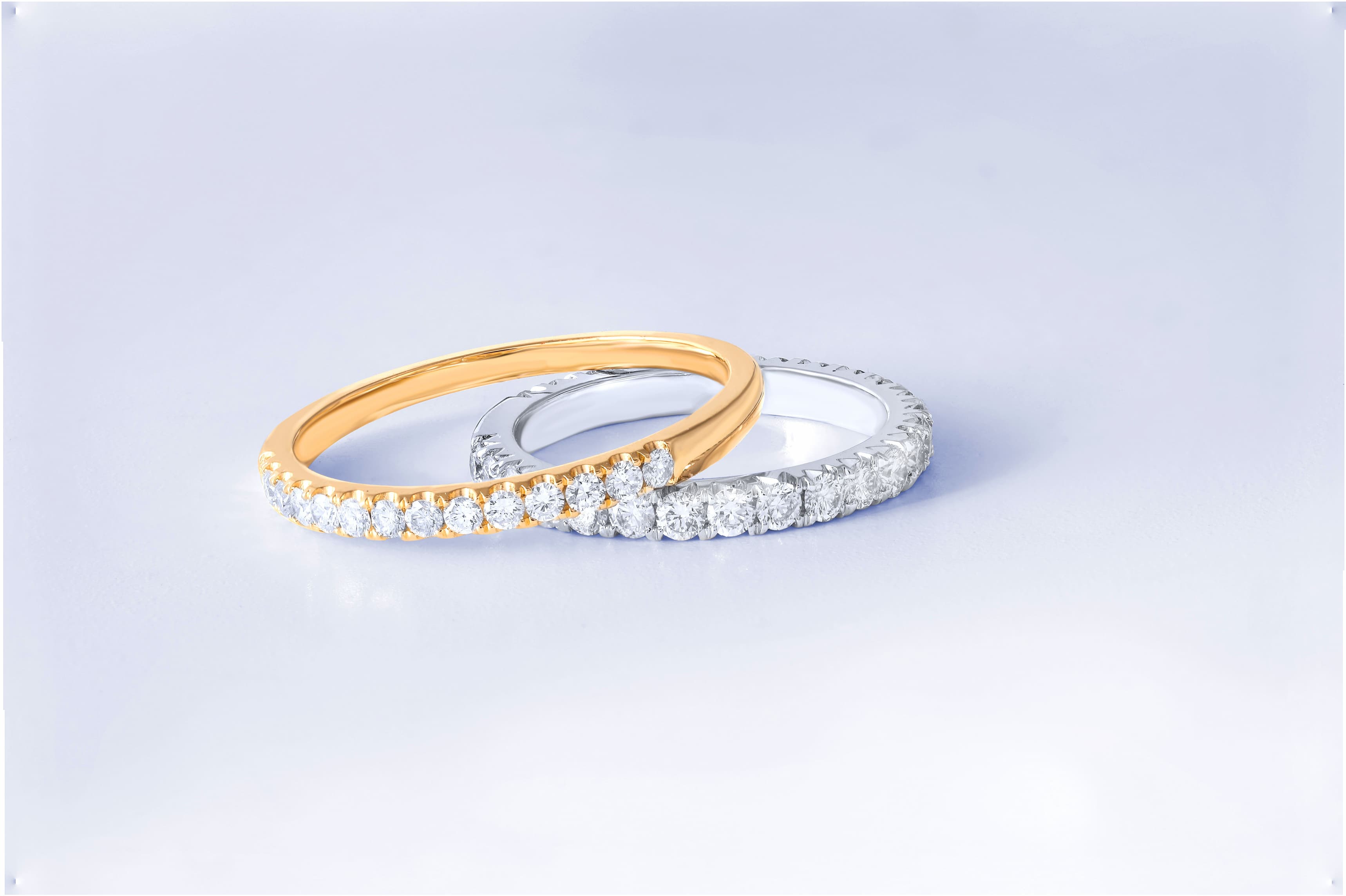
14K and 18K pieces come in a variety of colors, including yellow, white, and rose gold. The karat can slightly affect the jewelry’s appearance, though, so here’s what to expect.
Yellow gold
14K yellow gold tends to look somewhat lighter, while 18K yellow gold usually has a deeper and more saturated appearance. That’s because a larger share of the 18K alloy is naturally yellow gold. Silver and copper proportions change the exact shade in either karat, so keep in mind that color can’t reliably establish purity.
White gold
White gold gets its paler appearance from the metals mixed in with the gold. Many pieces also receive rhodium plating, which creates a bright white surface. Fresh rhodium can make 14K and 18K white gold look remarkably similar. But as that plating wears off, more of the warmer yellow base alloy may show through.
Rose gold
Copper creates rose gold’s pink or reddish color. 14K has a larger non-gold portion, giving manufacturers more room to use copper and produce a strong pink tone. 18K rose gold contains a higher proportion of yellow gold, so it tends to look warmer or more golden.
How do 14K and 18K gold hold up over time?
The higher non-gold content in 14K tends to make it harder, while 18K’s higher gold content keeps it softer. Over years of wear, that difference in durability between 14K and 18K gold can affect the wear a piece shows, along with how much cleaning and maintenance it needs.
Hardness and scratch resistance
14K jewelry generally resists surface scratches better thanks to its hardness. 18K pieces may show fine scratches more readily, especially on rings and bracelets.
Those surface marks don’t change the karat or the amount of gold in the item. They matter more when the jewelry is valued as a finished, wearable item than when its value comes mainly from the metal.
Dents and bending from everyday use
For structural strength, a thin 18K band, prong, or hollow link may be more vulnerable to bending and denting because of the softer alloy. But construction can outweigh karat, so a thick, well-made 18K ring may handle daily wear better than a very fine 14K design.
Repair and upkeep needs
Both 14K and 18K jewelry can be repaired and polished. Polishing removes a small amount of metal, and repeated, heavy polishing can soften edges and engravings. This may affect the value for designer or vintage jewelry, where an original finish or a clear maker’s mark can contribute to resale appeal.
How much are 14K and 18K gold worth?
If you’re thinking about reselling a piece of jewelry and you want to assess its worth, start with the gold itself. For instance, at a spot price of $4,278.20 per troy ounce, pure gold is worth about $137.55 per gram. Apply each karat’s purity, and the metal value comes out to roughly $80.24 per gram for 14K and $103.16 per gram for 18K.
Weight turns those differences in price between 14K and 18K gold into an estimate for the piece you own. A plain 5-gram 14K ring, for example, contains about $401 in gold at our example spot price. The same weight ring in 18K contains about $516 worth of gold.
This calculation assumes that the full 5 grams are gold alloy. If a ring has a diamond, for instance, using the total scale weight can overstate the gold value. Other gemstones, designer markings, rarity, and secondhand demand can all add or subtract value beyond the gold itself.
Keep in mind that a buyer may offer less than the calculated gold value to account for refining and operating costs. Scrap buyers commonly pay around 70% to 90% of melt value. So those 5-gram rings could net you roughly $281–361 for 14K or $361–464 for 18K when sold primarily for their gold content.
Find out what your gold is actually worth with Unvault
Once you’ve found a piece's stamp, you already have one half of a useful estimate: the karat. The other key information you can check at home is the jewelry's weight.
Our Gold Melt Value Calculator combines those inputs with the current gold spot price. Just enter 14K or 18K, add the jewelry’s weight, and you’ll get an estimate of its melt value without committing to a sale. If the item has diamonds, designer markings, or other qualities that may change its price, you can get a more accurate estimate fast by uploading images of your jewelry.
Get an instant valuation and decide whether to sell with Unvault.
Frequently Asked Questions