NEW: Featured in Bloomberg and Entrepreneur
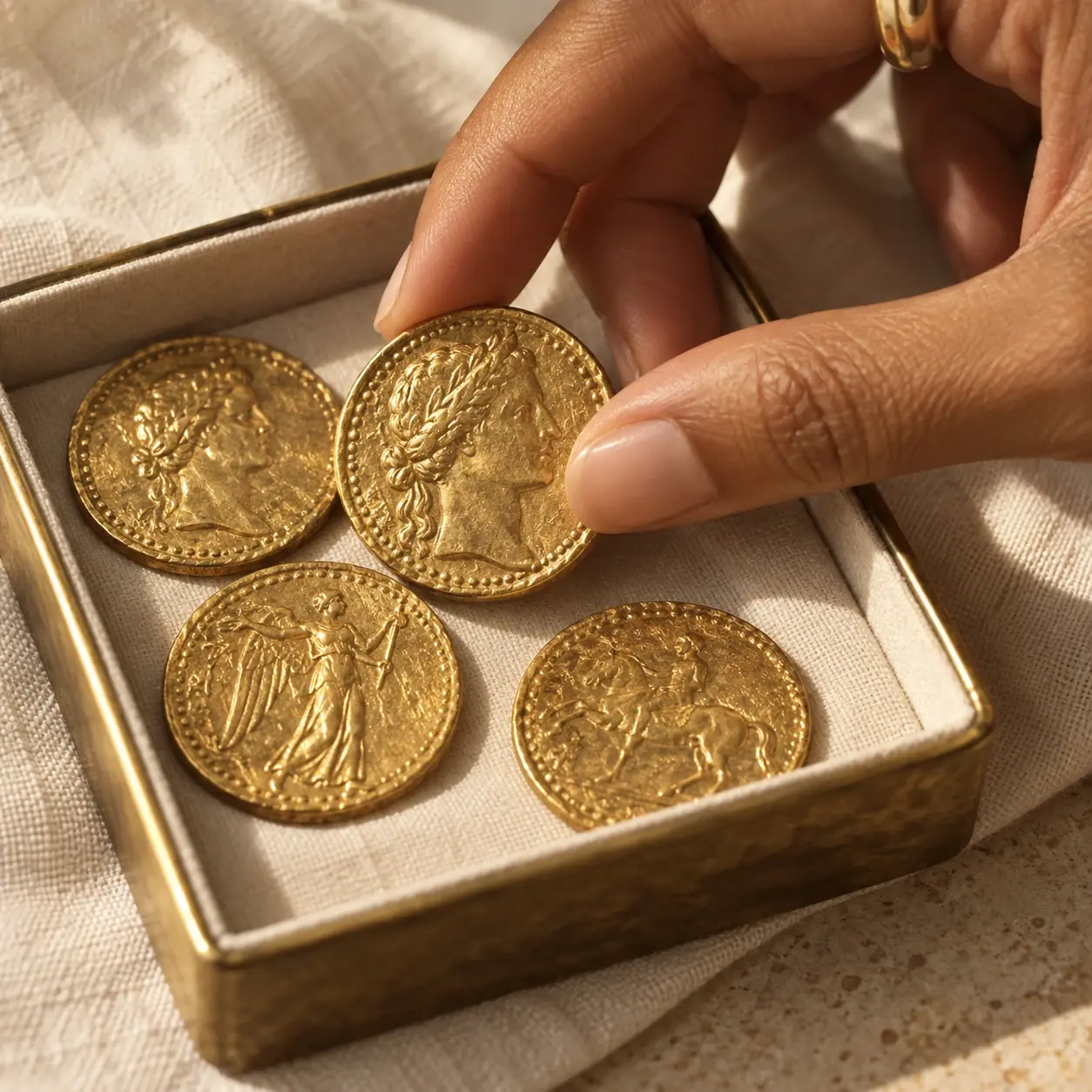
Bullion coins are struck to a fixed weight and purity, so once you know which coin you have, you know exactly how much gold is in it. No scale needed.
Here's how to confirm what you're holding.
01
02
03
04
A gold coin's melt value comes from its actual gold weight (AGW): the amount of pure gold in the coin, measured in troy ounces. AGW is the coin's gross weight multiplied by its fineness, and for standard bullion coins it's fixed by the mint.
That's why a 22K American Gold Eagle and a 24K Canadian Maple Leaf are both worth the same at melt: the Eagle is heavier, but both contain exactly one troy ounce of pure gold. The extra weight in the Eagle is copper and silver alloy, added to make the coin harder to scratch.
To calculate a coin's melt value, multiply its gold content by the current spot price of gold per troy ounce. Our calculator stores the gold content of each coin and uses today's live spot price, so all you choose is the coin and the quantity.
Specifications for selected common gold coins. Gold content determines melt value; collectible premiums are assessed separately.
Have gold jewelry or a coin that isn't listed? Use the gold melt value calculator with its weight and karat. See today's 22K and 24K gold prices for reference.
The gold spot price is the current market price at which gold can be bought or sold for immediate delivery, quoted in USD per troy ounce. It fluctuates throughout each trading day based on global supply and demand, currency movements, geopolitical events, inflation expectations, and central bank activity.
Gold is traded on major exchanges including the COMEX (part of the CME Group in New York) and the London Bullion Market Association (LBMA), which publishes a twice-daily benchmark. The spot price our gold coin calculator uses is refreshed daily to reflect current market conditions.
Because coin gold content is already stated in troy ounces, a coin's melt value moves one-for-one with spot: when gold rises 1%, so does the melt value of every coin in the calculator.
Bullion coins, including the American Gold Eagle, Buffalo, Maple Leaf, and Krugerrand, are minted in large numbers to hold gold. They're valued mainly on their gold content, so their price tracks melt value closely, usually with a small premium or discount depending on the buyer.
Collectible (numismatic) coins are valued on more than their gold. Date, mint mark, mintage, condition, and grading all matter. A common-date Saint-Gaudens Double Eagle may trade near melt, while a rare date or a high-grade example can sell for many times its gold content.
The gap between melt and resale value is largest for:
- Low-mintage or key-date coins
- Coins graded and slabbed by PCGS or NGC, especially in high grades
- Proof strikes and coins with original mint packaging and certificates
- Pre-1933 US gold and historic world coins with collector demand
Offers vary with the buyer’s costs, resale demand, and assessment of the coin. Compare the final amount you would receive, including any fees. Knowing your coin's melt value gives you a baseline to judge any offer against.
This is why Unvault values each coin individually rather than paying a flat percentage of spot. You see an itemized estimate first, and decide whether to sell after.