
.webp)
A jewelry appraisal estimates what it would cost to replace your piece at retail, which is why insurers use it and why it is usually high. A valuation estimates what a buyer would pay today, based on metal, gemstones, and market demand. When you sell, the valuation is the number that matters.
One of the most confusing moments for jewelry owners happens when they try to sell a piece that has an appraisal. On paper, the jewelry looks incredibly valuable. In real life, the offers don’t come close. This disconnect leads many people to feel misled, even though the issue isn’t dishonesty, it’s misunderstanding.
A jewelry appraisal is created for insurance purposes. Its goal is to estimate how much it would cost to replace your jewelry with a similar item at a retail store today. Retail stores include brand margins, craftsmanship costs, showroom expenses, and profit. That’s why appraisal numbers are intentionally high. They’re designed to protect you if your jewelry is lost or stolen, not to reflect resale reality.
A valuation, on the other hand, answers a very different question. It asks what someone would pay for your jewelry in the current market. This value is based on materials, demand, and actual resale conditions. It doesn’t include emotional attachment, gift value, or retail markups.
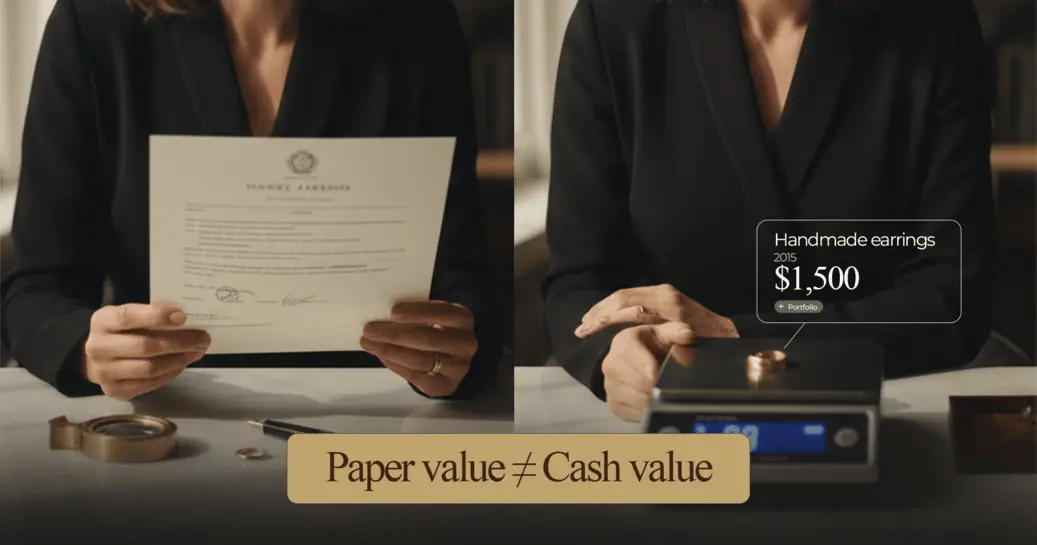
This difference matters because most people assume the appraisal represents real money they can access. When they discover it doesn’t, trust breaks down. Pawn shops and local buyers often worsen this experience by giving a single number without explaining how it was calculated. Without transparency, it feels arbitrary, even when it isn’t.
Valuation looks at what your jewelry is made of and how those components perform in the market. Gold is priced by purity and weight. Diamonds are examined for quality. Gemstones are assessed individually. If a piece has meaningful craftsmanship or brand recognition, that may add some premium, but it’s rarely as much as people expect.
Understanding this distinction empowers you. Instead of feeling disappointed by offers, you can evaluate whether they make sense. You can ask the right questions. You can decide whether selling now fits your goals or whether holding onto the piece makes more sense.
Education is the missing piece in most jewelry transactions. When buyers explain the difference between appraisal and valuation clearly, the selling experience becomes calmer, fairer, and far more trustworthy.
Frequently asked questions
Know what your jewelry is worth before you sell.
Monthly gold-price context and hallmark guides from Unvault’s gemologists. No spam, unsubscribe anytime.
Related posts
.webp)


Ready to see what your jewelry is worth?