
An old ring can look golden on every visible surface, yet still contain little (or no) actual gold. Plated and vermeil jewelry place gold over another material, while solid gold jewelry uses a gold alloy throughout the piece. These differences can make it hard to judge the value of an item you want to buy or plan to sell.
This article will explain what solid gold jewelry is and how it differs from other common styles. We’ll also offer tips for when to choose solid gold pieces and how to value them.
What’s solid gold jewelry?
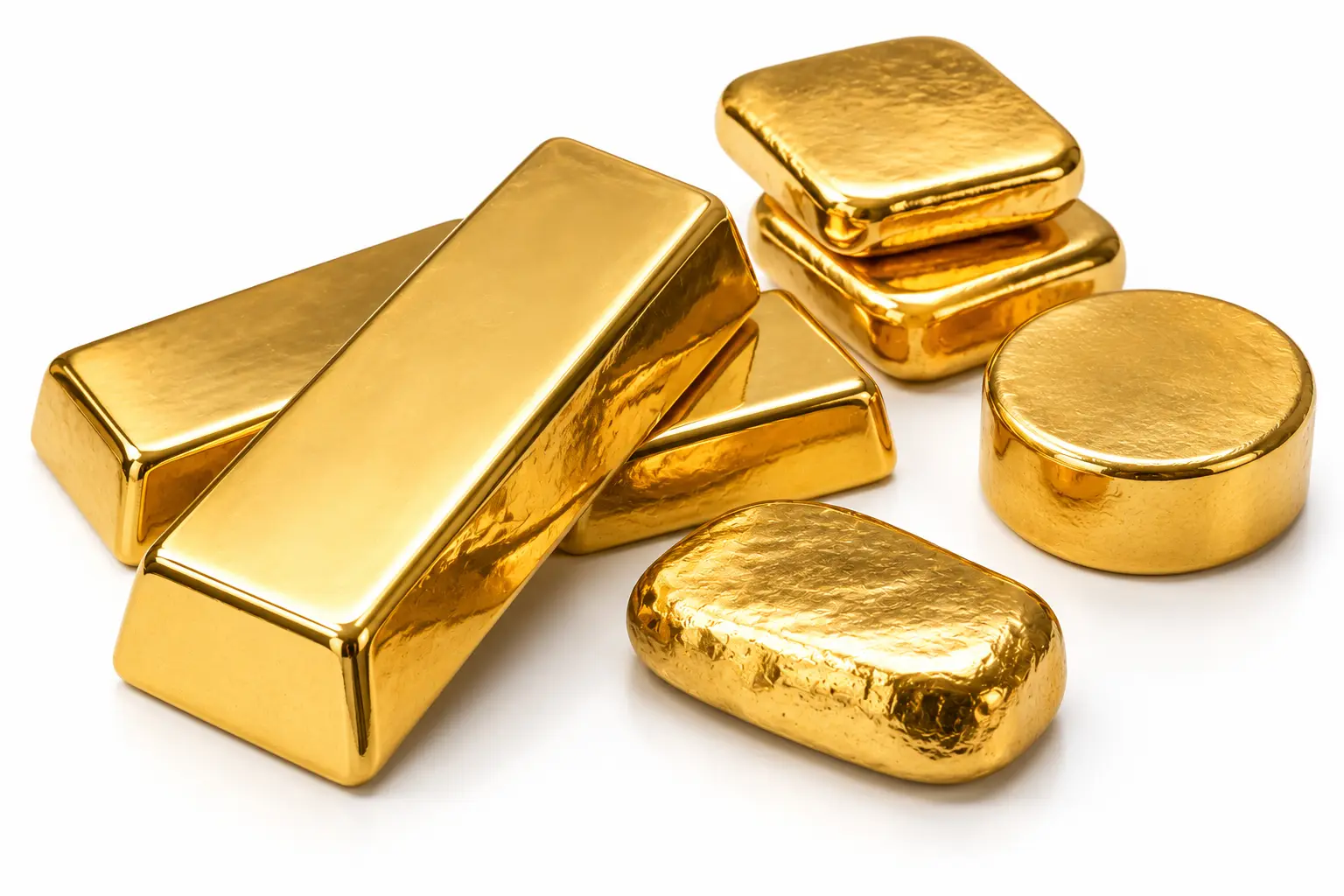
The term “solid gold” describes jewelry made from a gold alloy, rather than a base metal covered with gold. It doesn’t mean the piece is 100% gold; in fact, that’s rarely the case.
Most solid gold jewelry contains gold mixed with other metals, such as copper, silver, zinc, nickel, or palladium, to change properties like its strength and color. The item’s karat tells you how much of its alloy is actually gold, which in turn affects its metal value.
For example, 14K gold contains 14 parts gold out of 24 parts total, or 58.3% pure gold. An 18K piece contains 18 parts gold out of 24, or 75% pure gold.
Other types of jewelry only have gold at the surface. Gold-filled pieces have a layer of karat gold mechanically bonded to another metal, while vermeil jewelry uses gold over a sterling-silver base.
Characteristics of solid gold
The properties you notice in a piece depend partly on its karat and alloy recipe. Here are a few things to understand about solid gold:
- Color comes from the alloy: Solid gold jewelry can be yellow, white, or rose in color. Copper can push an alloy toward pink or red, while metals like palladium, nickel, and silver create a paler tone. White gold may also have rhodium plating over the gold alloy.
- Surface wear doesn’t reveal another base metal: Scratches and polishing marks can change the item’s finish, but ordinary wear won’t gradually expose brass or another core metal the way it can with gold-plated jewelry.
- Gold is relatively dense: A solid gold piece usually feels heavier than similarly sized jewelry made from lighter base metals. Heft is only a clue, though, since hollow construction, gemstones, and differences in design can make weight misleading.
- Skin sensitivity depends on the alloy: High-karat gold leaves less room for other metals, but solid gold isn’t necessarily hypoallergenic. A 14K or 18K piece may still contain metals like nickel that can irritate sensitive skin.
How karat affects solid gold’s purity
Karat has a direct effect on metal value, because it tells you what percentage of the jewelry’s weight is gold. At the same weight, a higher-karat piece contains more gold and therefore has a higher potential melt value.
Let’s review the common karats:
- 24K gold: 24K gold is 99.9% pure gold and has a rich yellow color. Since there’s very little added metal, a 24K item is very soft, and jewelers rarely use this material for pieces exposed to constant knocks and scratches.
- 22K gold: 22K jewelry contains 91.7% gold. It still has a strong yellow color, but it gains some hardness from the small proportion of other metals in the alloy.
- 18K gold: 18K is 75% pure gold. Its higher purity gives 18K pieces more gold value per gram than 14K or 10K jewelry. At the same time, the added metals make 18K alloys more practical for fine jewelry than 24K.
- 14K gold: 14K contains 58.3% gold, and it’s widely used for everyday jewelry thanks to its durability.
- 10K gold: 10K contains 41.7% gold, making it the lowest of the karats commonly found in U.S. jewelry. The high proportion of other metals tends to make 10K pieces harder and paler than high-karat yellow gold.
Keep in mind that karat gives you the percentage, but weight tells you how much gold a piece actually contains. If you want to put a dollar value on the metal, you can calculate gold jewelry value using those two details and the current gold spot price.
What are the pros and cons of solid gold?
Compared with plated, filled, and vermeil jewelry, solid gold gives you more recoverable gold and more freedom to repair or refinish the piece. The main tradeoffs are a steeper upfront cost and, at higher karats, softer metal.
Pros of solid gold
- It retains measurable metal value: Even a broken or unfashionable piece still contains a known proportion of gold. Understanding the karat, gold weight, and current market price provides a baseline valuation that’s harder to get with gold-plated jewelry.
- It can tolerate restoration: A jeweler can polish or refinish the metal without exposing a cheaper base-metal core. This can make older pieces easier to repair and continue wearing or sell online.
- The gold can be reused: You can refine or melt jewelry that no longer makes sense to repair, and recover the gold for other uses.
Cons of solid gold
- Higher purity means softer metal: 18K, 22K, and especially 24K pieces often show scratches or deformations more readily than lower-karat jewelry.
- Alloy metals can cause irritation: Lower-karat items contain a larger share of non-gold metals, and some recipes include potential irritants like nickel.
- It costs more than coated alternatives: A solid piece contains substantially more gold than gold-filled or plated jewelry, so its material cost is higher from the start.
When to choose solid gold jewelry
Let’s look at a few scenarios where buying solid gold might be a good option.
Get a free appraisal for your solid gold jewelry with Unvault
Solid gold jewelry isn’t usually 100% pure gold; instead, it has a mix of metals that depends on its karat and manufacturer. Because there’s gold throughout the entire piece, though, this type of jewelry tends to retain its value well.
If you know an item’s karat and weight, you can use our Gold Melt Value Calculator to combine those details with the current gold spot price and find out what your jewelry might be worth. And if the piece has gemstones, designer markings, or other details that could affect its price, you can upload photos for a more complete estimate.
Get an instant valuation and decide what to do with your solid gold jewelry.
Frequently asked questions
Know what your jewelry is worth before you sell.
Monthly gold-price context and hallmark guides from Unvault’s gemologists. No spam, unsubscribe anytime.
Related posts
.webp)


Ready to see what your jewelry is worth?