
If you’re typing "how much is my ring worth" into a search bar, you’re probably about to be disappointed, and that’s the point of this post. The number on your insurance appraisal, the price on the receipt, and what a buyer will actually pay are three different numbers, often off from each other by a factor of three.Understanding the gap between retail price, appraised value, and real resale value is the difference between getting paid what your ring is worth and getting talked down by a buyer who’s banking on your confusion.
How Much Is My Ring Worth? Retail Price vs. Real Resale Value
There are three numbers you’ll hear thrown around for any ring. Only one of them matters when you sell.
- Retail price — what someone paid at the store. Includes the jeweler’s margin, store overhead, and brand markup. This is the highest number you’ll see.
- Insurance appraisal — designed to cover replacement cost at retail. Almost always inflated, sometimes 2–3x higher than what the ring would actually sell for.
- Real resale value — what a buyer will actually pay you in cash. This is the only number that matters when you sell.
For most rings, real resale value lands at 30–60% of original retail price. Signed designer rings (Tiffany, Cartier, Harry Winston) sell at the top of that range. Generic rings without certified diamonds sell at the bottom.
What Is My Ring Worth on the Resale Market in 2026?
In 2026, the resale market is healthier than it has been in years. Gold is near record highs at roughly $4,814 per troy ounce, central bank demand has tightened the metal market, and specialist diamond buyers are paying competitively above pawn-shop floors.
For a typical ring, the resale value comes from three layered components:
- Metal value (the floor) — calculated as weight × purity × spot price. A 5-gram 14K gold band has a melt value of around $250 in 2026.
- Diamond or gemstone value — calculated using carat, cut, color, clarity, and certification. A 1ct GIA-certified VS1 H-color round brilliant currently resells for roughly $2,500–$4,000 depending on cut grade.
- Brand or design premium — Tiffany, Cartier, Bulgari, and other recognized makers can add 30–40% above the unbranded equivalent.
Total resale value = metal + stone + premium, minus the buyer’s payout percentage (typically 70–85% of the verified total for reputable buyers).
How Much Is My Engagement Ring Worth?
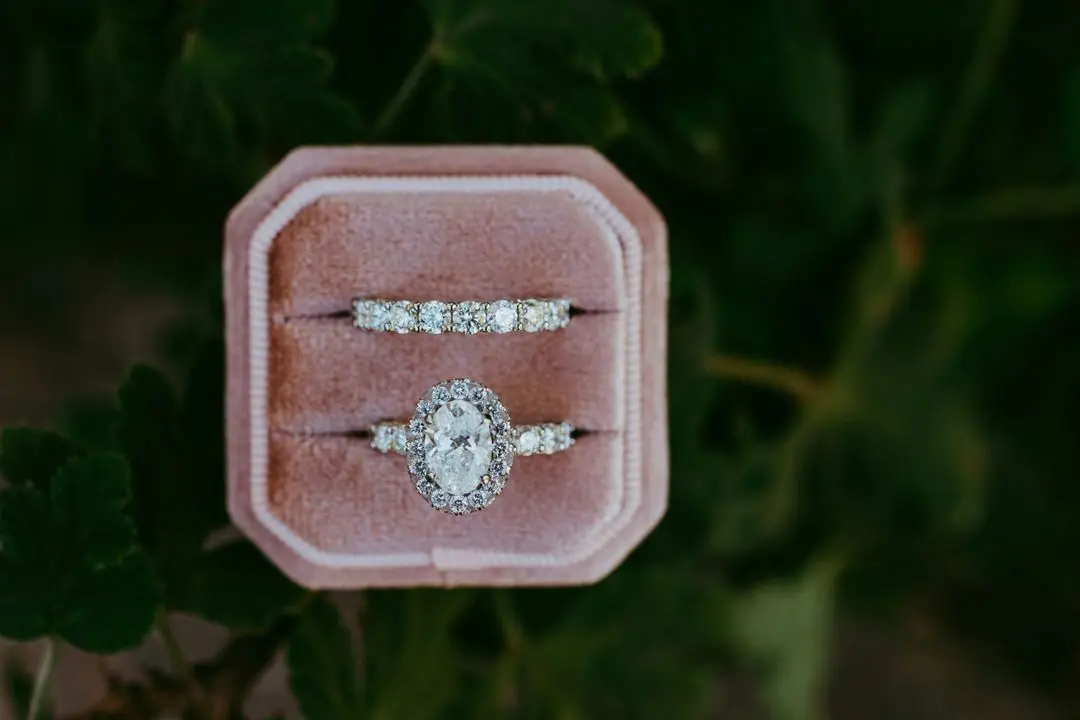
If you’re asking how much is my engagement ring worth, the answer depends mostly on the diamond and the brand.
The variables that move the price most:
- Diamond size (carat weight)
- Cut grade — Excellent and Ideal cuts sell faster and higher
- Color and clarity grades from GIA or AGS
- Brand — a signed Tiffany solitaire can be worth 30–40% more than the same diamond in a generic platinum setting
- Setting metal — platinum holds value better than 14K white gold
- Original documentation — GIA report, receipt, and box add real money
Rough resale benchmarks for an engagement ring originally purchased at retail:
- Generic ring, no certification: 20–35% of retail
- GIA-certified diamond, generic setting: 35–50% of retail
- Signed designer ring (Tiffany/Cartier) with full documentation: 50–70% of retail
A $10,000 retail Tiffany engagement ring, for example, often resells in the $5,500–$7,000 range. The same diamond in an unsigned setting from a chain jeweler might resell for $3,000–$4,500.
How Much Is My Wedding Ring Worth?
Wedding rings, the bands worn after the ceremony, follow different rules than engagement rings. Most of the value sits in the metal, not the stones.
Resale benchmarks in 2026:
- Plain 14K gold band: melt value of $90–$150 depending on weight; resale around 70–85% of melt to reputable buyers.
- Plain 18K gold band: melt value of $400–$700 depending on weight; resale similar percentage.
- Plain platinum band: depends on platinum spot price; typically $200–$500 melt for a standard band.
- Eternity band with side stones: metal + small-stone value; usually $400–$2,000 depending on stones and setting.
- Signed designer band (Tiffany, Cartier): commands a premium above metal.
If your wedding ring is a plain band, you’re mostly being paid for the metal. If it has side stones or a designer signature, the math changes meaningfully.
How Much Do Diamonds Sell For?
This is the question that catches most sellers off guard. The retail markup on diamonds is among the highest in jewelry, and that markup doesn’t survive resale.
General resale benchmarks in 2026:
- 0.50 ct, GIA-certified, VS clarity, G–H color: $400–$800 resale
- 1.00 ct, GIA-certified, VS1, F–H color, Excellent cut: $2,500–$4,500 resale
- 2.00 ct, GIA-certified, VS1, F–H color, Excellent cut: $8,000–$15,000 resale
- 3.00 ct+, GIA-certified, top grades: $20,000+ resale
Lab-grown diamonds resell for a fraction of natural diamonds, typically 10–25% of comparable retail price. The natural-vs-lab distinction is critical at appraisal and disclosure.
Stones without GIA, AGS, or IGI certification resell for significantly less. Buyers discount uncertified stones because they have to pay for grading themselves before reselling.
How to Calculate How Much Your Ring Is Worth
A back-of-the-envelope estimate, using the components above:
- Identify the metal and weight. Look for stamps (14K, 18K, 750, PT950). Weigh in grams.
- Calculate metal value. Weight × purity fraction × spot price. (For 14K: weight × 0.583 × current 24K gram price.)
- Identify the stones. Pull the GIA report, original receipt, or any prior appraisal. Note carat, cut, color, clarity.
- Estimate stone value. For certified diamonds, search recent comparable resale prices on platforms like Worthy or 1stDibs.
- Add the brand premium. Signed designer pieces add 30–40% above unbranded equivalents.
- Apply the buyer’s payout percentage. Reputable specialist buyers pay 70–85% of verified total.
This estimate gets you within a reasonable range. It does not replace a professional valuation.
Where to Sell Your Ring for the Best Price
The buyer you choose matters more than any other variable.
- Specialist online buyers: fast, national reach, competitive payouts when reputable. Best balance of speed and price for most sellers.
- Auction houses: high-end, signed, or rare pieces only. 10–25% commission and months-long timelines.
- Diamond resale platforms (Worthy, I Do Now I Don’t): consignment-style; can fetch retail-resale prices but slower.
- Estate jewelers and consignment shops: good for vintage or designer pieces.
- Pawn shops and "we buy gold" stores: fastest, worst payout. Skip for anything with a real diamond or designer signature.
The spread between buyers on the same ring can be $500 to $5,000 or more. Get more than one offer.
The Only Way to Know What YOUR Ring Is Worth: Online Jewelry Appraisal
Online calculators give you a generic estimate. They don’t account for the specific cut grade, the maker’s stamp inside the band, the platinum vs. white gold setting, or the actual condition of the piece. The only accurate number comes from someone who tests, grades, and verifies the ring itself.
Unvault does this for free, with a full transparent breakdown, in under 24 hours.
Find out what your ring is actually worth. Get a free valuation →
Frequently asked questions
Know what your jewelry is worth before you sell.
Monthly gold-price context and hallmark guides from Unvault’s gemologists. No spam, unsubscribe anytime.
Related posts

Ready to see what your jewelry is worth?